




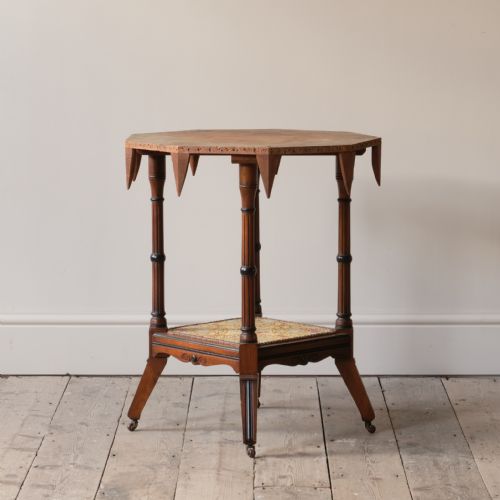


Victorian Tapestry Table
A victorian tapestry table brings tactile warmth to a room through needlework panels set into timber frames.
Victorian Tapestry Table
When you search for a victorian tapestry table, you encounter a mix of occasional furniture and upholstered seating featuring worked textile panels. These pieces combine wooden frames in walnut, rosewood, and mahogany with wool or silk needlepoint surfaces.
The selections on this page range from occasional and sewing tables to stools, footstools, and fire screens with dual functions. Victorian examples dominate the offering, accompanied by occasional earlier Georgian forms and later Edwardian pieces.
Materials and construction
The timber frames utilise solid walnut, rosewood, and mahogany, shaped into turned legs, carved supports, and X-frame structures. Joinery relies on traditional methods suited to supporting daily use in reception and dressing rooms.
Needlepoint and tapestry panels employ wool and silk threads worked on canvas grounds. These textile insertions are secured directly into table insets or upholstered over padding on stools and screens.
Victorian Tapestry Table Retail Price Guide 2026
Typical asking prices for victorian tapestry table among the pieces listed under this phrase on Sellingantiques today, from the lower quarter to the upper quarter. They describe what is for sale here now, not the wider market.
Listings combine walnut, rosewood, and mahogany with textile elements spanning the Victorian, Regency, and Edwardian periods.
What separates the finer examples
Quality rests in the precision of the needlework and the crispness of the timber carving. Denser stitching with subtle colour shading denotes greater skill in the textile panel.
Timber selection dictates overall distinction, where figured walnut or richly grained rosewood elevates the piece. Structural integrity in the frame and stability in revolving or folding mechanisms complete the measure of a superior item.
H Ogden of Manchester
The Victorian Tapestry Table Glossary
- Needlepoint
- A type of canvas work embroidery executed with wool or silk yarn, commonly forming the decorative top of a table or stool.
- X-frame
- A structural furniture base formed by intersecting diagonal timber members, frequently seen on dressing and centre stools.
- Burr walnut
- A prized timber veneer showing swirling growth patterns, used to surface high-grade occasional tables.
- Face screen
- A small adjustable panel mounted on a stand, designed to protect the complexion from the heat of an open fireplace.
Victorian Tapestry Table: Frequently Asked Questions
What is a victorian tapestry table used for?
These pieces served practical roles in nineteenth-century parlours and boudoirs as occasional surfaces, sewing stands, or seating. The textile tops added colour and texture to domestic interiors.
They function today as small side tables, footstools, or decorative accents in sitting rooms and bedrooms.
How do I care for the tapestry top?
Protect the needlework from direct sunlight to prevent fading of the wool and silk threads. Gentle vacuuming through a mesh screen helps remove dust without disturbing the fibres.
Avoid placing damp items or unsealed drinks directly onto the textile surface.
Are the tapestry panels original?
Many pieces retain their original nineteenth-century needlework panels, worked in wool or tent stitch. The integration of textile into timber reflects the domestic craft of the period.
Close inspection of the canvas and backing materials reveals the age and method of the mounting.
What woods were used for the frames?
Cabinet makers utilised dense hardwoods including walnut, rosewood, and mahogany. Figures often feature burr walnut veneers or finely turned mahogany legs.
Lighter woods such as satinwood or oak appear less frequently across these specific forms.