



Rosewood Needlework Stand
A rosewood needlework stand offers a clever surface and textile panel for the parlour, crafted to hold sewing materials or block the hearth.
Rosewood Needlework Stand
A rosewood needlework stand encompasses sewing tables, work tables, and pole screens encountered across this selection. These pieces date from the Georgian, Regency, and Victorian periods, with mid-nineteenth-century examples appearing frequently.
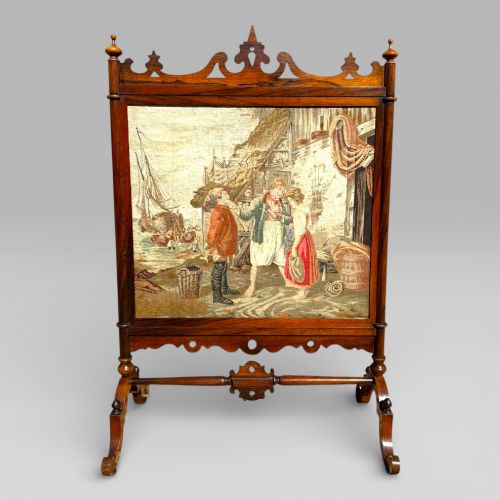
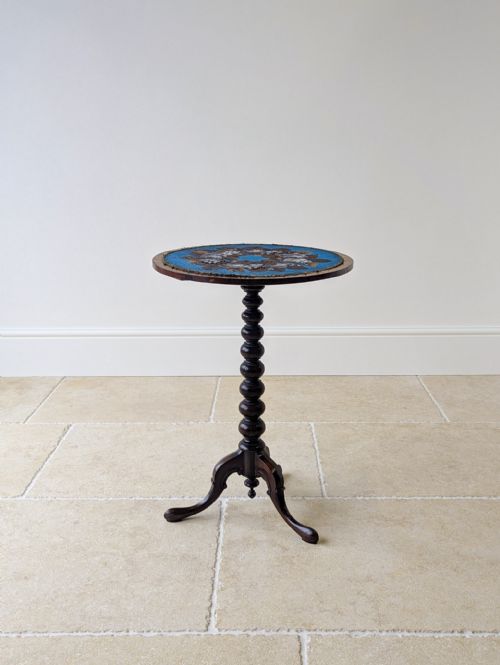
The forms include drop-leaf sewing tables, tripod wine tables, and cheval fire screens alongside embroidered pole screens. Originating largely from English workshops, they combine functional storage with decorative needlepoint, tapestry, or beadwork panels.
How they were made
Construction relies heavily on rich rosewood timber, sometimes augmented with mahogany, shaped into tripod bases, carved stands, and drop-leaf frames. Brass fittings provide structural support and mobility where castors are fitted.
Textile panels incorporate intricate fabric, wool, and velvet needlework, often featuring beadwork or needlepoint tapestry secured within wooden or brass frames.
Rosewood Needlework Stand Retail Price Guide 2026
Typical asking prices for rosewood needlework stand among the pieces listed under this phrase on Sellingantiques today, from the lower quarter to the upper quarter. They describe what is for sale here now, not the wider market.
Object forms on this page include fire screens, sewing tables, work tables, side tables, and pole screens.
What varies in quality
Quality rests upon the crispness of the timber carving and the complexity of the internal fittings, particularly in fitted work tables designed for crafting. Finer execution shows in the balanced proportions of tripod bases and grand architectural proportions.
The needlework panel also dictates distinction, where finely executed beadwork, tapestry, and embroidery demonstrate superior handwork compared to simpler textiles.
The Rosewood Needlework Stand Glossary
- Rosewood
- A dense, dark timber prized for its rich grain and deep colour, commonly utilised in high-status nineteenth-century furniture. It takes a fine polish and provides a sturdy foundation for decorative stands.
- Pole Screen
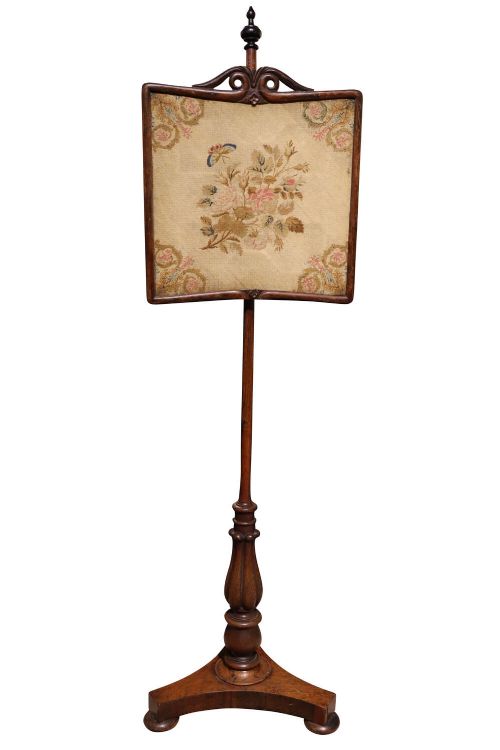
- A vertical screen mounted on a tall wooden pole with a tripod or weighted base, designed to be adjusted vertically to block heat from an open fire. The sliding panel usually displays decorative needlework or tapestry.
- Needlework
- General term encompassing embroidery, tapestry, and beadwork executed by hand on a textile ground. These panels form the primary decorative elements on screens and sewing table inserts.
- Drop-leaf
- A table design featuring hinged flaps on the sides that can be raised to extend the surface area or lowered when space is restricted. It offers flexibility in domestic interiors.
Rosewood Needlework Stand: Frequently Asked Questions
What is a pole screen?
A pole screen is a vertical textile panel mounted on a slender wooden stand designed to shield the face from a fireplace's radiant heat.
The adjustable panel slides up and down on its central pole to suit the user's seated position.
How were sewing tables used?
Sewing tables served as specialised workspaces for ladies engaged in needlecraft, embroidery, and textile pursuits.
They typically concealed fitted compartments, drawers, or hanging fabric bags beneath the top to store threads, needles, and unfinished projects.
How do I date a Victorian piece?
Dating a Victorian piece relies on examining the specific stylistic markers, construction methods, and timber choices recorded across the nineteenth century.
Early Victorian examples often retain Regency influences like heavier carved pedestals, while later items shift in proportion and decorative detail.
Where should I place a needlework stand?
These stands suit sitting rooms, studies, or parlours where their decorative textile panels and compact footprints can be appreciated.
Freestanding work tables and screens function effectively beside seating areas or near fireplaces to echo their original domestic context.