
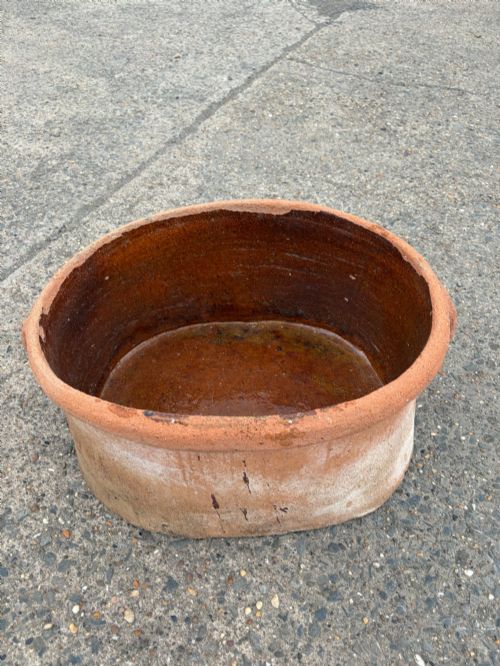
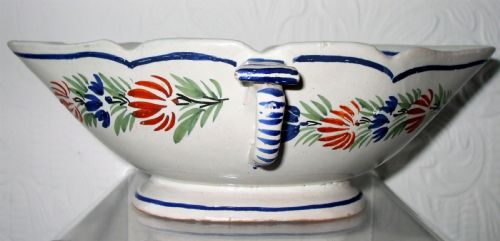


Country Pottery Vessel
A country pottery vessel brings earthy utility into a modern room, offering tactile handles and rich glaze runs shaped by centuries of regional use.
Country Pottery Vessel
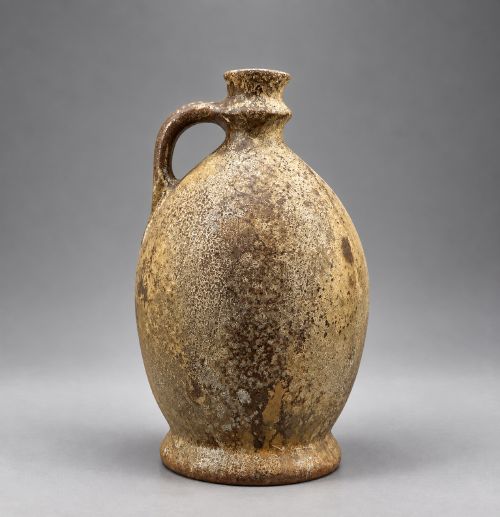
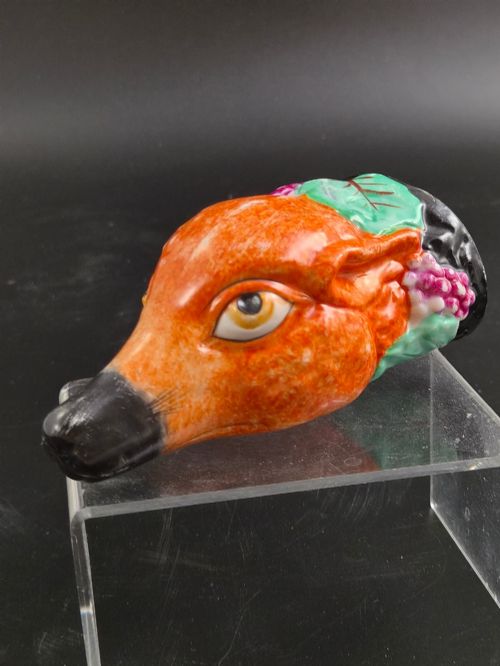
A country pottery vessel encompasses utilitarian earthenware, terracotta, and stoneware shapes made for kitchen, dairy, and tavern service across European and British regions. The selections on this page span from the seventeenth century through the early twentieth century, showing functional domestic forms rather than courtly porcelain.
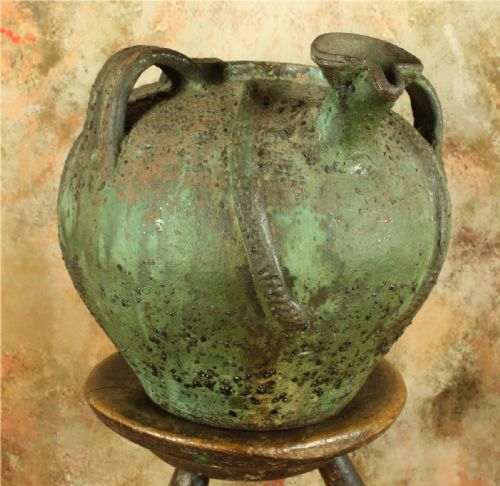
Buyers will encounter oil pots, confit jars, tavern jugs, slipware pitchers, and dairy bowls originating from French provincial workshops, English country kilns, and Dutch potteries. These domestic items were built to hold liquids, oils, or foodstuffs in daily rural life.
The most common examples on this page are nineteenth-century French confit pots and terracotta vessels, alongside earlier seventeenth-century and eighteenth-century slipware jugs. Each piece carries the distinct regional signature of its local clay bed and traditional firing method.
Materials and construction
Potters shaped these vessels from local clay, earthenware, and terracotta on a wheel or built them by hand before applying lead glazes, salt glazes, or tin enamel. The natural mineral content of the clay dictated the warm red, brown, or buff body colours beneath the surface coatings.
Glazes were poured or brushed over the raw bodies to ensure liquid retention, pooling thickly around rims and handles during high-temperature kiln firings. Slipware decoration involved trailing light-coloured liquid clay over darker bodies to create simple linear patterns before the final glaze sealing.
Early puzzle jugs forced drinkers to solve a hidden network of hollow spouts without spilling ale down their chins.
Distinctions in quality
Quality rests upon the honesty of the form, the depth and stability of the glaze, and the preservation of the original surface wear from centuries of handling. A superior vessel retains strong potting lines and balanced proportions without excessive restoration obscuring its utilitarian origins.
The character of the glaze runs, the richness of the slip trails, and the clarity of the maker's handwork separate standard kitchen utility pieces from exceptional surviving examples of folk pottery. Age-related surface degradation should enhance the tactile honesty of the object rather than compromise its structural integrity.
Doulton Lambeth·Royal Staffordshire·Quimper
The Country Pottery Vessel Glossary
- Slipware
- Pottery decorated with a thin mixture of clay and water called slip, applied before firing to create contrasting lines or patterns. This technique appears on early English and Dutch jugs.
- Confit pot
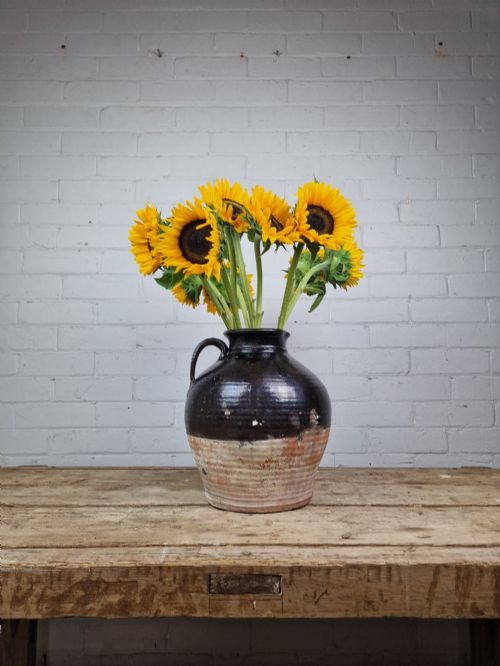
- A French regional earthenware jar featuring glazed upper sections and unglazed lower bodies, traditionally used for preserving meats. These vessels often include sturdy carrying handles.
- Salt glaze
- A vitreous coating formed by throwing common salt into the hot kiln during firing, creating a textured surface resembling orange peel. This finish appears on stoneware jugs and barrels.
- Terracotta
- Fired but unglazed or transparently glazed porous clay of a brownish-red colour. It forms the body of many nineteenth-century garden and kitchen vessels.
Country Pottery Vessel: Frequently Asked Questions
What were country pottery vessels used for?
These vessels served purely practical domestic roles in European kitchens, dairies, and taverns, holding olive oil, confit meats, ale, milk, or vinegar. Their robust construction was designed for heavy daily labour rather than display.
Over generations, pieces migrated from dark larders and dairies into domestic living spaces as decorative objects that celebrate historical craftsmanship and rural utility.
How do I date an old pottery vessel?
Dating relies on examining the potting technique, the composition of the clay body, the characteristics of the glaze, and any stylistic clues from regional forms. Earlier seventeenth-century pieces often feature heavy slip trails and coarser earthenware bodies.
Later nineteenth-century and early twentieth-century examples show more uniform manufacturing methods, standardised glazes, and industrial factory marks where applicable.
Are these old pots safe for food?
Historic lead glazes and porous earthenware bodies mean these vessels are generally unsuited for modern food consumption or holding liquids for long periods. Centuries of use leave microscopic fissures that absorb moisture and residues.
It is best to treat antique vessels as decorative display objects, dried flower holders, or dry storage pieces rather than functional kitchenware.