
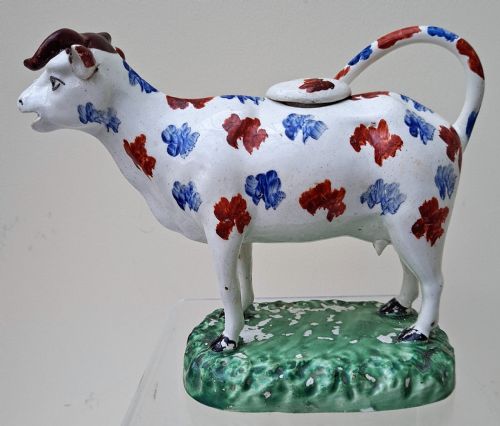


Folk Art Pottery Jug
A folk art pottery jug brings tactile rural character into a room, offering robust forms and honest glazes shaped by traditional hands.
Folk Art Pottery Jug
A folk art pottery jug encompasses robust vessels and utilitarian containers shaped across centuries, ranging from early slipware examples to later regional earthenwares. These objects display straightforward domestic utility combined with distinct local artistry, reflecting the practical needs and aesthetic habits of past makers.
On this page, buyers frequently meet earthenware pitchers, slipware tavern jugs, and sculptural creamers such as cow creamers and character jugs. The selection spans 17th-century Dutch and English slipware pieces alongside 19th-century bargeware, pearlware, and Mediterranean painted pottery.
The variety stretches from substantial tavern vessels designed for pouring ale to small decorative creamers and strawberry jars. Each piece represents a specific regional tradition, utilising local clays and traditional firing methods peculiar to its origin and period.
How they were made
Potters shaped these vessels from local earthenware and terracotta clays, often throwing them on simple wheels or hand-building sculptural forms like cow creamers. The resulting bodies provide a heavy, porous foundation suited to everyday domestic service.
Surfaces received lead glazes, ceramic glazes, or fluid slip applications that dripped and pooled naturally during the firing process. Artisans decorated the damp clay with painted pigments or trailed slip designs, sealing the porous earthenware for holding liquids.
Listings feature earthenware and terracotta vessels spanning the seventeenth through the nineteenth centuries, utilising lead glaze, pearlware, and slip decoration.
What varies in quality
The division between ordinary and exceptional pieces rests upon the confidence of the form and the expressive strength of the decoration. Stronger examples display bold, unhesitating slip trails and well-defined modelling that reveal the maker's surety.
Glaze coverage and firing atmosphere dictate the visual depth of the surface, where rich pooling and varied tonal shifts elevate a simple earthenware body. The most satisfying pieces retain an unpretentious integrity combined with clear regional character.
The Folk Art Pottery Jug Glossary
- Slip
- A mixture of clay and water applied to pottery for decoration or sealing before firing. Potters trail or brush slip across the drier clay body to create contrasting patterns.
- Slipware
- Pottery decorated with a thin layer of liquid clay called slip, often finished with a clear lead glaze. This technique creates glossy surfaces with distinct linear or marbled designs.
- Pearlware
- A refined earthenware developed in the late eighteenth century featuring a subtle bluish glaze that pooled in crevices. It bridged the gap between creamware and later white stonewares.
- Earthenware
- Porous pottery fired at relatively low temperatures and requiring a glaze to become waterproof. It remains the primary body type for traditional utilitarian wares.
- Lead glaze
- A glossy coating made with lead compounds that melts during firing to seal porous earthenware bodies. It produces a warm, glassy finish that accentuates the underlying clay.
Folk Art Pottery Jug: Frequently Asked Questions
What were folk art pottery jugs used for?
These vessels served everyday domestic functions including pouring milk, serving ale in taverns, and storing liquids or preserves. Utilitarian forms like pitchers and creamers were made for active use in rural kitchens and dining spaces.
Over time, many of these functional items transitioned into decorative display pieces as regional styles shifted. Their sturdy construction allowed them to survive centuries of household handling.
How do I date a slipware jug?
Dating relies on examining the clay body, the consistency of the slip, and the characteristics of the lead glaze. Early seventeenth-century examples typically feature heavier throwing lines and darker, iron-rich body tones.
Later nineteenth-century pieces often show different potting techniques and brighter surface contrasts. Comparing the decorative motifs with documented examples helps narrow down the period of origin.
Are cow creamers considered folk art?
Cow creamers combine utilitarian function with whimsical sculptural design, making them a staple of vernacular ceramic traditions. Potters shaped these animals with hollow bodies and openings on the back for filling with cream.
They reflect the playful side of rural pottery production across regions like Staffordshire and Wales. Their appeal lies in this blend of functional pouring design and charming folk sculpture.
How should I display antique earthenware?
Display these pieces away from direct sunlight and fluctuating moisture to protect the porous earthenware and glaze surfaces. Stable shelving that supports their weight prevents accidental knocks and structural stress.
Grouping items by regional style or glaze type highlights their distinct historical characteristics. Allowing adequate space around each vessel lets the rustic forms stand out clearly in a room.