
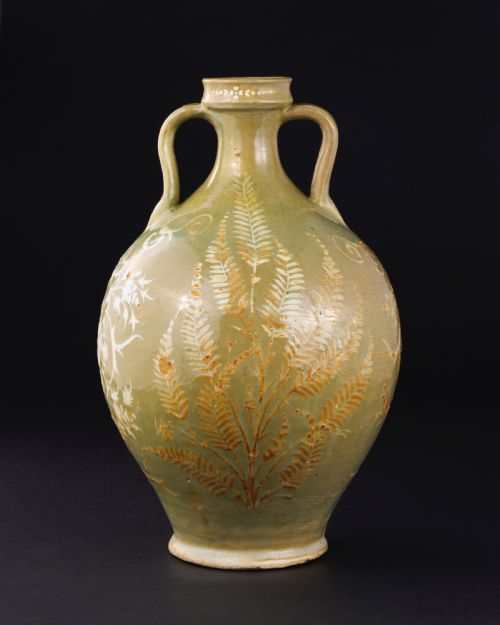


17th Century Ceramic Jar
A 17th century ceramic jar is a vessel of remarkable utility and age, prized by collectors for its surviving glaze and historic form.
17th Century Ceramic Jar
When you search for a 17th century ceramic jar, you encounter a diverse array of international pottery vessels spanning several distinct cultural traditions. The selection predominantly includes Dutch Delft blue and white vases, Chinese porcelain jars from the Transitional and Kangxi periods, and Persian Safavid celadon pottery.
Forms range from apothecary albarello drug jars and lidded ovoid containers to strawberry jars and garniture vases. These vessels served practical domestic or medicinal functions in their original eras before transitioning into decorative display pieces.
Origins stretch across Europe and Asia, uniting Dutch baroque, Italian majolica, Japanese Edo period Arita wares, and Ming dynasty pots under one broad heading. Each piece carries the distinct stylistic hallmarks of its regional kiln and period.
How they were made
Potters of this era shaped vessels from earthenware, porcelain, and heavy slip, throwing them on manual wheels or forming them within moulds. Earthenware bodies often received opaque tin glazes to create a smooth, white ground suitable for pigment painting.
Decoration relied heavily on cobalt pigment, iron red, and green enamel to apply intricate botanical, avian, and figurative scenes. Master artisans achieved subtle colour shifts through high-firing techniques, particularly visible in celadon glazes and cobalt underglazes.
The inventory records Dutch Baroque, Italian Baroque, and Chinese Transitional styles alongside Ming and Qing dynasty works.
What varies in quality
The clarity and precision of hand-painted cobalt pigment decoration set exceptional examples apart from simpler utilitarian vessels. Brushwork execution ranges from spontaneous folk art motifs to highly refined imperial and export painting standards.
Surface preservation, including the stability of the tin glaze, celadon glaze, or enamel overlay, dictates the overall integrity of the piece. The survival of matching original lids on ovoid jars and albarellos significantly enhances the completeness of the vessel.
The 17th Century Ceramic Jar Glossary
- Albarello
- A tall cylindrical drug jar used in pharmacies to store ointments and dry drugs. This specific form originated in the Middle East and was later adopted throughout Italian and European potteries.
- Tin-Glazed Earthenware
- Pottery covered with a lead glaze made opaque by the addition of tin oxide. This technique provided a brilliant white surface for cobalt blue painting.
- Celadon Glaze
- A jade-green ceramic glaze originating in East Asia, characterised by iron oxides fired in a reduction kiln. The subtle green tones mimic the appearance of precious jade.
- Garniture
- A set of matching vases or pots designed for display together on a mantelpiece or cabinet top. These sets typically feature graduating sizes or alternating shapes.
- Wucai
- A Chinese porcelain decorative style utilising five colours, combining underglaze blue with contrasting overglaze enamel colours such as iron red and green.
17th Century Ceramic Jar: Frequently Asked Questions
What were drug jars used for?
Apothecary jars held medicinal herbs, syrups, and dry drugs in historic pharmacies and dispensaries. Their wide mouths allowed easy access to thick pastes and ointments before being tied with parchment.
Over time, these functional containers moved from working apothecary shelves into private collections and decorative displays.
How do I display an antique jar?
Place robust ceramic vessels on stable tables or within secure cabinets away from heavy foot traffic. Ensuring adequate support prevents accidental tipping of these historic objects.
Avoid placing them in direct sunlight to protect sensitive enamel colours and glaze surfaces from fading.
How are Dutch and Chinese styles related?
Dutch potters heavily imitated imported Chinese porcelain during the seventeenth century to satisfy surging European demand. This cross-cultural exchange produced distinctive blue and white chinoiserie motifs executed in European workshops.
Local artisans adapted Asian floral and avian designs to fit familiar domestic earthenware and Delftware shapes.
How do I identify a Kangxi period jar?
Kangxi porcelain vessels typically display vibrant cobalt blue underglazes with exceptional depth and luminous white bodies. Look for fine potting, crisp foot rings, and traditional floral or figurative compositions.
Many pieces from this reign reflect high imperial standards designed specifically for export markets.