
Country Pine Press
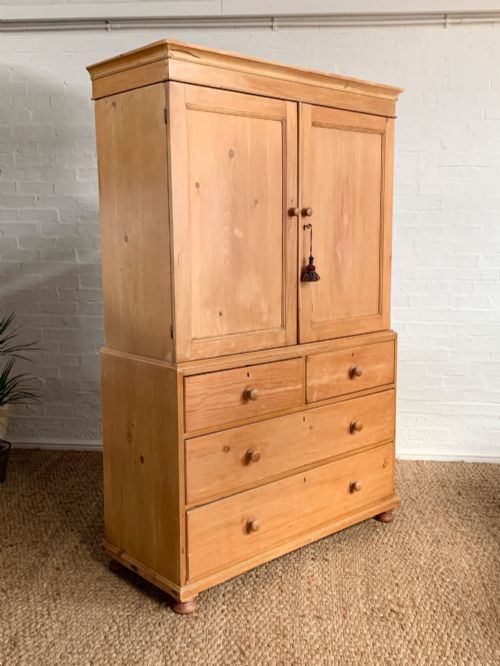
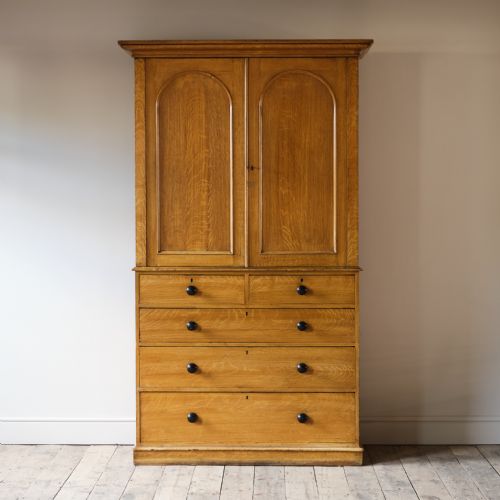
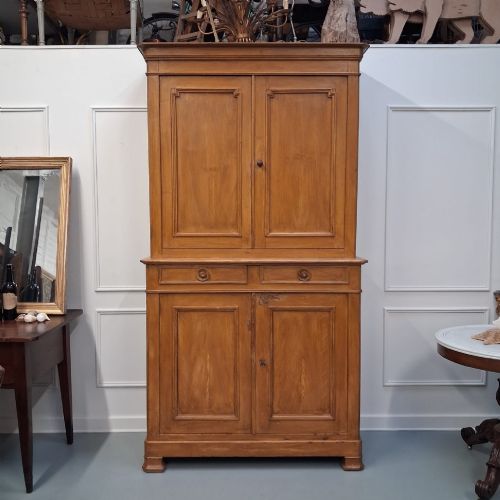
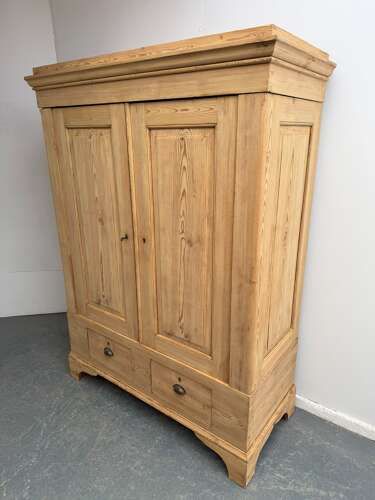
Country pine press pieces are utilitarian storage furniture built for practical rooms, offering generous proportions and straightforward timber character that suit modern interiors.
Country Pine Press
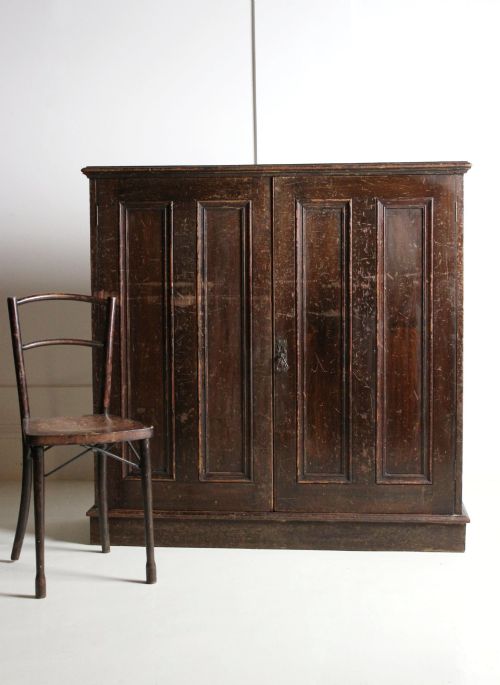
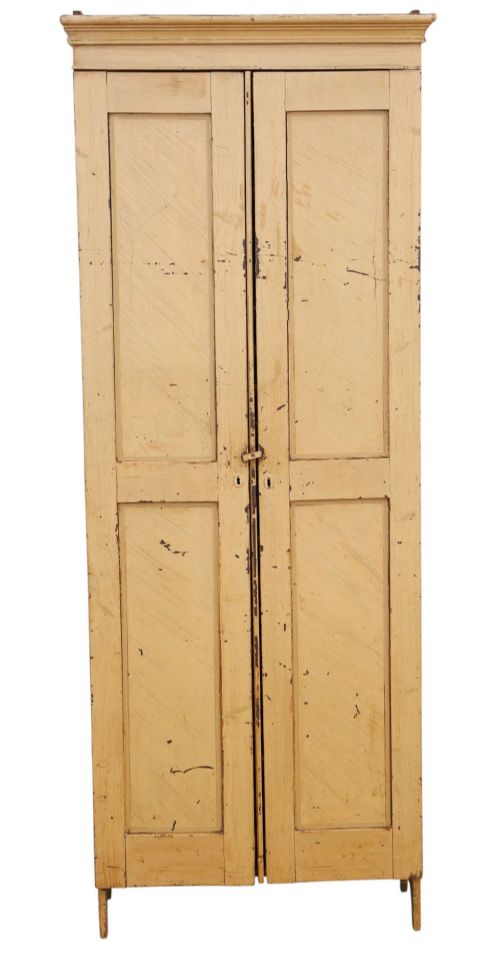
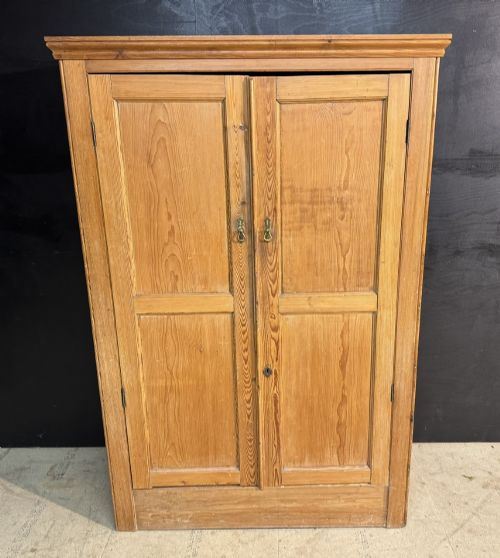
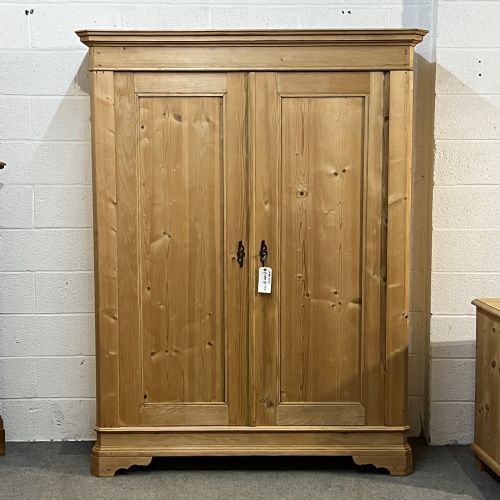
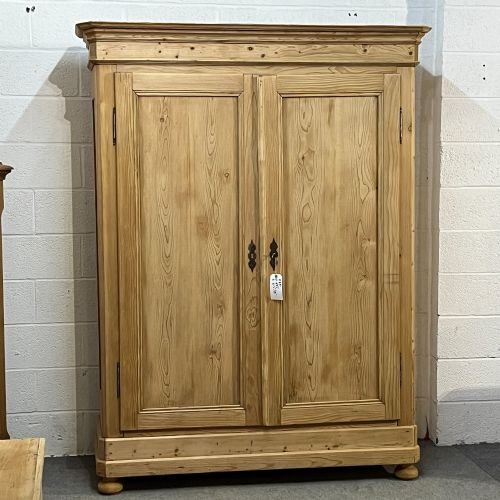
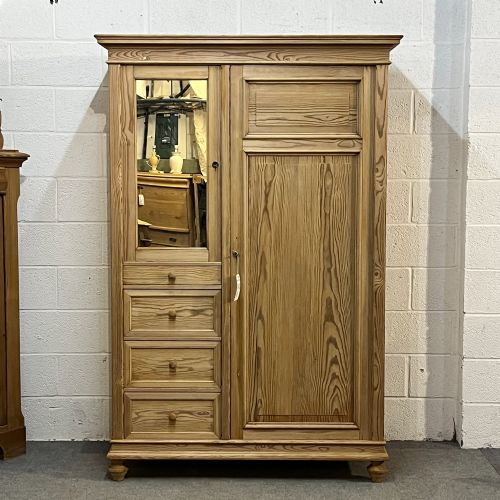
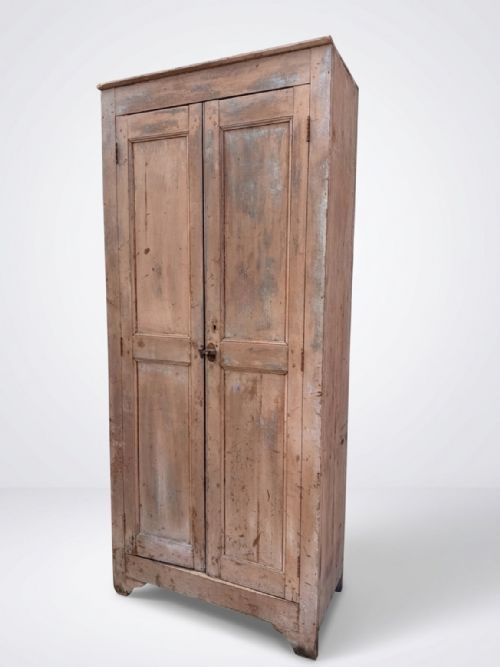
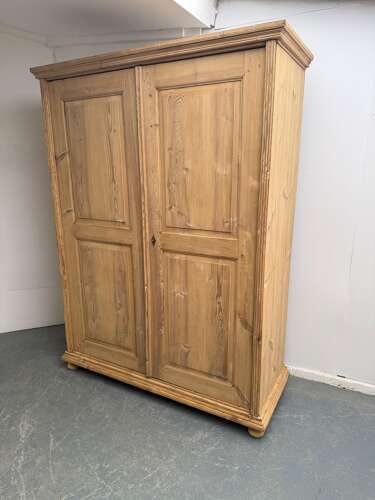
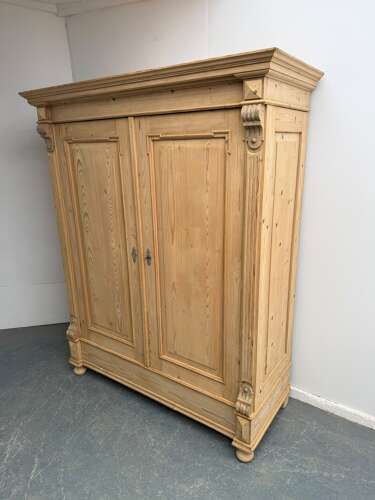
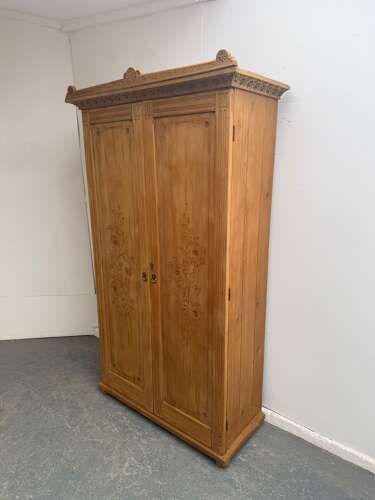
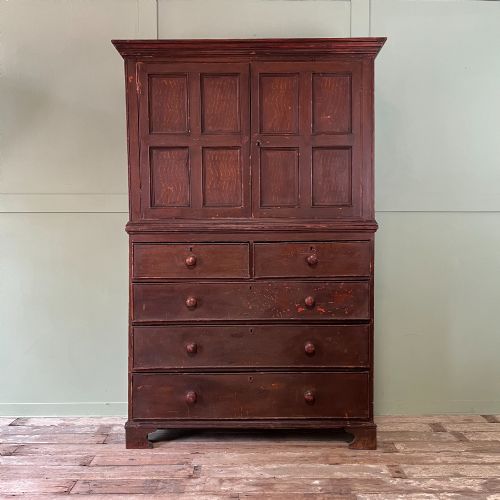
A country pine press comprises large storage items such as housekeeper cupboards, linen presses, wardrobes, and tall cabinets designed for domestic utility. These pieces originate across diverse regions, appearing in French provincial, Scandinavian, Irish, and English vernacular styles.
Most examples date from the Georgian and Victorian eras through to the early twentieth century, spanning stripped, waxed, and painted finishes. Buyers frequently encounter tall double wardrobes, compactum configurations with drawers, and large shelved storage cupboards.
The domestic role of these items dictated their robust construction, often built to dismantle for transport or tailored for specific household linen and clothing storage.
Construction and Materials
Makers utilised solid pine timber, frequently combined with iron, brass, and glass hardware for hinges, handles, and panel glazing. Surfaces received treatments ranging from traditional wax polish to scumble glaze, original paint layers, or bare wood left to patinate.
Joinery methods included knockdown frames designed for easy assembly in domestic chambers, alongside panelled doors, pegged joints, and moulded cornices. Drawers and internal shelving utilised straightforward secondary timbers alongside the primary pine structure.
Listings span Georgian, Victorian, and early twentieth-century eras, featuring pine alongside iron, brass, and glass elements.
Assessing Quality and Character
Quality rests in the preservation of original surfaces, such as early paint finishes or scumble work, versus stripped pine surfaces that have lost their historical patina. Proportion also dictates standard, with well-balanced architectural mouldings and original hardware elevating a piece above plain utilitarian boxes.
Structural integrity depends upon the survival of original knockdown mechanisms, drawers that run true, and doors that hang evenly within their frames. Untouched regional details and purposeful interior fittings distinguish superior examples from standard workshop production.
Johnston’s of London
The Country Pine Press Glossary
- Press cupboard
- A large enclosed storage piece traditionally used for linens and garments, often featuring upper shelving or hanging space above lower drawers.
- Housekeeper cupboard
- A substantial utility cabinet with multiple doors and internal shelving designed for domestic storage in large country houses.
- Knockdown
- Furniture constructed to dismantle into major sections using pegged or bolted joints for ease of transport between rooms.
- Scumble paint
- A decorative surface technique where a translucent glaze is manipulated over a lighter base coat to imitate graining or texture.
- Compactum
- A multi-functional wardrobe combining hanging compartments, shelves, and internal drawers within a single unified case.
Country Pine Press: Frequently Asked Questions
What is a country pine press?
A country pine press is a heavy wooden storage cabinet or wardrobe built for domestic utility, typically featuring panelled doors and internal shelving or hanging space.
These pieces served functional roles in farmhouses, country houses, and provincial homes before entering the antique market as versatile storage furniture.
How do I care for waxed pine?
Waxed pine surfaces require regular application of bees-wax polish applied with a soft cloth to maintain the timber moisture and natural sheen.
Avoid placing these pieces near direct heat sources or strong sunlight, which can dry out the historic wood and cause timber movement.
Can these wardrobes be dismantled?
Many period pine wardrobes and presses were built with knockdown construction, using internal bolts or pegs so they could be taken apart for transport.
This historical design feature makes it practical to move large cupboards up staircases and through standard doorways today.
How do I date a pine cupboard?
Dating relies on examining construction methods, hardware types, moulding profiles, and surface finishes alongside timber characteristics.
Georgian examples tend to display simpler architectural proportions and hand-planed surfaces, whereas Victorian pieces often feature heavier mouldings and factory-produced ironmongery.