


Arched Panel Linen Press
An arched panel linen press is a substantial storage piece built to hold household textiles, combining deep drawers with upper cupboard doors.
Arched Panel Linen Press
An arched panel linen press is a substantial storage piece designed for domestic textiles, uniting upper doors with lower drawer sections. Buyers seeking this form encounter vernacular and formal pieces spanning the eighteenth and nineteenth centuries.
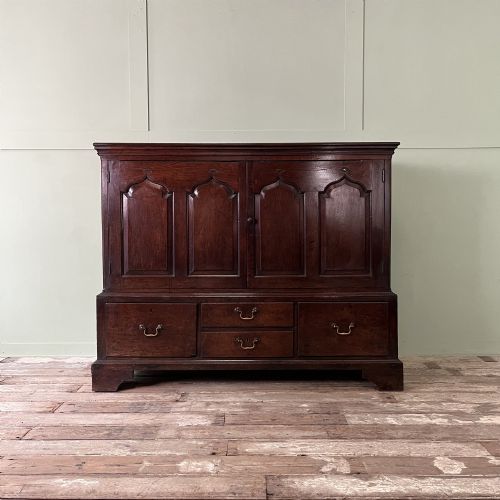
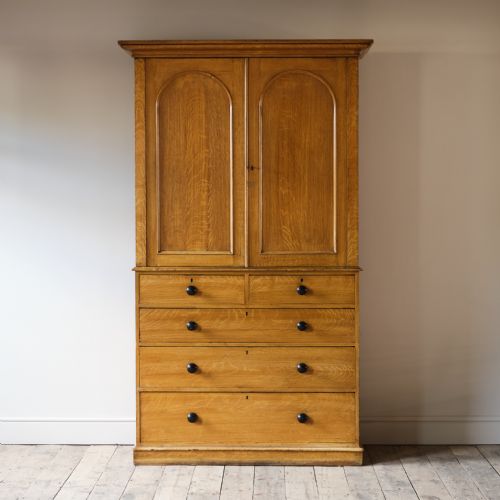
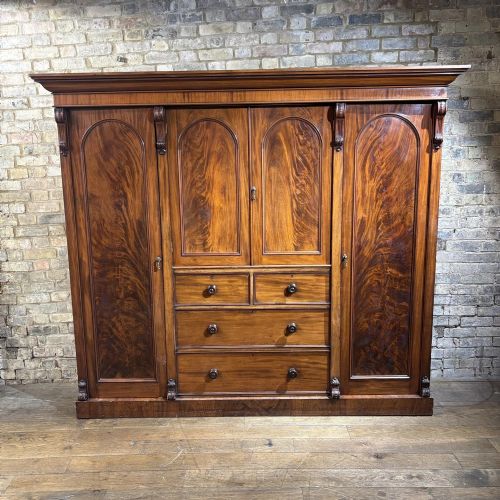
The pieces on this page appear in native timbers like oak and pine, alongside mahogany and flame mahogany veneer. Vernacular examples from Wales sit alongside formal Georgian breakfront wardrobes and Victorian housekeeper cupboards.
Regional variations include low press cupboards and dwarf proportions, reflecting the diverse domestic architecture of English and Welsh country homes. These forms evolved to store household linens and apparel before fitted closets became standard.
How they were made
Cabinet makers constructed these large wardrobes from solid oak, mahogany, and pine, frequently applying flame mahogany veneer to formal Georgian and Victorian façades. Iron and brass hardware, including hinges and drawer pulls, secured the heavy timber doors and operational compartments.
Vernacular pieces often retain original paint surfaces or surface wax applied to native pine and oak panels. Joinery techniques varied from traditional frame and panel construction to knockdown wardrobe designs intended for easy transport.
Some nineteenth-century pine wardrobes arrived with knockdown engineering, proving that flat-pack furniture troubled Victorian movers just as much.
What varies in quality
Quality in an arched panel linen press rests on the selection of timber, such as figured mahogany or well-figured oak, and the integrity of the structural joinery. Finer examples display balanced proportions, clean architectural lines, and undisturbed original surfaces like early paint or polish.
The sophistication of the internal configuration and the execution of panel mouldings distinguish regional vernacular workshop output from high-style urban cabinet making. Surface preservation and the retention of original brass and iron hardware further separate standard domestic utility items from exceptional survivals.
The Arched Panel Linen Press Glossary
- Linen press
- A tall storage cabinet featuring upper doors enclosing sliding trays or shelves above a chest of base drawers. Originally utilised for flat linen storage before the widespread adoption of modern clothes hangers.
- Breakfront
- A piece of furniture where the central section projects forward from the flanking outer sections. This architectural arrangement creates depth and visual rhythm on large wardrobes and cupboards.
- Vernacular
- Objects built by local craftsmen using regional traditions and native timbers rather than following strict metropolitan design books. Welsh and English country cupboards frequently display these distinct regional characteristics.
- Flame mahogany veneer
- A thin slice of wood cut from the fork of a mahogany tree to produce a distinctive flickering flame pattern. Cabinet makers applied this decorative veneer to the primary surfaces of formal Georgian and Victorian furniture.
- Knockdown wardrobe
- A large piece of furniture engineered to disassemble into modular components for transport and installation in rooms with narrow access. These sectional designs appear frequently in nineteenth-century pine pieces.
Arched Panel Linen Press: Frequently Asked Questions
What is an arched panel linen press used for?
An arched panel linen press provides substantial storage space for household textiles, garments, and bedding within deep drawers and upper shelving compartments. Historically, the internal sliding trays kept flat linens neatly pressed before the adoption of modern hanging wardrobes.
Today, these versatile pieces serve effectively in bedrooms, hallways, or living spaces for general storage while adding strong period character to a room.
How do I date an arched panel linen press?
Dating relies on examining the timber species, construction methods, hardware, and overall stylistic details evident in the piece. Eighteenth-century examples frequently utilise solid native oak with hand-planed panels, while Victorian pieces often incorporate mahogany veneers or painted pine.
Regional vernacular pieces often retain construction traits specific to rural workshops in Wales or England during the seventeen-hundreds and eighteen-hundreds.
Are these pieces difficult to move?
Many large wardrobes and press cupboards are heavy multi-part structures built from solid timbers like oak and mahogany. Some nineteenth-century examples feature knockdown construction designed for straightforward dismantling into manageable sections.
Assessing the scale and modularity of a specific piece helps determine the logistical requirements for transport and placement in a home.
How should I care for antique timber furniture?
Maintaining antique timber requires stable indoor humidity levels and protection from direct sunlight to prevent wood shrinkage and surface cracking. Regular dusting with a soft cloth preserves wax finishes and original painted surfaces without stripping historic patina.
Avoiding harsh chemical polishes ensures the timber and any applied veneers age gracefully over time.