


Country Oak Wall Shelves
Country oak wall shelves bring honest timber and utilitarian charm to a room, offering practical display space with centuries of character.
Country Oak Wall Shelves
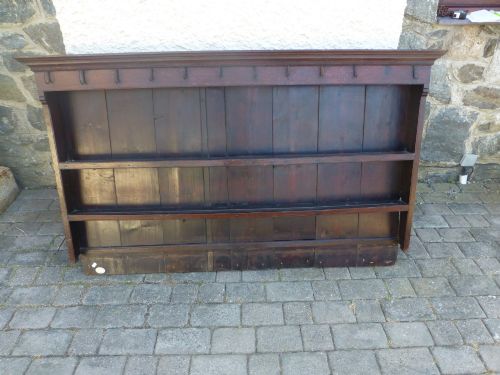
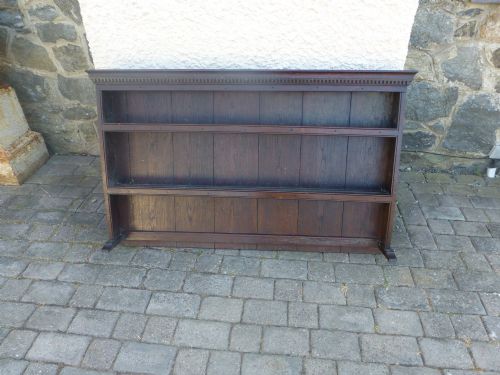
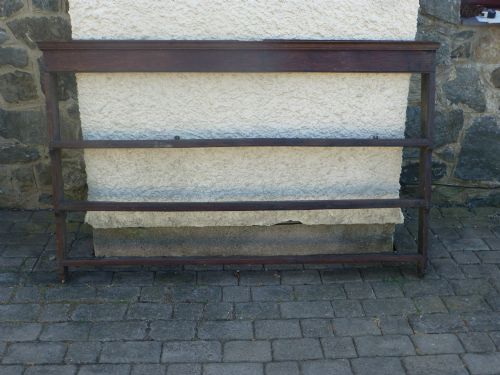
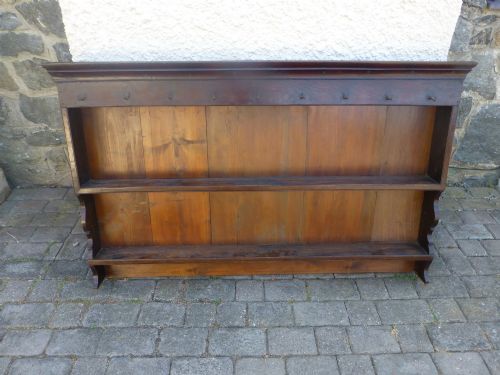
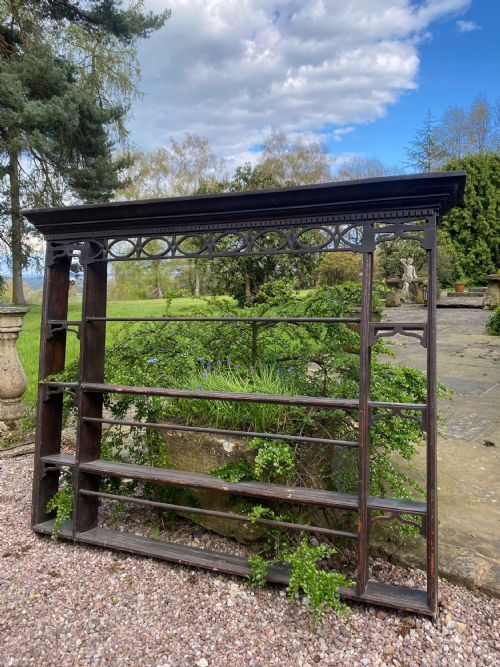
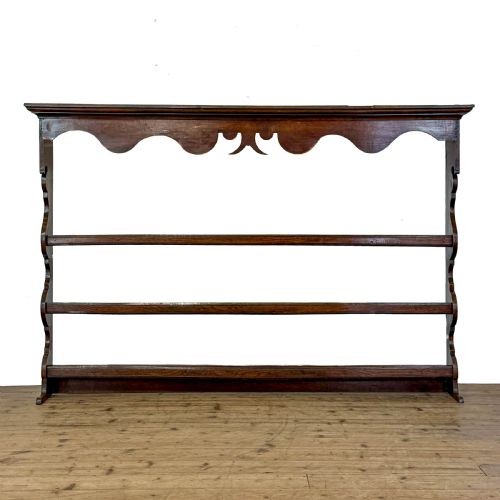
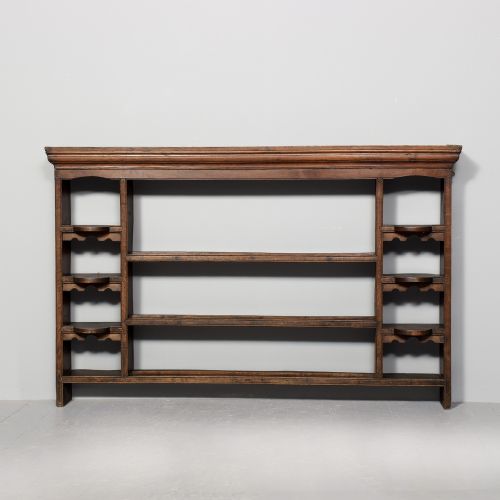
Country oak wall shelves encompass practical hanging storage designed for displaying ceramics, books and household goods in domestic settings. When you search for country oak wall shelves, you encounter sturdy plate racks, hanging cupboards and open wall shelves dating from the seventeenth, eighteenth and nineteenth centuries. These pieces originate from English and French provincial traditions, reflecting the utilitarian needs of historical kitchens and living spaces.
The most frequent form on this page is the eighteenth century oak delft plate rack, designed to display earthenware plates upright against a wall. Alongside these, the selection includes Georgian hanging wall shelves, corner cupboards and carved wooden racks. Pieces span periods from the seventeenth century through to the nineteenth century, with styles ranging from English country and French provincial to George III and Gothic Revival.
Materials and Construction
Construction relies primarily on solid oak, frequently supplemented with pine for internal linings or backboards, and occasionally incorporating secondary timbers like mahogany or bleached oak. Cabinetmakers shaped these woods using hand tools, assembling frames with pegged mortise and tenon joints to ensure durability under daily household use.
Metal elements are strictly functional, utilising iron brackets or hinges and brass fittings where appropriate for hanging and securing doors. Surfaces are finished simply, allowing the natural grain of the wood to show, sometimes enhanced by historical staining or the pale tone of bleached oak.
Listings feature oak alongside auxiliary materials such as pine, iron, brass and mahogany, spanning eras from the seventeenth to the nineteenth century.
Quality and Character
Quality in these pieces rests upon the integrity of the timber and the honesty of the construction, rather than elaborate ornamentation. Superior examples display well-figured oak boards with deep patination accumulated through generations of domestic use.
Proportion and architectural detail distinguish finer pieces, such as those featuring shaped shelves, Corinthian columns or thoughtful moulding profiles. The balance between the structural frame and the open display tiers dictates the visual success of the shelf.
The Country Oak Wall Shelves Glossary
- Delft rack
- A wall-mounted wooden rack specifically designed with grooves or rails to display earthenware plates upright. These fixtures formed a central feature in historical dining areas and kitchens.
- George III
- A British design period spanning from seventeen sixty to eighteen twenty, characterised by classical restraint and refined proportions. Pieces from this era often exhibit balanced architectural detailing.
- Provincial
- Describing furniture made in regional areas rather than metropolitan workshops. Such pieces often combine traditional local techniques with straightforward, functional designs.
- Corinthian columns
- Classical architectural columns featuring ornate, acanthus-leaf capitals. Their presence on country furniture denotes a maker borrowing high-style motifs for regional commissions.
- Patina
- The surface sheen and deep colour developed by wood over centuries of handling, exposure to light and waxing. It serves as a visual record of an object's age and history.
Country Oak Wall Shelves: Frequently Asked Questions
How were country oak wall shelves used originally?
Historically, these shelves served primarily in kitchens and dining rooms to store and display everyday ceramics, pewter plates and household provisions. Their open design kept frequently used tableware within easy reach.
Over time, they evolved to display decorative pottery and collections, moving from purely utilitarian workspace fixtures to prominent interior display units.
How do I hang a heavy antique wall shelf safely?
Hanging antique oak shelves requires locating secure wall studs or masonry anchor points to bear the substantial weight of solid hardwood. Professional fixings rated for heavy loads ensure the piece remains stable.
Due to the weight of oak timber and the added load of displayed ceramics, professional installation is strongly recommended to protect both the wall and the antique.
Can I place antique oak shelves in a modern kitchen?
These shelves integrate successfully into contemporary kitchens, providing practical open storage for everyday dinnerware, glassware or cookbooks. The warm timber tones soften modern kitchen aesthetics.
Care should be taken to site them away from excessive moisture, direct heat sources and grease splatters to preserve the historical wood finish.
How do I tell an 18th-century rack from a later copy?
Eighteenth-century examples display construction characteristics such as hand-cut peg joints, irregular board widths and surface patination developed through prolonged use. Tool marks and timber shrinkage offer reliable indicators of age.
Later reproductions often feature uniform machine-sawn timbers, modern fixings and artificial distressing that lacks the genuine integration of wear seen in period pieces.