


Rustic Kitchen Display Rack
A rustic kitchen display rack brings practical charm and honest utility to a room, offering open timber shelving to organise everyday earthenware.
Rustic Kitchen Display Rack
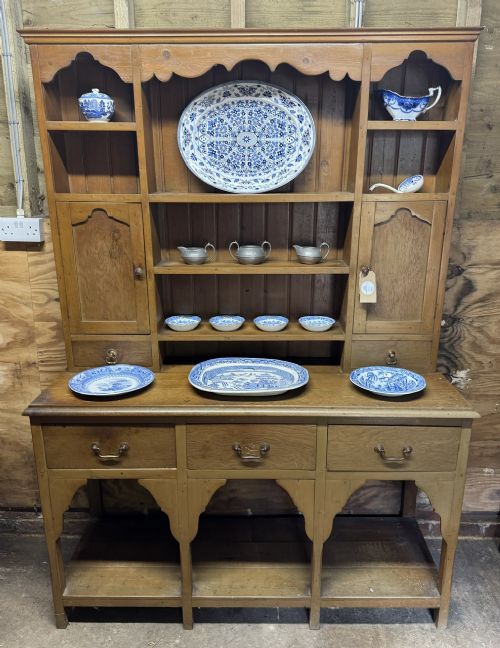
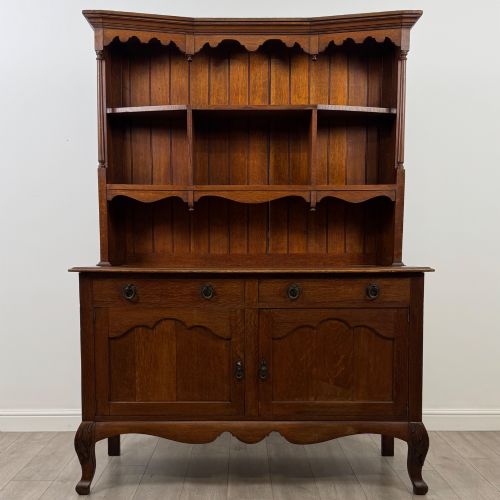
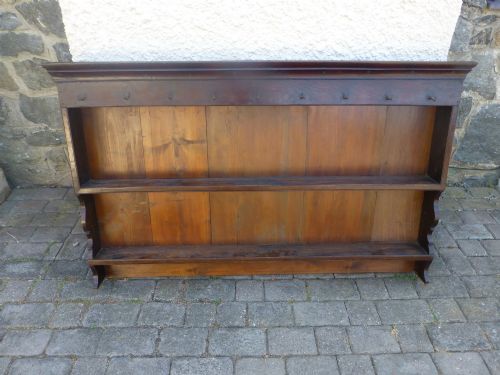
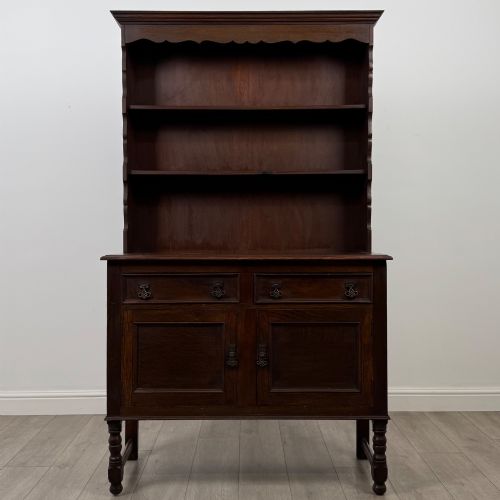
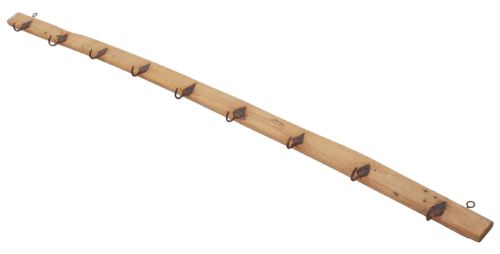
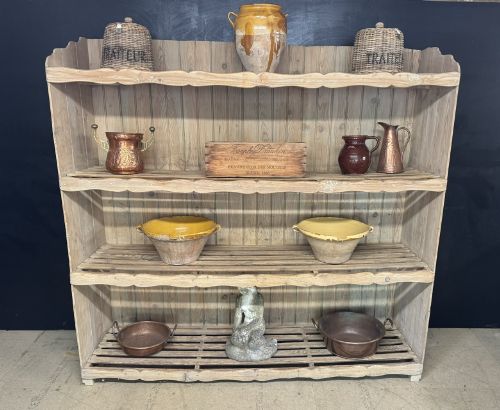
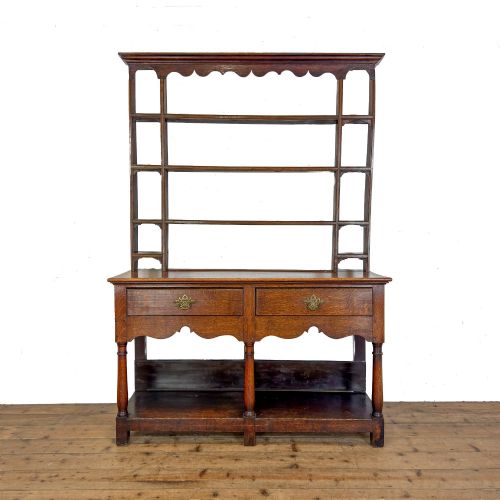
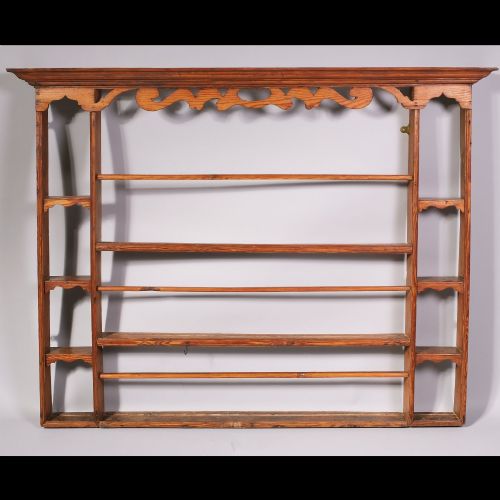
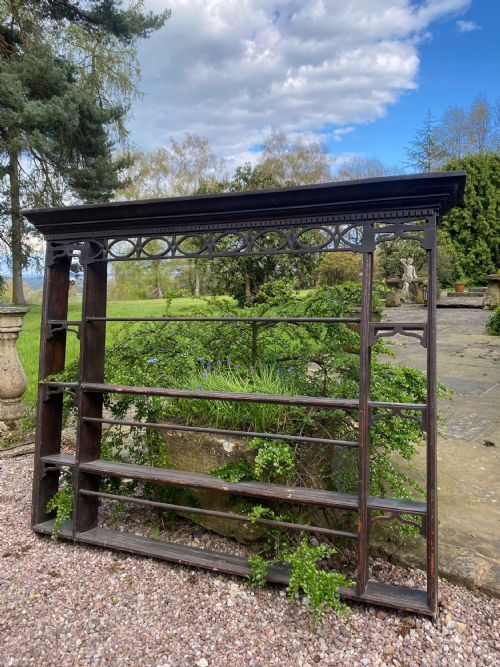
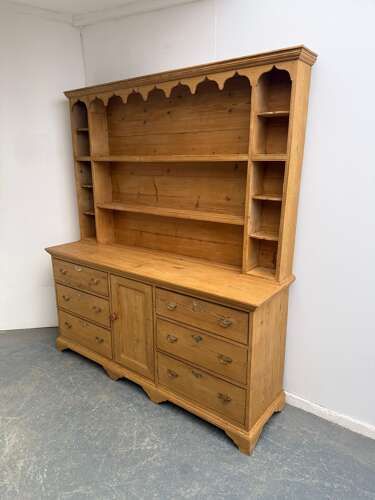
A rustic kitchen display rack serves as a functional wall-mounted or freestanding framework designed to hold plates, spoons, and kitchen vessels in plain sight. These pieces range from simple wall-hung pine plate racks and spoon racks to substantial multi-part Welsh dressers incorporating open display tiers above enclosed cupboards.
When searching for a rustic kitchen display rack, buyers frequently encounter pieces originating from the eighteenth and nineteenth centuries, spanning Georgian, Victorian, and Edwardian periods. Regional variations such as Welsh vernacular furniture and French provincial vaisseliers appear alongside country oak and pine forms.
The most common versions on this page combine sturdy timber construction with straightforward open shelving meant for daily culinary use. Many examples retain original patinated surfaces, showing the gentle wear of generations of domestic life.
Materials and construction methods
These items are constructed predominantly from domestic timbers such as oak, pine, and chestnut, selected for their structural strength and availability in country workshops. Joinery relies on traditional methods including pegged mortise and tenon joints to bear the weight of heavy ceramics.
Secondary materials such as wrought iron, brass, and pewter frequently appear as hanging hooks, game racks, and decorative fittings, adding functional contrast to the timber. Surfaces are often finished simply with wax or historic painted layers, preserving the natural grain and texture of the wood.
What separates examples in quality
Quality in these pieces is dictated by the integrity of the timber and the retention of an authentic, undisturbed surface finish. Retaining original backboards, fretwork details, and period hardware elevates a piece above later adaptations or heavily restored examples.
The proportion and balance of the open display tiers relative to the base structure distinguish regional vernacular workshops from basic utility furniture. Pieces that preserve their original patination and honest signs of age demonstrate the highest grade of craftsmanship.
The Rustic Kitchen Display Rack Glossary
- Delft rack
- A wall-mounted or dresser-integrated wooden shelf specifically designed with plate grooves and retaining rails to display ceramics upright.
- Welsh dresser
- A large kitchen furniture form featuring a lower base of cupboards or drawers surmounted by open display shelving for tableware.
- Vaisselier
- A French regional term for a cupboard or rack built specifically to house and display dining vessels and kitchenware.
- Trefid spoon
- An early dining spoon featuring a flattened, three-lobed terminal handle, often associated with seventeenth and eighteenth-century cutlery collections displayed on racks.
- Patina
- The surface sheen and colour acquired by wood and metal over centuries through handling, waxing, and atmospheric exposure.
Rustic Kitchen Display Rack: Frequently Asked Questions
How do I hang a wall display rack safely?
Heavy timber wall racks require secure anchoring directly into structural wall studs or masonry using appropriate weight-bearing fixings to support the load of ceramics.
Distributing the weight evenly across multiple fixing points ensures the antique frame remains stable against the wall during daily use.
Can I use these racks for modern heavy plates?
Most historic racks feature shallow display grooves designed for lighter earthenware and pewter rather than thick modern stoneware.
Checking the depth of the plate ledge and the angle of the retaining rail before loading helps prevent crockery from slipping forward.
How do I clean an old pine or oak rack?
Dusting gently with a dry, soft cloth is sufficient for maintaining timber surfaces without disturbing the historic wax or dry-scraped paint.
Avoid using modern liquid polishes or harsh detergents that can penetrate porous old wood and soften the original surface finish.
How can I tell eighteenth-century oak from later timber?
Early oak displays distinct medullary rays, often referred to as silver grain, visible from quarter-sawing techniques used by period joiners.
Hand-cut peg marks, irregular board widths, and surface tool signatures further indicate construction methods typical of eighteenth-century workshops.