
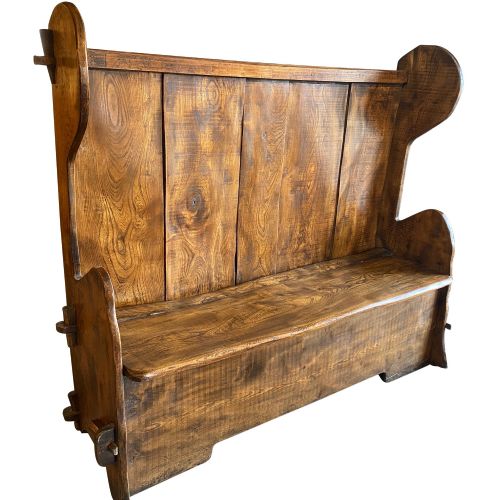
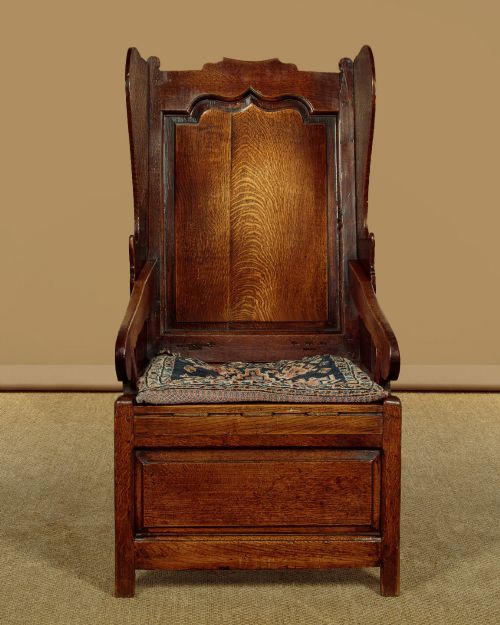
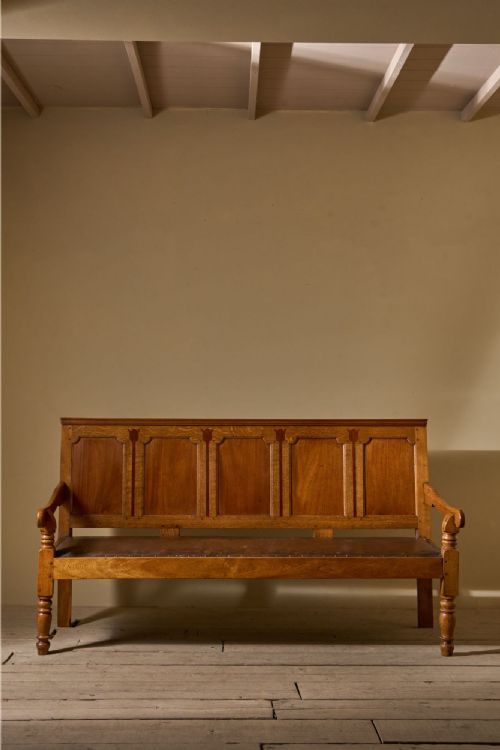
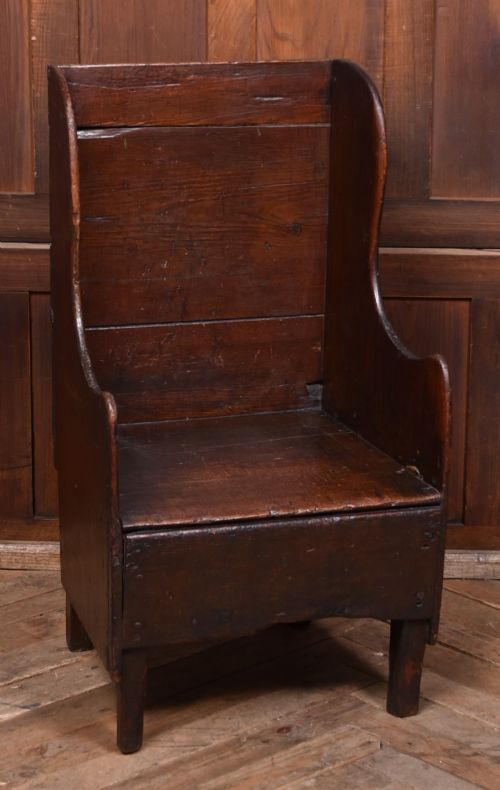
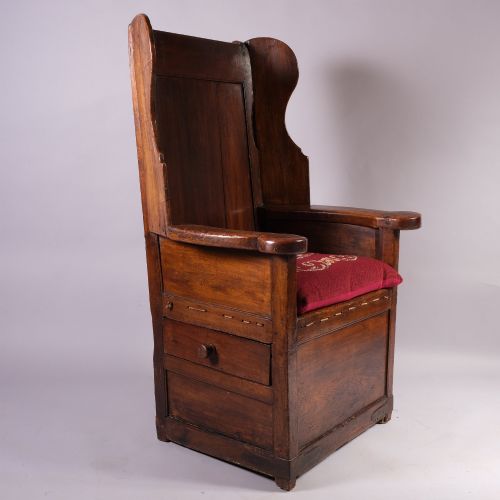

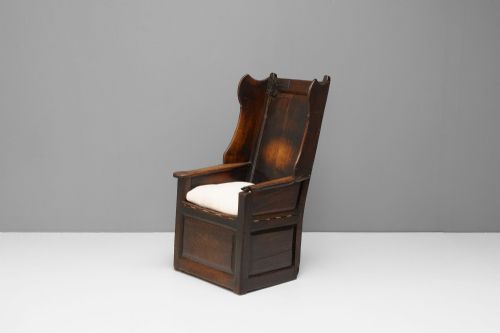


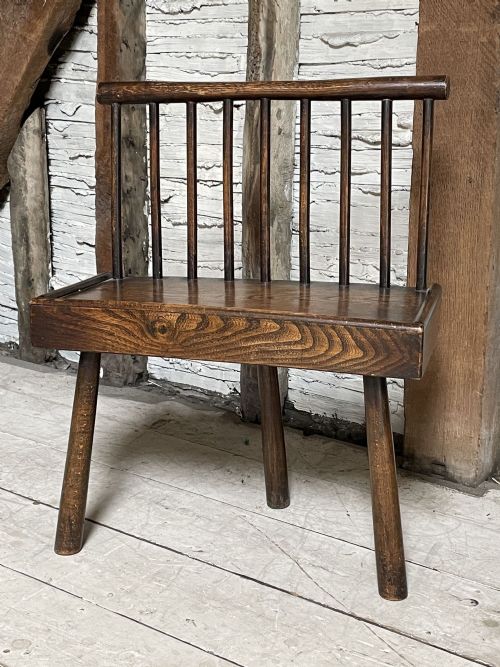
Country Oak Settle Chair
These country oak settle chairs offer sturdy vernacular seating built for centuries of farmhouse use.
Country Oak Settle Chair
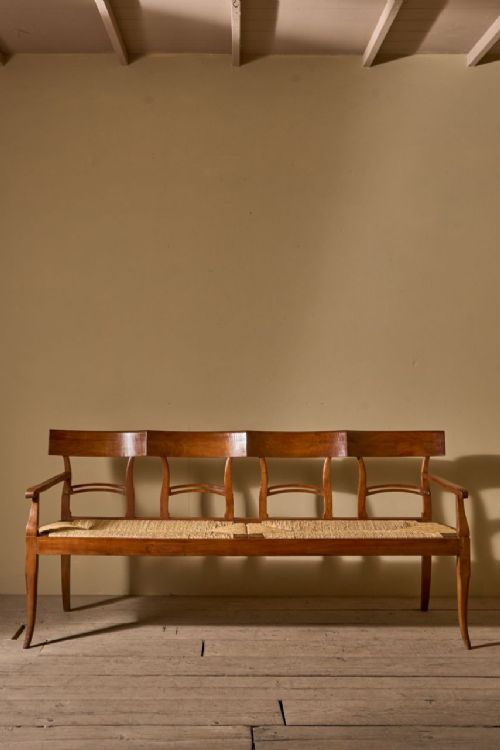
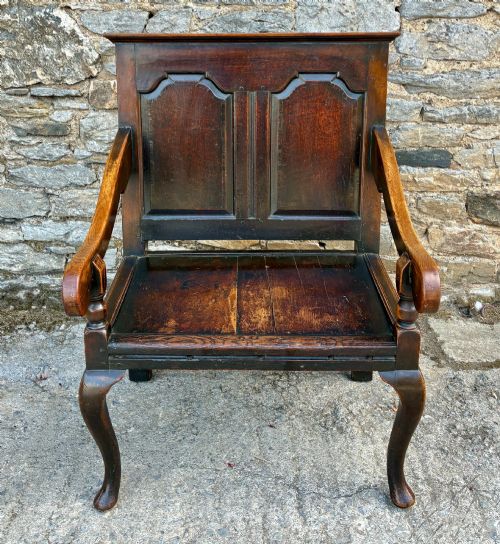
A country oak settle chair combines the high-backed protection of a traditional bench with domestic seating. You will frequently encounter examples shaped from solid oak alongside variants in elm, fruitwood, and cherrywood.
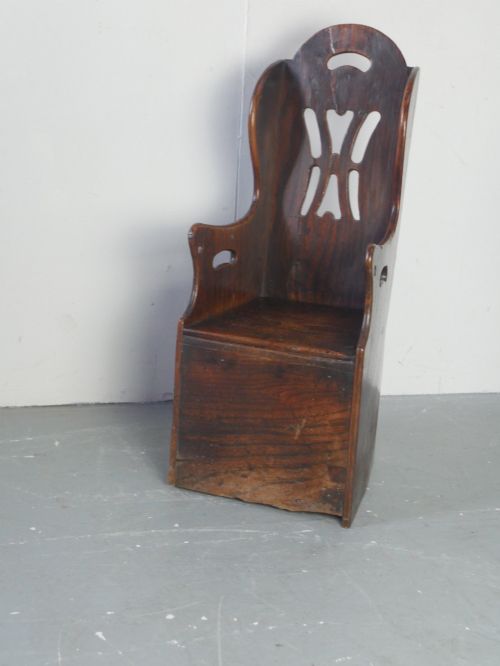
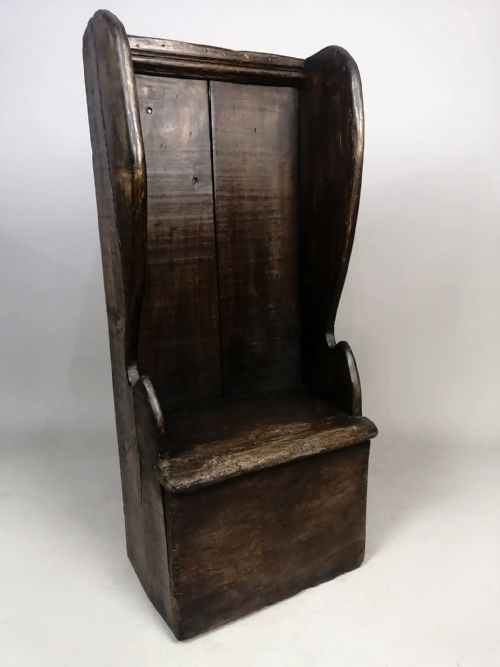
The selections span centuries of rural joinery, stretching from the seventeenth century vernacular through Georgian periods into the nineteenth century. Forms range from compact childs lambing chairs to small hall benches and box settles equipped with storage.
Makers built these pieces for farmhouse interiors to block cold draughts and provide reliable daily seating. The inventory includes regional pieces such as Lakeland lambing chairs and Dutch country open arm designs.
Construction and Materials
Joiners relied on solid native timbers, primarily oak, elm, and fruitwood, shaped by hand into heavy boards and structural frames. Carpenters utilised natural grain patterns and sturdy pegged joints to withstand daily wear.
Seating surfaces often incorporated woven rush or simple wooden planks, sometimes softened with fabric, textile, or leather upholstery. Details like tulip decoration and stickback frames reveal the regional traditions of the makers.
Listings feature oak, elm, fruitwood, cherrywood, and rush spanning from the seventeenth century through the Georgian era to the twentieth century.
Assessing Quality and Character
Proportion and scale dictate the visual weight of each piece, distinguishing modest vernacular work from more ambitious regional design. Settles of small proportions and neat childs chairs demonstrate tighter timber selection and careful scaling.
The integrity of the structural frame and the preservation of original timber surfaces define the distinction between fine examples and heavily altered pieces. Patina accumulated through generations of use marks the best surviving seating.
The Country Oak Settle Chair Glossary
- Settle
- A wooden bench with a high back, solid arms, and often a closed base or storage compartment underneath. This design helped keep fireside occupants warm by blocking cold air.
- Lambing chair
- A traditional armchair featuring high panelled or winged sides designed to shield the sitter from draughts. These often include enclosed lower sections.
- Vernacular
- Architecture and furniture built by local craftsmen using traditional regional methods and materials rather than academic architectural styles. These pieces reflect the practical needs of rural communities.
- Box settle
- A form of seating featuring a built-in storage box beneath the hinged seat. It served a dual purpose in tight rural cottages.
Country Oak Settle Chair: Frequently Asked Questions
What is a country oak settle chair?
A country oak settle chair is a traditional wooden seat featuring a high back and solid arms. These pieces were designed for farmhouse kitchens to block draughts.
They combine the function of a bench with the comfort of an armchair, often including enclosed lower sections or storage boxes.
How were these chairs used?
Rural households placed these seats near hearths to protect occupants from cold stone floors and chilly air currents. The high wings and solid panels trapped warmth around the sitter.
Versions with storage compartments held blankets, dry goods, or household items, making them central to daily domestic life.
How do I live with one?
These sturdy pieces anchor hallways, kitchens, and living spaces with strong historical presence. Their practical proportions allow them to fit against walls or function as primary seating.
Pairing them with simple interiors lets the warm grain of oak, elm, and fruitwood stand out without visual clutter.
How do I tell periods apart?
Early seventeenth and eighteenth century pieces display heavy pegged construction and simpler vernacular lines. Details like tulip decoration or stickback frames point towards specific regional styles.
Nineteenth century variants often incorporate refined proportions or alternative timbers such as cherrywood alongside traditional oak.