
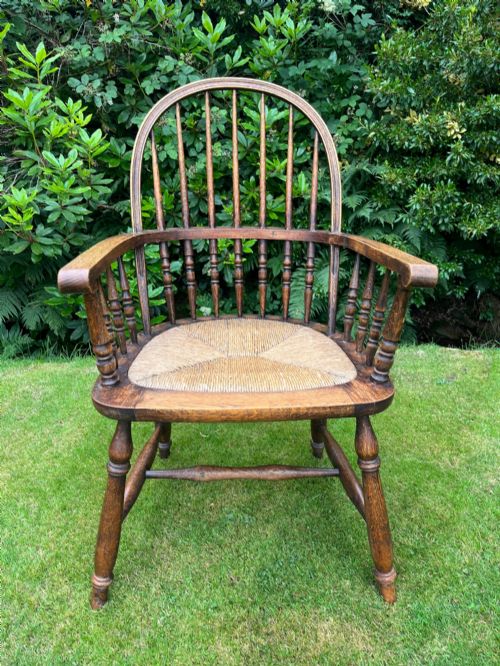
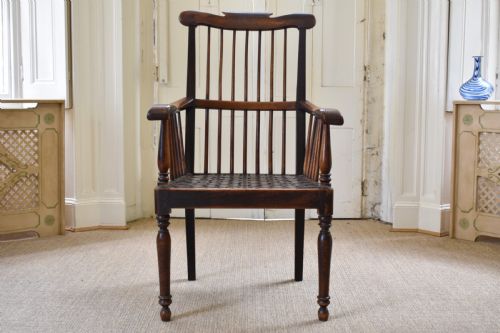
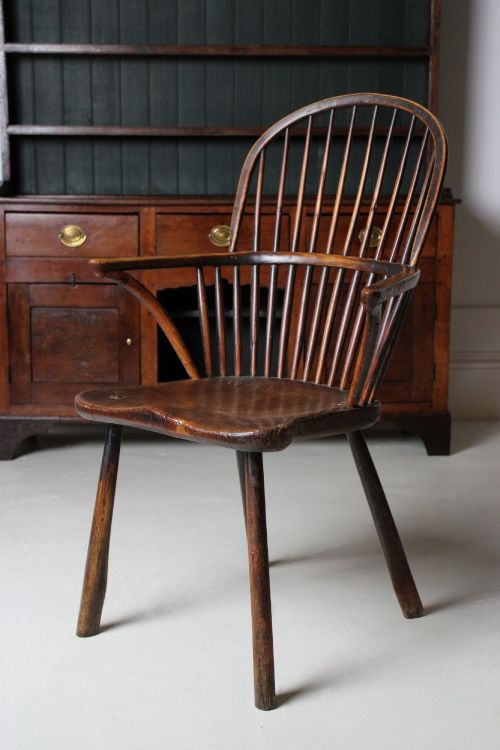
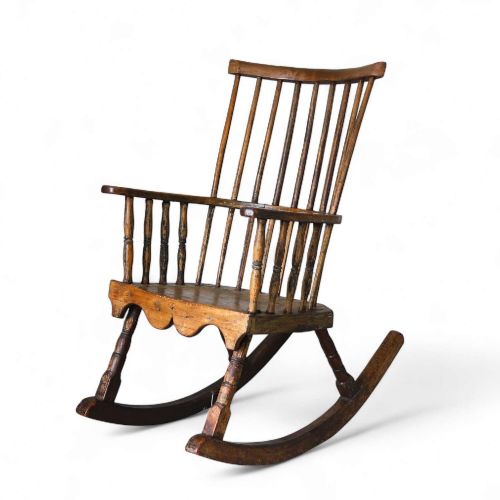
English Country Vernacular Chair
An english country vernacular chair brings honest regional character and unpretentious timber grain into a modern room.
English Country Vernacular Chair
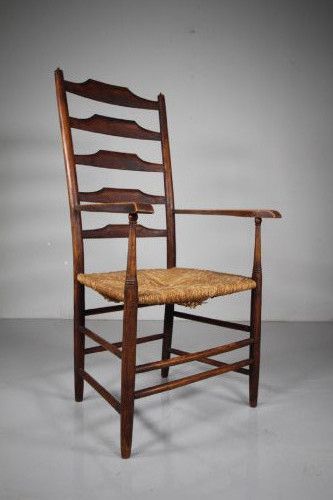
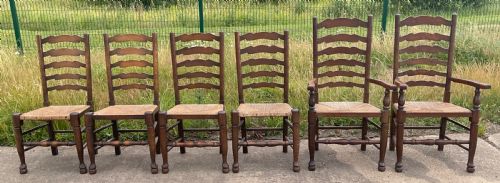
The timeline stretches from the seventeenth century through the georgian era and the victorian period, encompassing nineteenth-century stickbacks and low backs. Buyers encounter single armchairs, carvers, and matched or harlequin sets intended for kitchen and dining use.
Regional variations appear across the Thames Valley, Lancashire, Shropshire, and the West Country. Makers utilised whatever local timber stood to hand, resulting in distinct domestic seating designed for practical daily life.
Materials and Construction
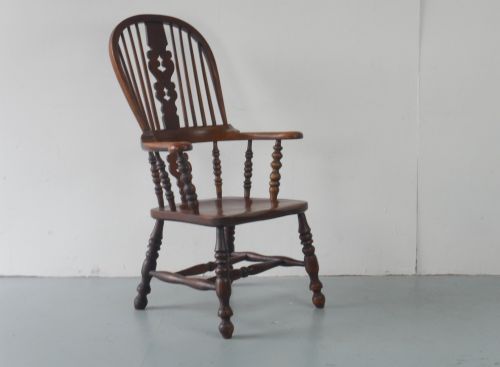
Construction relies on a combination of native hardwoods selected for specific structural properties. Elm frequently forms the solid saddle seat, while ash, beech, or fruitwood provide flexible spindles and steam-bent hoops.
Many examples incorporate yew or laburnum for visible grain pattern and rich colour. Joinery typically employs traditional dowelled and wedged joints, securing turned legs directly into thick wooden seats without metal fixings.
Materials recorded include elm, ash, yew, beech, laburnum, fruitwood, and rush.
Substance and Surface
Quality rests upon the integrity of the timber and the depth of the surface patina accumulated over centuries of use. Examples retaining original brown paint or unstripped waxed grain display superior historical character.
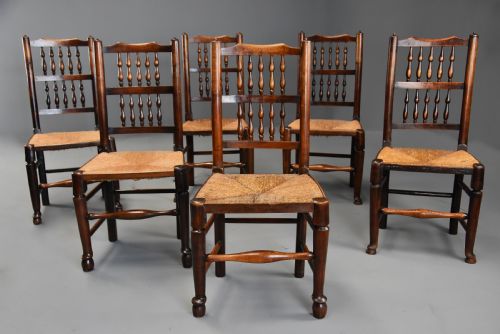
Proportion and comfort distinguish standard utility seating from finer artisan output. Substantial arm bow profiles, well-turned spindles, and retained height in the legs separate exceptional survivors from heavily worn pieces.
Philip Clissett·Gabbitass Worksop maker·Fred Walker Rockley
The English Country Vernacular Chair Glossary
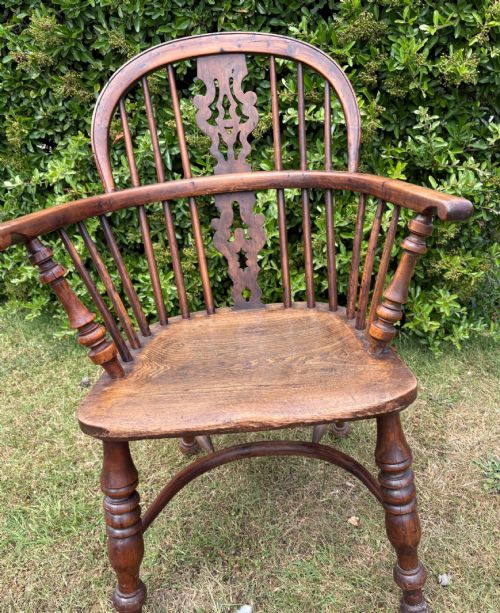
- Windsor chair
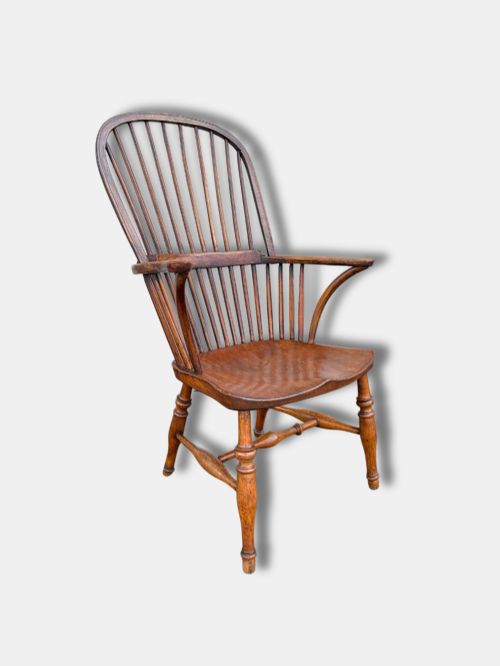
- A wooden seating form featuring a solid carved saddle seat into which the legs and back spindles are independently tenoned. This construction provides robust domestic utility while allowing for sculptural back designs.
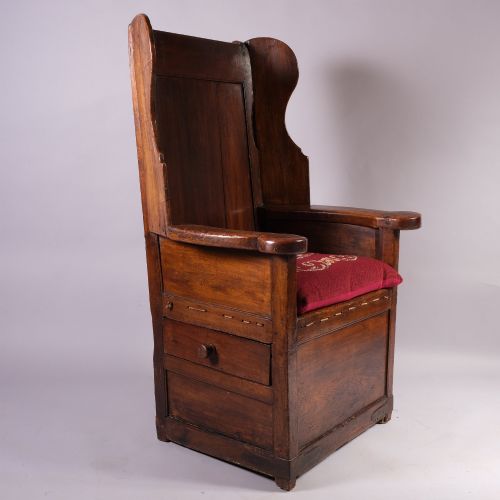
- Lambing chair
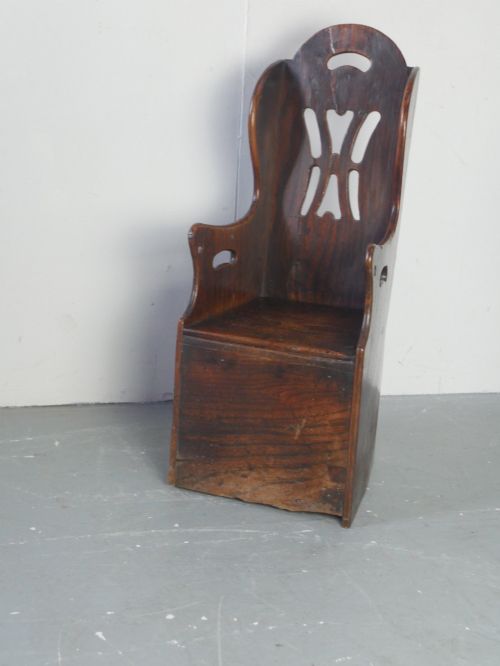
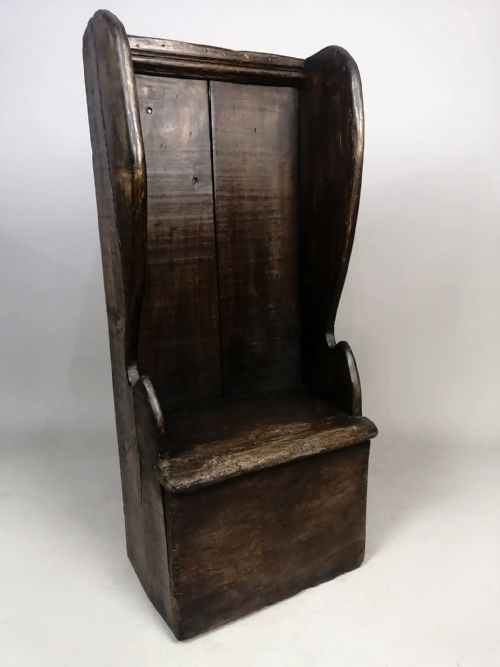
- An enclosed high-backed armchair traditionally positioned near the hearth to shield occupants from draughts. These often include solid wood wings and a storage box beneath the seat.
- Comb-back
- A Windsor chair variation where the top rail resembles the spine of a comb, with vertical spindles rising through a horizontal arm bow. This regional design offers reliable back support.
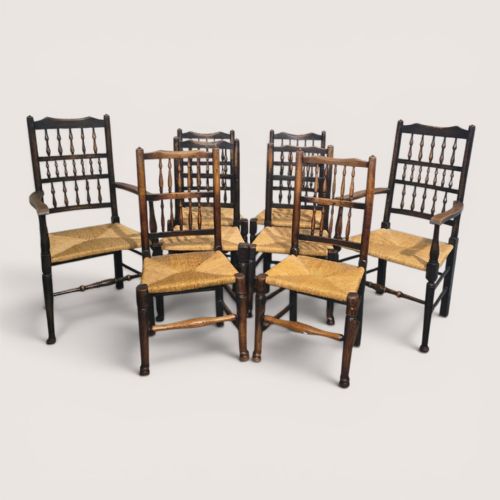
- Spindle back
- A lighter seating form constructed with a vertical grid of turned wooden rods fitted between horizontal rails. These serve well as flexible dining or kitchen chairs.
- Patina
- The lustrous surface sheen developed on timber through decades of handling, polishing, and natural oxidation. A deep patina indicates authentic age and continuous care.
English Country Vernacular Chair: Frequently Asked Questions
How do I identify a Thames Valley Windsor chair?
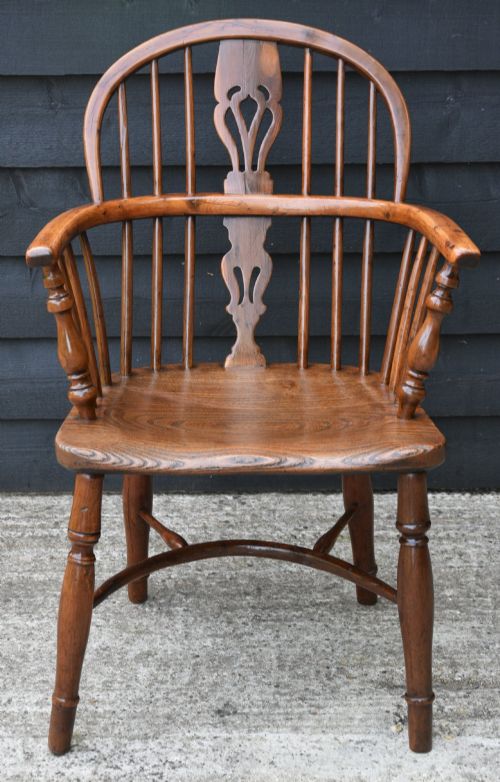
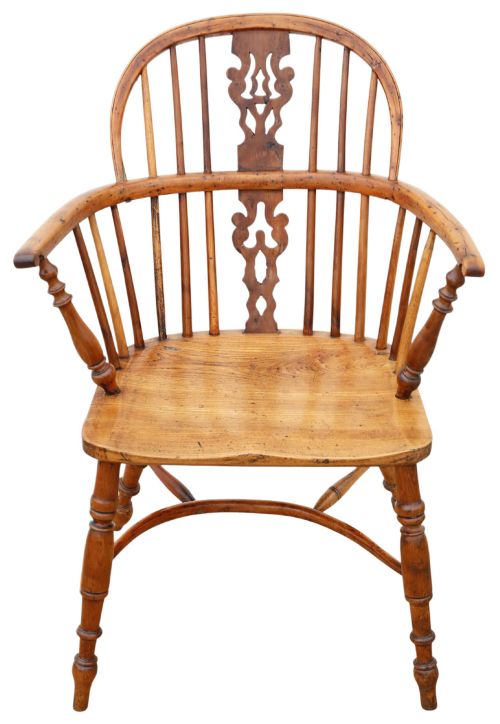
Thames Valley pieces often feature distinctive yew or elm construction with expressive splats and sculpted arms. Local makers in this region produced balanced proportions and refined turnings.
Look for distinctive details like a central pierced splat in the low back or hoop back, paired with stable crinoline stretchers joining the legs.
Are these chairs suitable for daily dining use?
Rural chairs were built for hard domestic service and remain remarkably sturdy for everyday seating. Their solid timber construction handles regular movement without losing structural integrity.
Ensure seat heights match modern tables, as older pieces can occasionally measure lower than contemporary standard dining chairs.
What timber combinations are most common?
Maker workshops paired elm seats with ash or beech bendings because each wood served a specific structural purpose. Elm resisted splitting under the carved seat depression.
Ash and yew provided the necessary elasticity to form curved arm rails and slender vertical spindles without snapping during steam bending.
How should I care for historic surface finishes?
Maintain the dry timber surface using natural beeswax applied sparingly and buffed with a soft cloth. Avoid modern silicone polishes that penetrate the grain and alter the historic appearance.
Keep wooden seating away from direct heat sources and dramatic humidity shifts to prevent timber shrinkage and joint movement.