
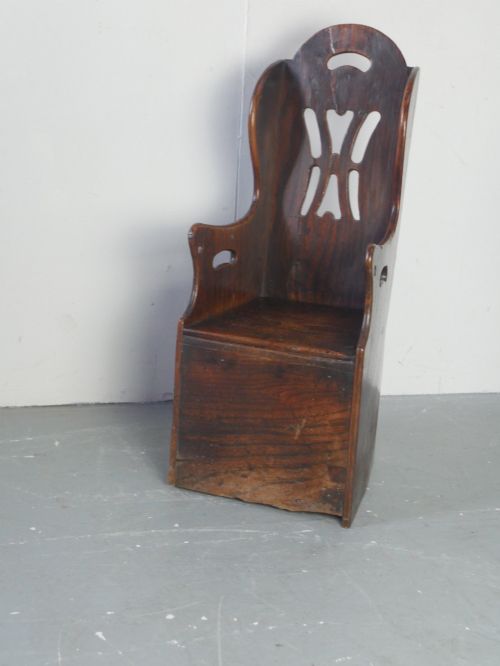
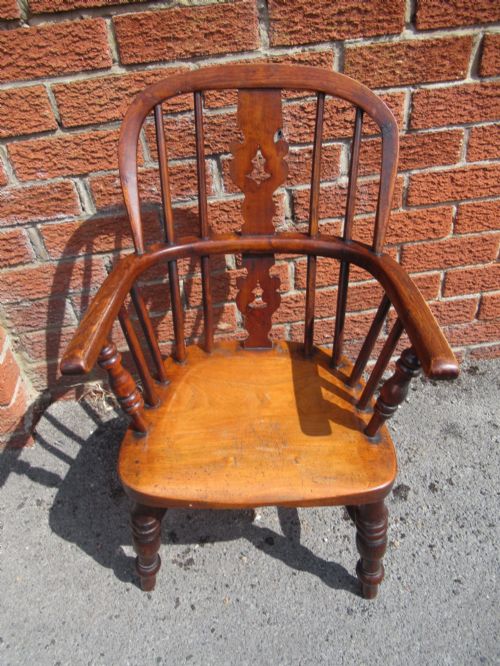


Pierced Back Childs Chair
A pierced back childs chair is a sturdy piece of seating scaled down for youngsters, offering both enduring charm and practical everyday utility.
Pierced Back Childs Chair
You are most likely to meet 19th century and Georgian examples on this page. They follow the traditional Windsor design tradition scaled down for domestic use.
The origins of these items lie in English country workshops where local timber was shaped into functional household furniture. Their small proportions reflect historical domestic life rather than modern toy furniture.
How they were made
Maker's workshops relied on native hardwoods including elm, yew, oak, ash, and beech to build these durable children's seats. Yew wood and elm appear frequently in the listed items, chosen for their grain and strength.
Traditional greenwood working techniques involved turning spindles and bending timber to form the characteristic Windsor backs. The pierced splat back design provides both structural support and decorative detail to the chair frame.
Listings feature periods spanning from the mid-eighteenth century through to the twentieth century, with nineteenth-century examples appearing most frequently.
What varies in quality
The choice of timber creates a distinct difference between standard examples and finer pieces. Yew wood components with pronounced figuring elevate the overall presence of the chair compared to plain elm or beech.
The refinement of the turning on the legs and spindles distinguishes workshop output. Crisp lines in the pierced splat and balanced proportions in the arm supports show greater skill from the maker.
The Pierced Back Childs Chair Glossary
- Windsor chair
- A chair built with a solid wooden seat into which the legs and back spindles are direct-inserted. This construction method ensures notable sturdiness.
- Pierced splat
- A vertical wooden slat in the centre of the backrest featuring a cutout design. It lightens the visual weight of the frame while retaining strength.
- Yew wood
- A dense native timber prized for its rich grain patterns and warm amber tones. Cabinet makers selected it for high-status country furniture.
- Rocking chair
- A seating form mounted on curved wooden rockers to allow gentle motion. Children's versions provide a comforting seat for young occupants.
Pierced Back Childs Chair: Frequently Asked Questions
What is a pierced back childs chair?
A pierced back childs chair is a miniature wooden seat built in the traditional Windsor style, featuring a decorated vertical splat in the backrest.
These pieces were made for young children in domestic settings, combining small dimensions with the sturdy construction of adult furniture.
Were these chairs used by children?
Yes, these items served as practical seating for youngsters during meals or quiet times in the household.
Their robust timber construction allowed them to withstand daily use by children over generations.
How do I date a childs Windsor chair?
Dating relies on examining the timber species, tool marks, and overall construction methods used by the maker.
Earlier examples from the eighteenth century often display specific turning patterns and wood patination that distinguish them from later nineteenth-century pieces.
What woods were used for these chairs?
Country makers utilised native British hardwoods such as elm, yew, oak, ash, and beech.
Yew wood and elm appear regularly in these listings, offering durable qualities and attractive grain patterns.