
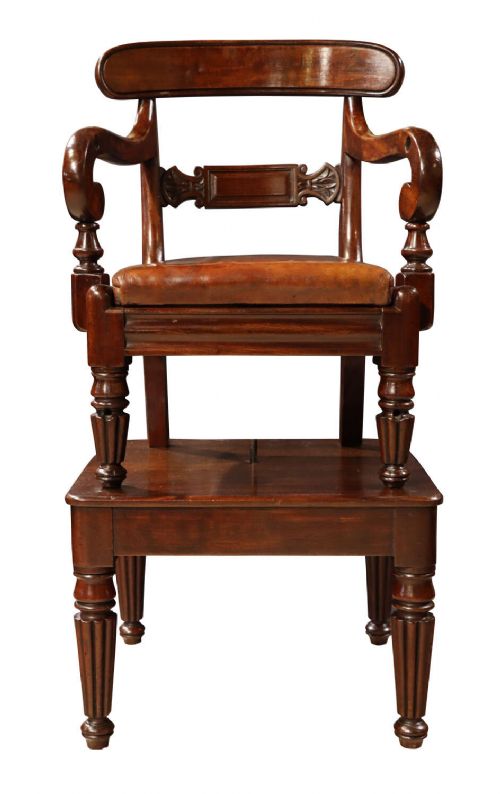


Georgian Children Chair
These georgian children chair examples are miniature seating pieces scaled for youngsters, offering collectors historical domestic charm.
Georgian Children Chair
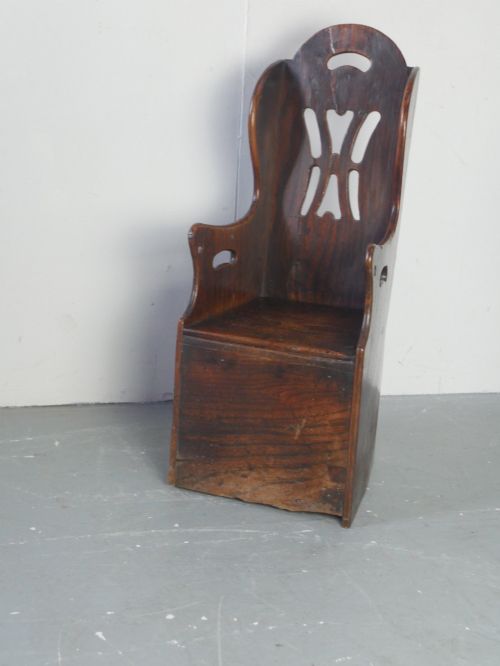
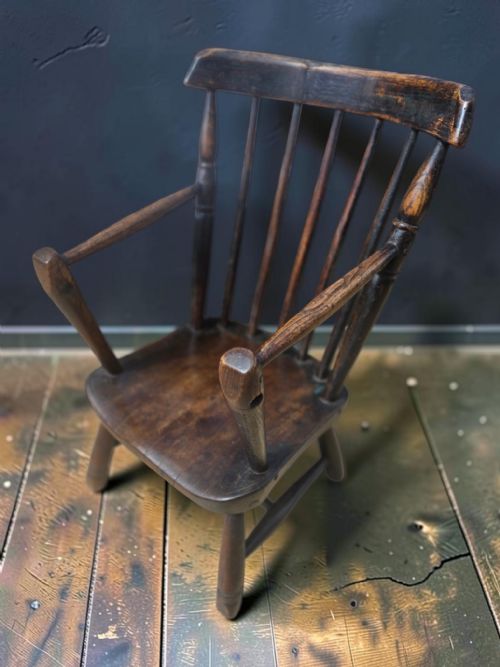
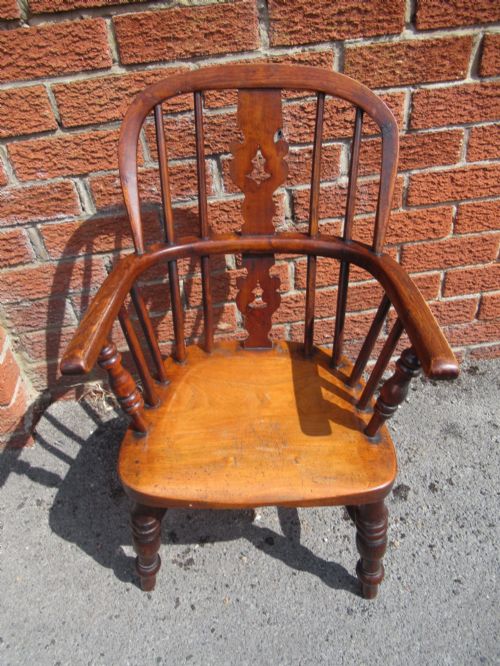
A georgian children chair represents scaled-down domestic seating made during the eighteenth and nineteenth centuries, including high chairs, armchairs, and rocking variants. You will frequently encounter elm, mahogany, and ash examples featuring traditional vernacular or Windsor forms.
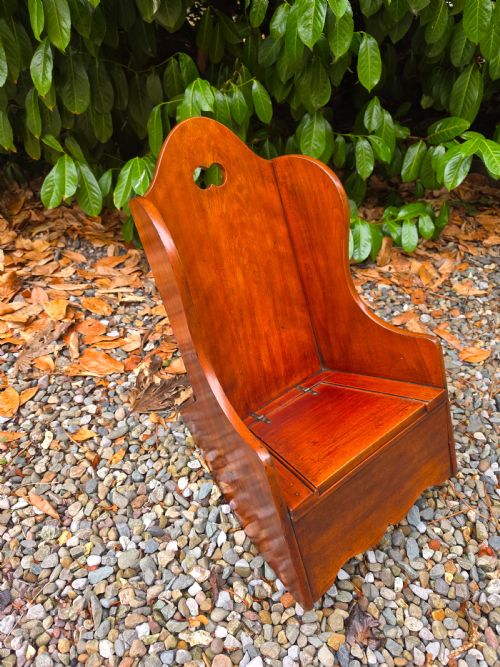
The selection on this page ranges from simple stick-back designs to sophisticated metamorphic high chairs and potty rockers. These items served daily nursery functions for young family members in period households.
Originating largely from English country workshops and cabinet makers, the surviving pieces demonstrate how domestic furniture was adapted in miniature for children. The forms span standard low armchairs, chairs on stands, and high chairs with crinoline stretchers.
How they were made
Cabinet makers and rural bodgers utilised native timbers like elm, ash, yew, and oak, often combining woods within a single Windsor frame. Turned spindles, steam-bent hoops, and saddle seats were constructed using traditional joinery techniques suited to sturdy daily use.
Mahogany and walnut appeared in more formal urban workshops, where makers incorporated caned panels, brass fittings, and upholstered fabric or leather inserts. Regional English makers also applied rush seating to ladderback frames for nursery seating.
A tiny three-month-old subject once sat still long enough to be immortalised in an ink portrait alongside these very seat designs.
What varies in quality
Quality depends on the integrity of the timber selection and the retention of original surfaces, such as aged fruitwood or figured mahogany. Superior examples display refined turning on stretchers and legs rather than coarse utility shaping.
The presence of original elements, including crinoline stretchers, swing stands, and potty mechanisms, separates standard regional pieces from exceptional collector specimens. Proportion and structural balance dictate whether a miniature form maintains true period aesthetic harmony.
The Georgian Children Chair Glossary
- Windsor chair
- A wooden chair built with a solid saddle-shaped seat into which the back and legs are direct-tenoned. These feature bentwood hoops or stick backs.
- Crinoline stretcher
- A bowed reinforcement stretcher connecting the legs of a Windsor chair below the seat. It adds structural rigidity to the underframe.
- Metamorphic
- Describing furniture designed to transform into multiple functional configurations, such as a high chair converting into a low chair and table combination.
- Potty rocker
- A nursery rocking chair incorporating a concealed aperture or commode seat for young children. These combine movement with practical domestic utility.
- Bergere
- An upholstered armchair featuring enclosed cane sides and back panels. This style appears on refined parlour children's seating.
Georgian Children Chair: Frequently Asked Questions
How were high chairs used?
These elevated seats allowed young children to sit safely at table height during family meals. They provided stability and containment for toddlers in busy domestic environments.
Some high chairs included removable trays or attached lower stands, while others featured enclosed safety barriers around the seat.
What woods were used most?
English country makers frequently selected local hardwoods like elm, ash, and yew for their robust Windsor chairs. These timbers offered the necessary flexibility for steam-bending and strength for daily wear.
Urban cabinet makers preferred mahogany and walnut for formal parlour seating, sometimes combining them with brass details or caned inserts.
How do I identify a Windsor?
A Windsor is characterised by a solid wooden seat where legs and back spindles are fitted directly into bored holes. Look for a saddle-shaped seat and turned underframe components.
Regional variations include hoop backs, stick backs, and the distinctive crinoline stretcher connecting the lower legs.