
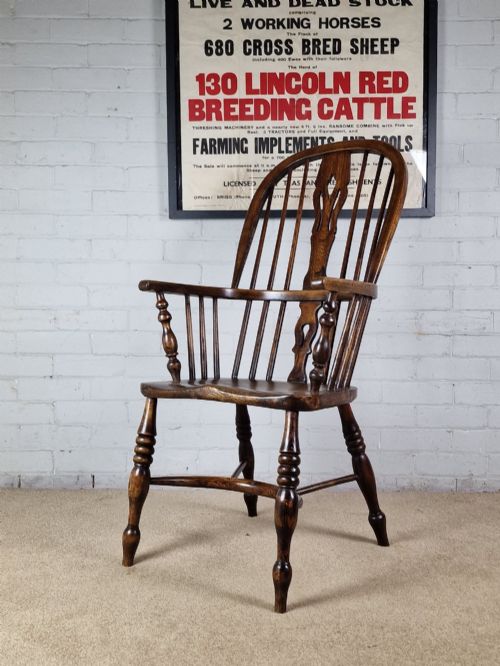
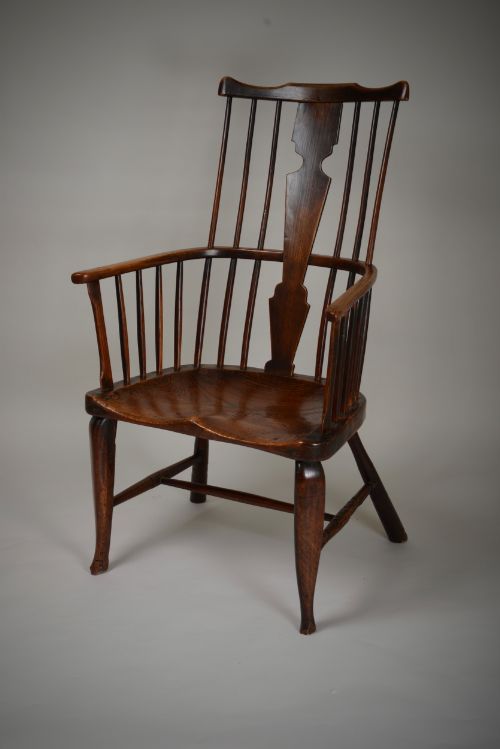
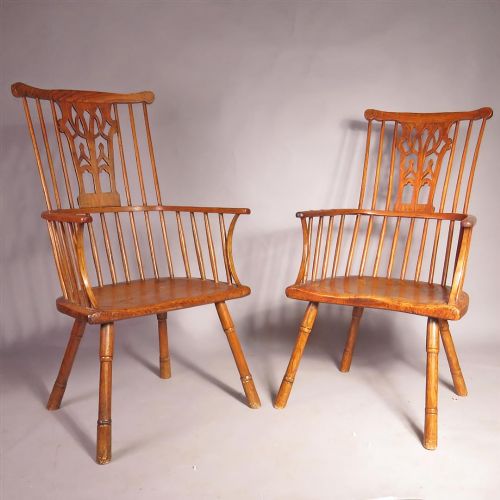
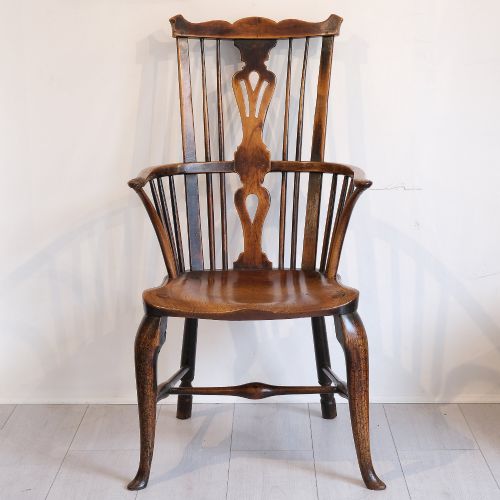
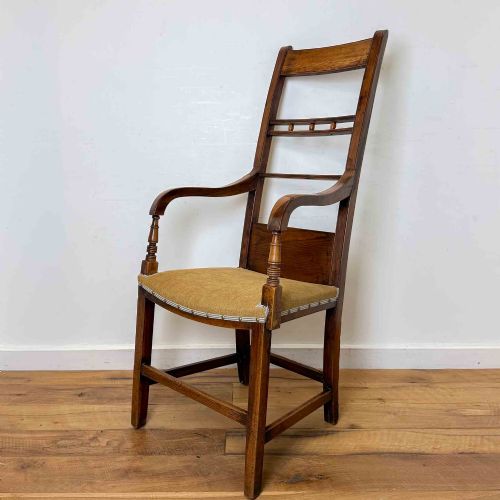


Georgian Elm High Chair
A georgian elm high chair brings robust country vernacular character to early seating, prized for rich timber figuring and honest regional construction.
Georgian Elm High Chair
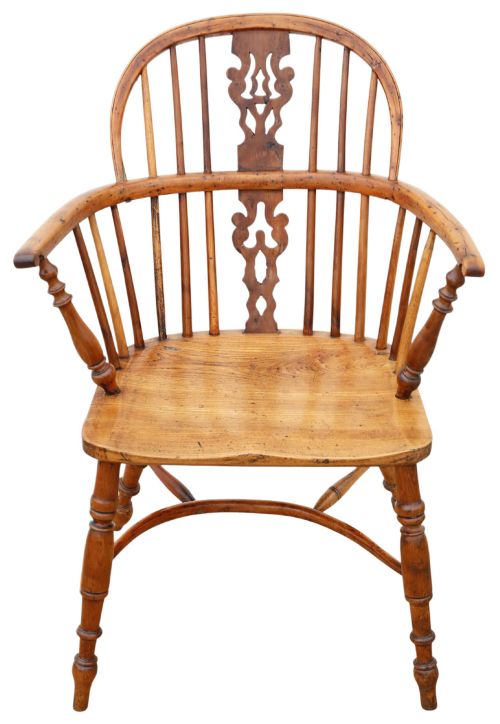
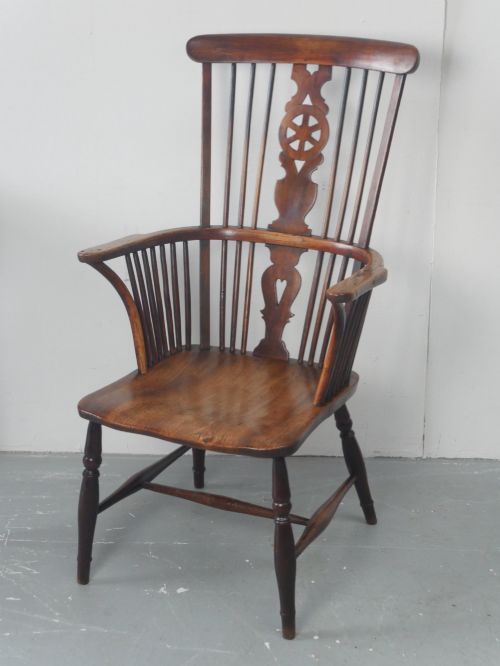
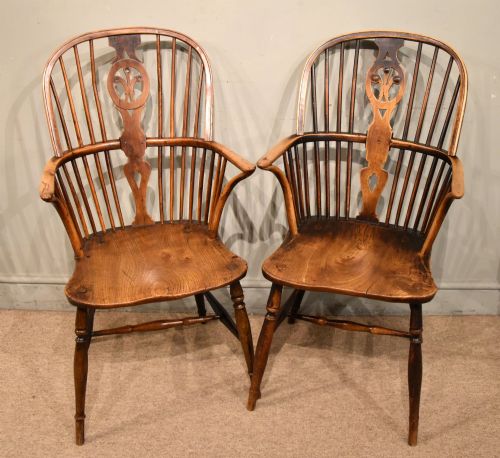
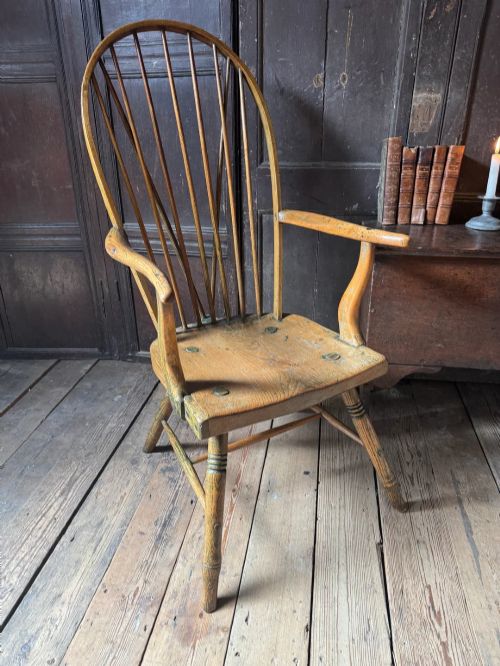
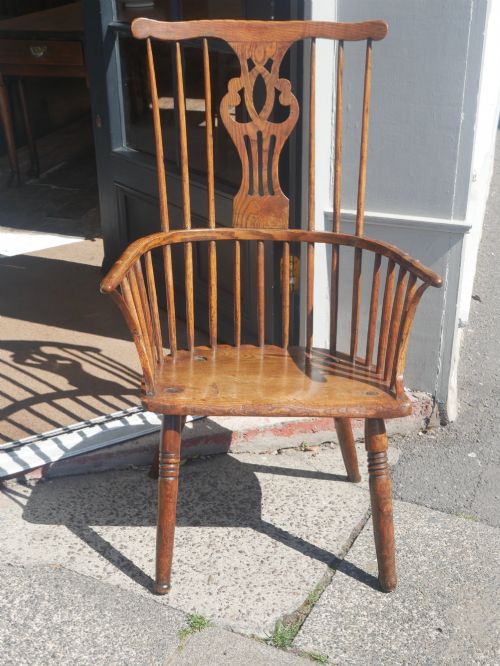
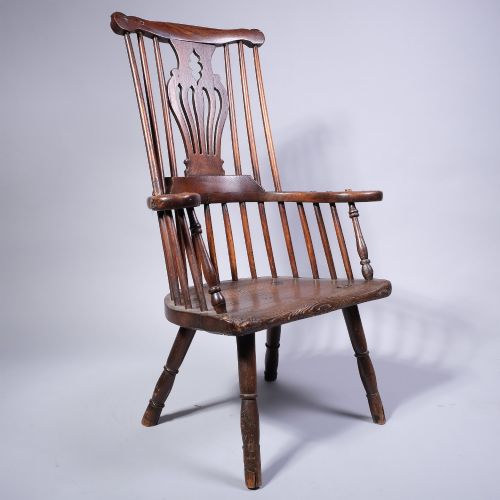
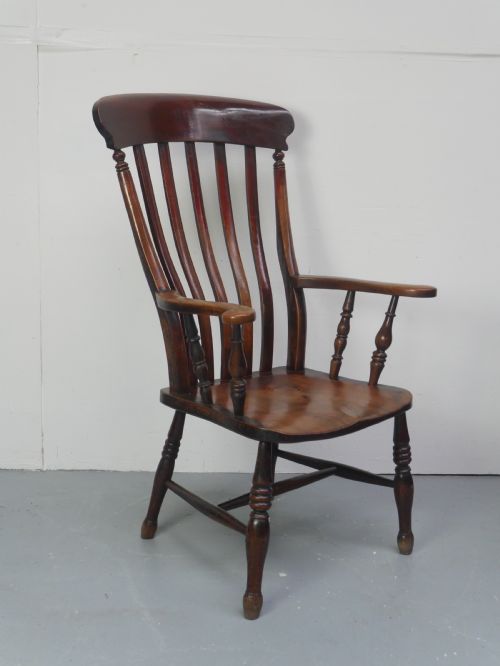
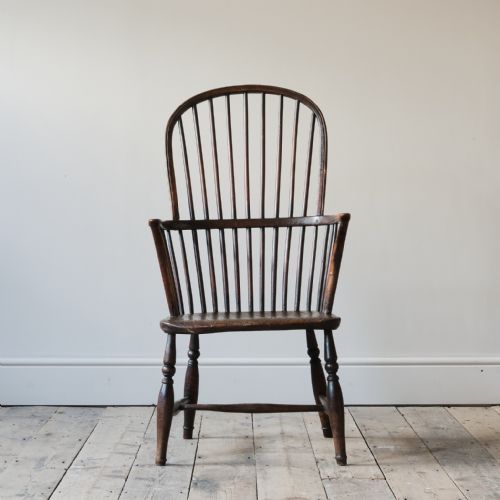
The selections recorded here span periods from the eighteenth century through the nineteenth century, encompassing regional vernacular forms such as comb backs and hoop backs. These pieces demonstrate how rural makers adapted standard domestic chair designs for children.
Materials and Construction Techniques
Makers utilised elm primarily for solid slab seats, chosen for its interlocking grain that resisted splitting under heavy use. This dense timber paired frequently with ash, yew, fruitwood, and beech for spindles, legs, and bentwood elements.
Construction relied on traditional Windsor framing methods, where turned legs and back spindles fitted directly into a thick wooden seat. Steam bending shaped the continuous hoops and combs characteristic of the regional styles.
Judging Quality and Character
Quality rests in the selection of timbers and the harmony of the regional proportions, where contrasting woods like yew and elm create visual depth. Better examples display confident turning on the legs and balanced, comfortable proportions within the child scale.
Surface patina and original timber surfaces separate exceptional survivals from pieces that have suffered heavy restoration or aggressive stripping. The integrity of the wedged joints and the retention of structural elements dictate the standing of each chair.
The Georgian Elm High Chair Glossary
- Comb back
- A Windsor chair variation where the vertical spindles of the back extend upward into a horizontal headpiece resembling the teeth of a comb. This regional style appears frequently in eighteenth-century seating.
- Hoop back
- A continuous bentwood rail forming the arms and back of a chair in a single curved sweep. This technique provided considerable structural strength to vernacular seating.
- Vernacular
- Objects made by local craftsmen following regional traditions rather than strict academic style guidelines. These pieces reflect the available materials and practical needs of the district.
- Crinoline stretcher
- A bowed or curved stretcher connecting the legs of a chair below the seat to provide lateral stability. It takes its name from the shape of nineteenth-century hoop skirts.
- Slab seat
- A thick plank of solid timber shaped and carved to form the base of a chair. Elm served as a preferred material for this purpose due to its tough grain.
Georgian Elm High Chair: Frequently Asked Questions
How do I date a high chair?
Dating relies on examining construction methods, tool marks, and the wear patterns present on the wooden seat and footrests. Regional styles and timber combinations also provide clear indicators of the period.
Earlier examples from the eighteenth century tend to feature simpler, hand-turned components and deeper patination compared to later nineteenth-century interpretations.
What woods were used?
Makers selected elm principally for solid seats because the twisty grain prevented splitting under stress. Spindles and legs utilised flexible timbers such as ash, yew, fruitwood, and beech.
Combinations of contrasting woods often highlight the vernacular artistry inherent in these rural seating pieces.
Where were these chairs made?
Rural workshops across England produced these chairs, with specific regional traits identifying districts like the Thames Valley or West Country. Local timber availability dictated which woods predominated in each area.
Country joiners and specialised chair makers supplied farmhouses and domestic households with durable everyday furniture.
How should I care for elm?
Maintain the wood by avoiding direct heat sources and excessive moisture swings that can cause timber to split or warp. Regular dusting with a dry cloth protects the historic surface.
Applying a traditional beeswax polish occasionally helps nourish the aged grain without building up heavy chemical layers.