
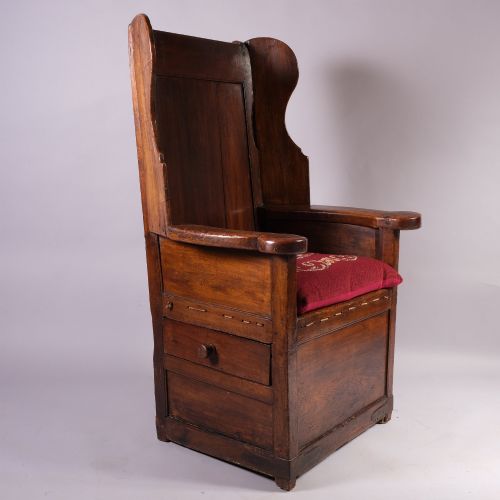
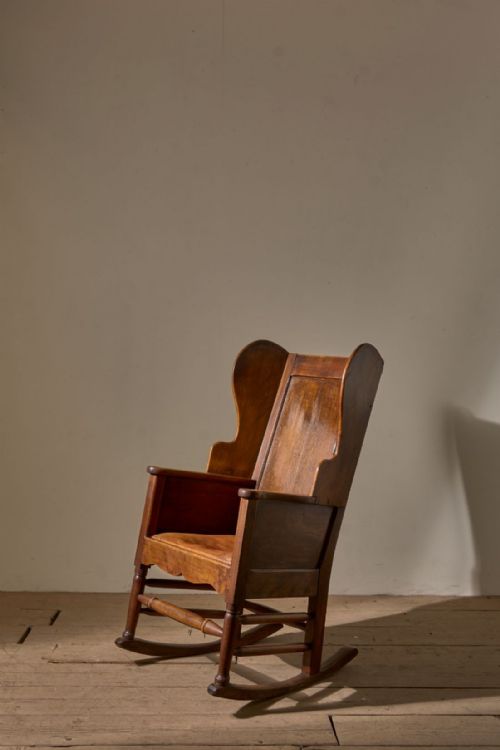


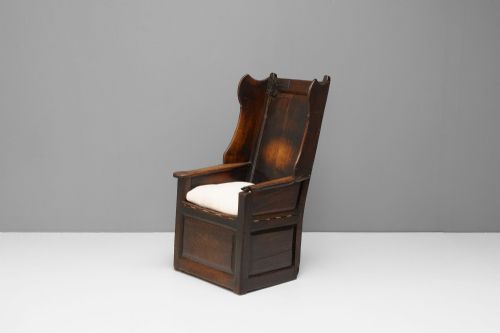


Oak Lambing Chair
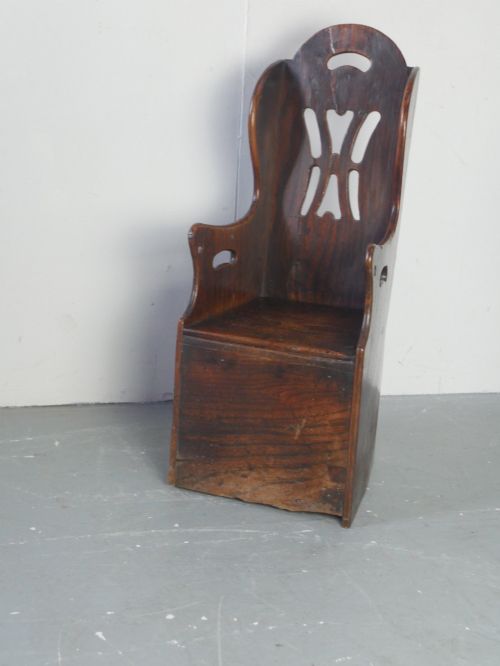
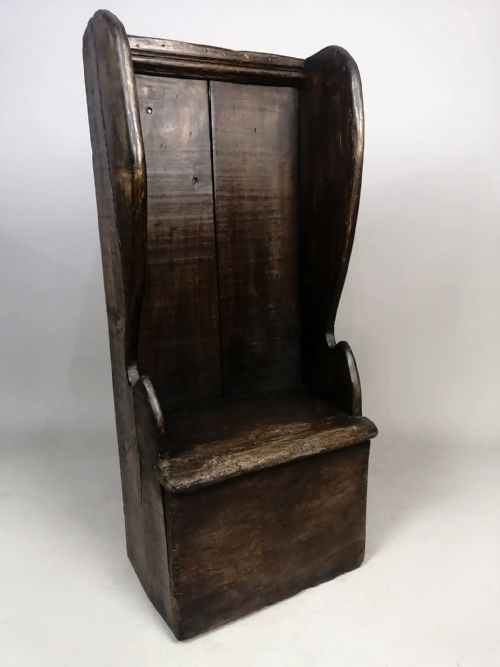
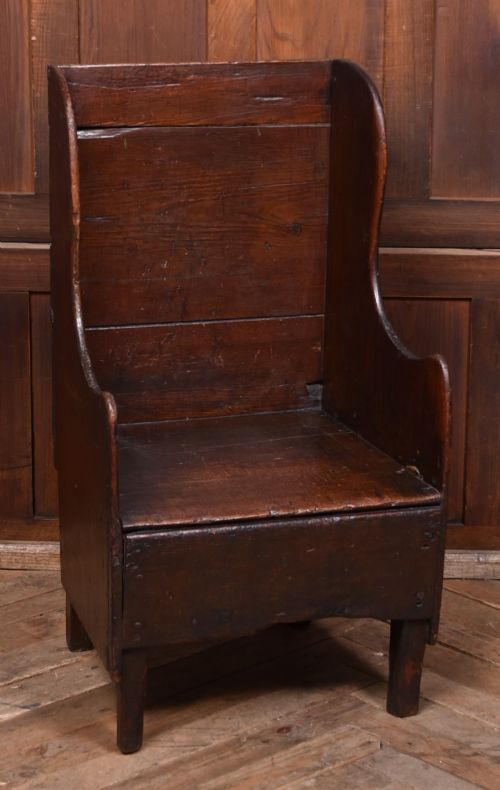
An oak lambing chair is a heavy vernacular fireside seat designed to keep out draughts, built by country joiners for warmth and shelter.
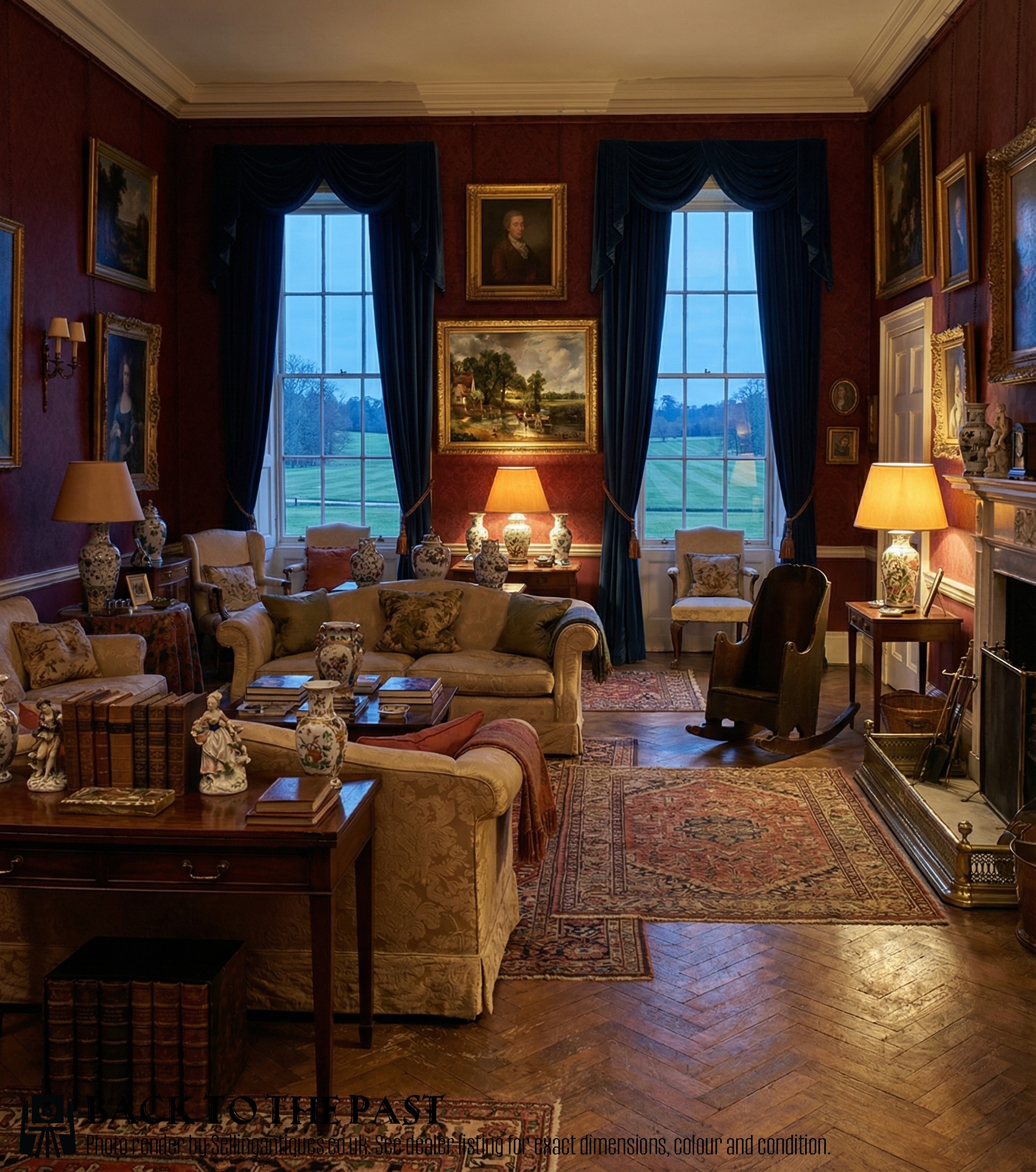
Oak Lambing Chair
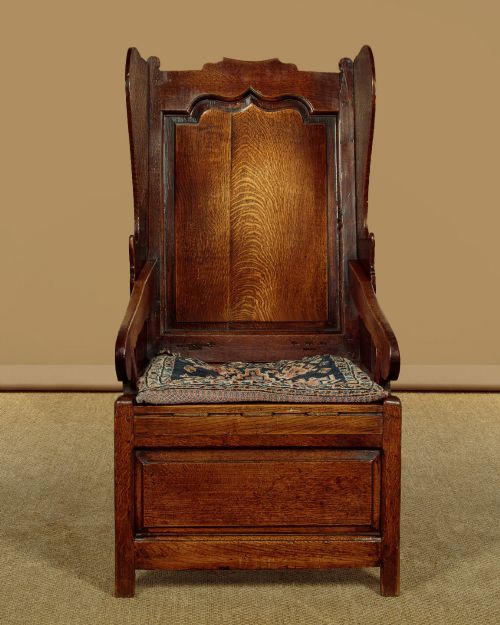
When you examine an oak lambing chair, you are looking at a traditional fireside seat constructed with solid high backs and protective side wings designed to block winter draughts. The pieces encountered most frequently on this page originate from the eighteenth century, though examples stretch from the seventeenth into the nineteenth century.
Makers in English, Welsh, Scottish, and Dutch regions built these armchairs primarily for vernacular domestic use, incorporating storage spaces like under-seat drawers or rope-strung seating bases. Regional variations range from simple panelled constructions to smaller child-sized rocking chairs and canopied reading seats.
The form developed directly from solid plank and panel construction traditions, serving as practical seating for shepherds, farmers, and household members near hearths. Survivors retain the heavy proportions and timber characteristics of rural domestic utility.
How they were made
Joiners built an oak lambing chair using solid native timber boards joined by pegging, mortise and tenon joints, and occasional framing panels. Secondary woods like elm and fruitwood frequently appear in country workshops alongside the primary oak framework.
Upholstery materials such as leather, fabric, and wool textiles were applied to seats or pads, while rope weaving supported earlier seated versions before solid board bases became standard. Brass fixings occasionally secure small drawers built into the lower framing beneath the squab.
Oak Lambing Chair Retail Price Guide 2026
Typical asking prices for oak lambing chair among the pieces listed under this phrase on Sellingantiques today, from the lower quarter to the upper quarter. They describe what is for sale here now, not the wider market.
Listings feature oak, elm, and fruitwood materials combined with fabric, leather, and brass across eighteenth and nineteenth-century periods.
What varies in quality
Quality in these vernacular seats depends upon the integrity of the original timber framing, the survival of early panel work, and the proportion of the protective wings. Pieces retaining their original seat structures, base boards, and un-replaced joints stand apart from heavily restored examples.
The degree of regional character and the sophistication of the joinery distinguish finer workshop pieces from standard utilitarian seating. Proportions also influence the piece, with well-balanced arm heights and undisturbed patination marking superior survival.
Lamb Of Manchester·Charles Bevan
The Oak Lambing Chair Glossary
- Lambing chair
- A high-backed wooden fireside armchair featuring solid wings designed to shelter the sitter from cold draughts. These seats often include enclosed bases or under-seat drawers.
- Vernacular
- Objects built by local tradesmen or country joiners for practical domestic use rather than following strict high-style urban architectural designs. This tradition defines most rural furniture.
- Wainscot
- A style of wooden panelling utilising framed construction with pegged joints, commonly adapted for the backs and sides of early country armchairs. It provides structural rigidity.
- Canopy
- An overhead wooden hood projecting above the top rail of a chair to trap hearth heat around the sitter's head. It represents a rarer variant of the standard wing form.
- Joint
- A connection point between structural wooden members, typically secured with pegged mortise and tenon techniques in early chair construction.
Oak Lambing Chair: Frequently Asked Questions
What is an oak lambing chair?
An oak lambing chair is a traditional fireside seat built with high solid backs and side wings designed to keep draughts away from the person sitting near the hearth.
These pieces were constructed by country joiners using local hardwoods and panel techniques, often incorporating small drawers beneath the seat for storage.
How were these chairs used?
These chairs served as practical domestic seating placed near fireplaces in farmhouses and rural cottages where warmth was essential during winter months.
The enclosed sides and high wings trapped heat around the sitter, while child-sized versions and rocking variants provided seating for younger family members.
How do I date an oak lambing chair?
Dating relies upon examining the construction methods, tool marks, timber shrinkage, and panel assembly styles visible across the framework. Seventeenth and eighteenth-century examples display pegged joinery and hand-riven boards distinct from later nineteenth-century manufacturing.
Hardware types, drawer construction, and wear patterns around the feet and arms also provide chronological clues for comparison.
Are all lambing chairs made of oak?
While oak served as the primary timber for the structural framework, country makers utilised other local woods depending on regional availability.
Listings show examples constructed using fruitwood, elm, and various textiles or leather for seating elements alongside the main wooden body.