




Antique Lambing Armchair
An antique lambing armchair provides hooded comfort by the fire, built by country makers to keep out drafts.
Antique Lambing Armchair
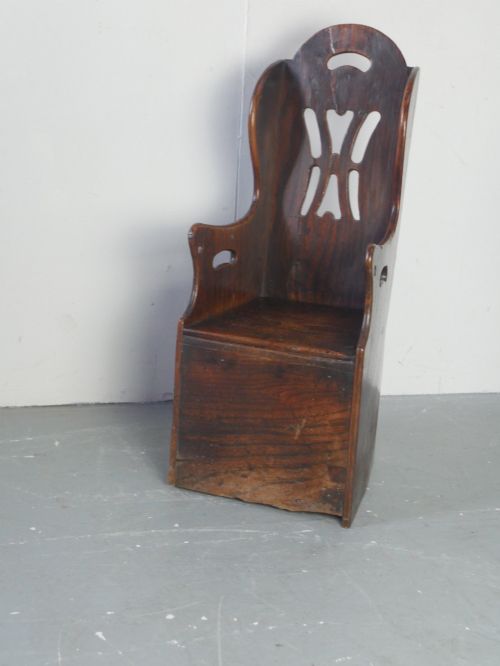
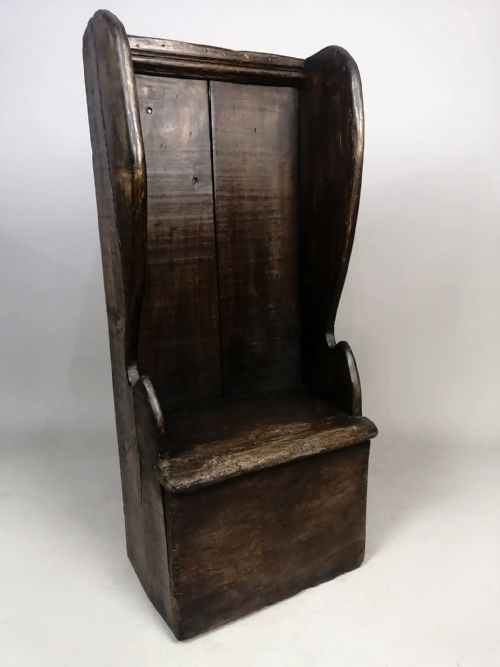
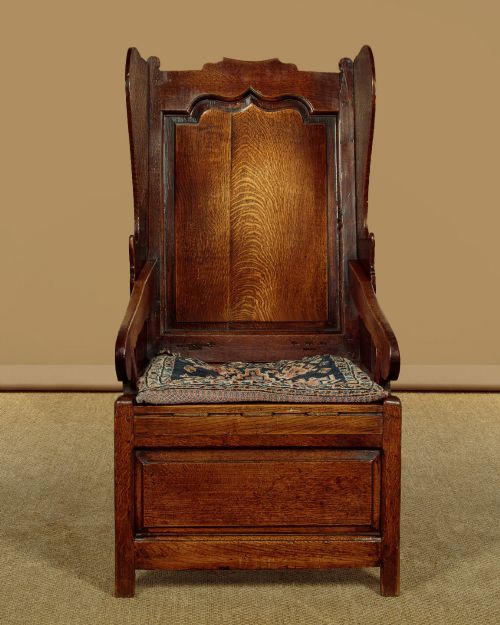
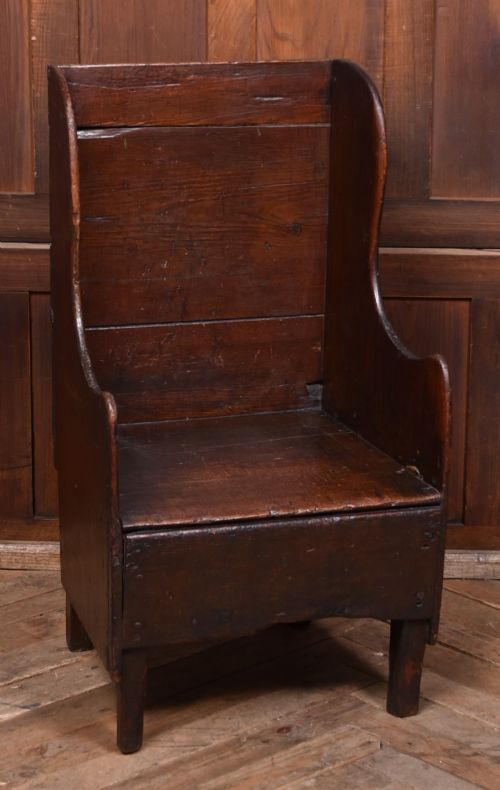
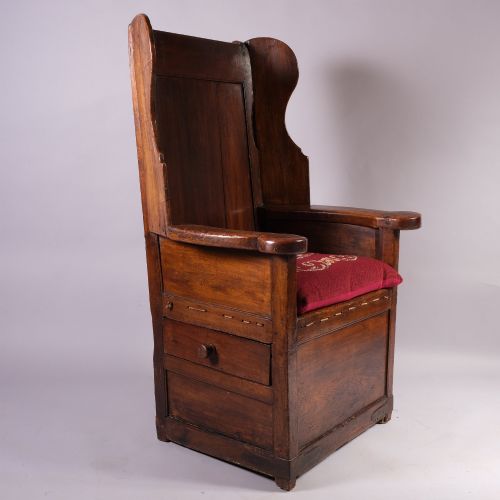
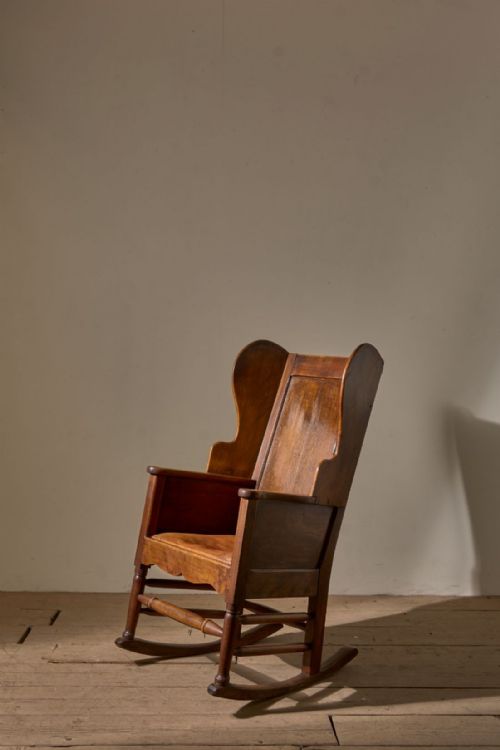
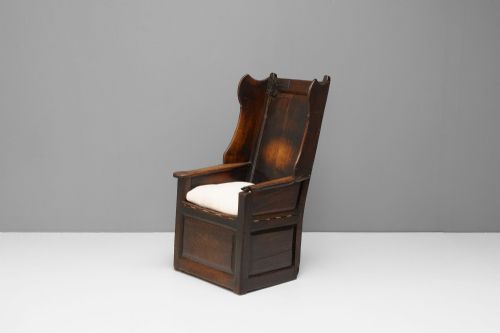
An antique lambing armchair is a vernacular country seat built to keep out drafts with a characteristic high wooden back and enclosed sides. You will most frequently meet 18th century oak and elm examples on this page, alongside smaller children's variants and occasional rocking models.
The form developed in rural districts to protect shepherds and farmers from bitter winter weather. Makers built these chairs in regions such as Wales, Lakeland, and Scotland using local hardwoods like oak, elm, and fruitwood.
Beyond standard armchairs, the evidence includes chair tables, rocking chairs, and diminutive children's chairs. These pieces reflect the practical needs of country households where sturdy construction and weather protection mattered most.
How they were made
Country craftsmen constructed these seats using solid native timbers such as oak, elm, and fruitwood, joined with traditional pegged mortise and tenon joints. Panels of solid wood formed the high hooded backs and enclosed sides, offering robust protection against drafts.
Some examples feature upholstered pads or squab cushions in fabric, textile, or leather set into the timber frame. Surface finishes range from natural waxed patinated oak to painted pine and polished fruitwood.
Some provincial makers incorporated small built-in drawers beneath the seat for storing pipes, tinder, or a warm brick.
What varies in quality
Quality in these vernacular country chairs rests upon the integrity of the timber and the proportion of the hood. Better examples display carefully selected native hardwoods with deep, honest patination accumulated over centuries of domestic use.
The design of the high back and wings dictates the visual balance of the piece. Finer versions maintain crisp architectural lines in the woodwork while retaining their original structural timbers without excessive replacement.
Lamb Of Manchester
The Antique Lambing Armchair Glossary
- Hooded back
- A high wooden back curving forward at the sides to shield the sitter from drafts. This defining feature created a warm microclimate around the occupant.
- Vernacular
- Architecture or furniture built by local craftsmen using traditional regional methods rather than mengikuti formal academic styles. These pieces relied on readily available local materials and practical utility.
- Fruitwood
- Timber sourced from fruit-bearing trees such as pear, apple, or cherry, prized by country makers for its fine grain and warm tone. It was often turned or carved for structural and decorative members.
- Wainscot
- A heavy wooden armchair constructed with panelled backboards rather than turned spindles. The term originates from high-quality imported oak boards used for wall panelling and heavy furniture.
- Squab cushion
- A loose, padded seat cushion designed to fit directly onto a wooden chair base. These added comfort to rigid timber seating during long winter evenings.
Antique Lambing Armchair: Frequently Asked Questions
What is an antique lambing armchair used for?
These chairs provided practical shelter from cold drafts in rural homes and farmhouses. The high wooden hood trapped heat from a hearth fire around the person seated inside.
Today, they serve as striking statement seating in traditional or modern interiors. Collectors often place them in hallways, studies, or living rooms where their sculptural wooden hoods can be fully appreciated.
How do I date an antique lambing armchair?
Dating relies upon examining the timber species, construction techniques, and regional stylistic traits. Earlier 17th century and George I examples display heavier planking and simpler joined frameworks, while later 19th century pieces often show Victorian Gothic Revival influences.
Tool marks, fixings, and the natural wear patination of the wood provide further clues to age. Comparing the panel construction with dated vernacular furniture helps narrow down the period of manufacture.
How do I live with an antique lambing armchair?
Living with these chairs requires basic care appropriate for antique timber and vernacular furniture. Placing them away from direct heat sources and sudden temperature fluctuations protects the old wood and prevents splitting.
They pair well with simple wool textiles and natural leather squab cushions that complement their rustic origins. Regular dusting and occasional wax application maintain the rich patination built up over centuries.