




Oak Wingback Chair
An oak wingback chair provides deep side wings to block draughts, combining sturdy timber frames with upholstered comfort.
Oak Wingback Chair
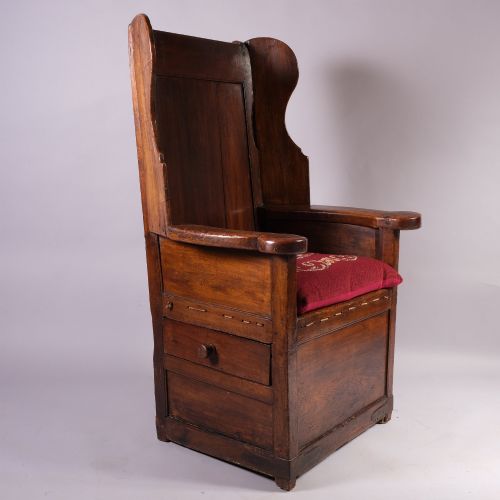
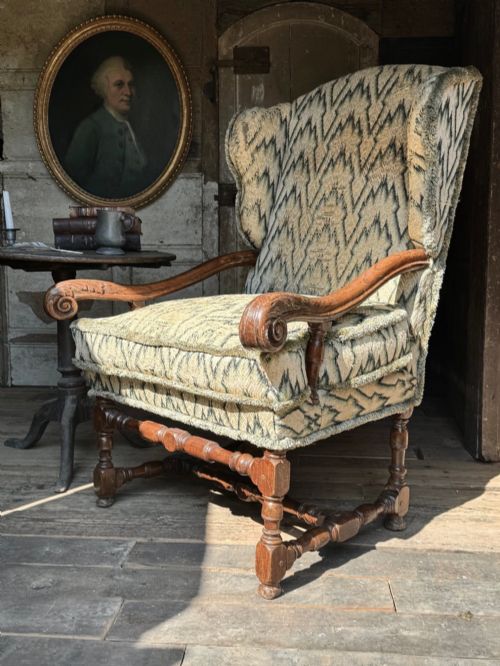
An oak wingback chair is a traditional seating form defined by its protective side panels designed to trap heat from a hearth and shelter the sitter from cold room draughts. The pieces gathered here range from early provincial examples to later Edwardian and Victorian interpretations.
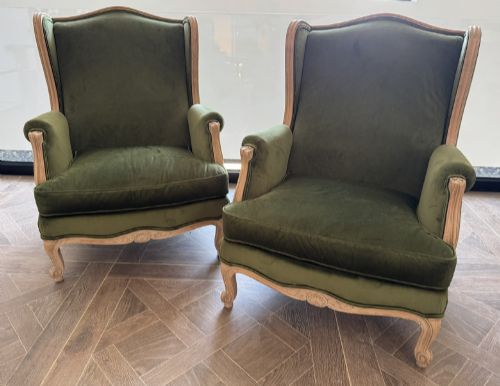
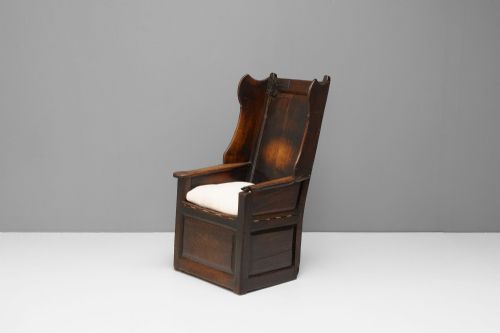
You are most likely to encounter eighteenth-century country pieces, including regional lambing chairs, alongside nineteenth-century iterations and later Edwardian framed armchairs. These items appear in various forms, from children's armchairs to large reading chairs.
How they were made
The primary structural material is oak, often paired with secondary woods and supported by brass hardware where required. Frames are built to bear weight securely, utilising traditional joinery techniques suited to heavy domestic seating.
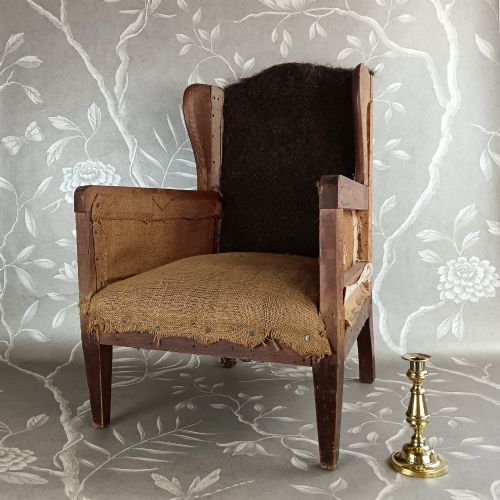
Upholstery materials vary widely across the selection, featuring leather, hessian, fabric, damask, and general textiles. Many chairs combine exposed timber framing with padded seating areas designed for sustained use.
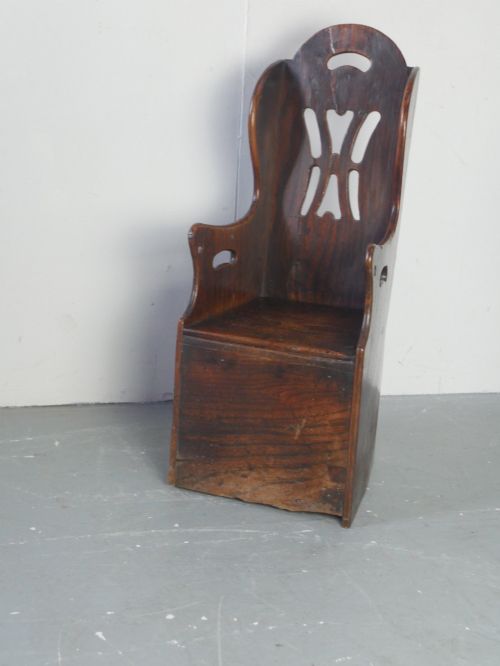
Some chairs were built small enough for a child to tend the lambs by the fire.
What varies in quality
Quality rests in the integrity of the timber frame and the proportion of the wings relative to the seat. Earlier vernacular examples show direct, functional construction, whereas later revival pieces often incorporate decorative carving or specific stylistic details.
The degree of preservation in both the woodwork and the upholstery material determines the character of each piece. Original structural soundness separates everyday seating from exceptional examples of vernacular craftsmanship.
The Oak Wingback Chair Glossary
- Wingback
- A style of armchair featuring extensions, or wings, mounted to the arms and rising to the back to deflect draughts. This form originated in the seventeenth century for fireside comfort.
- Lambing chair
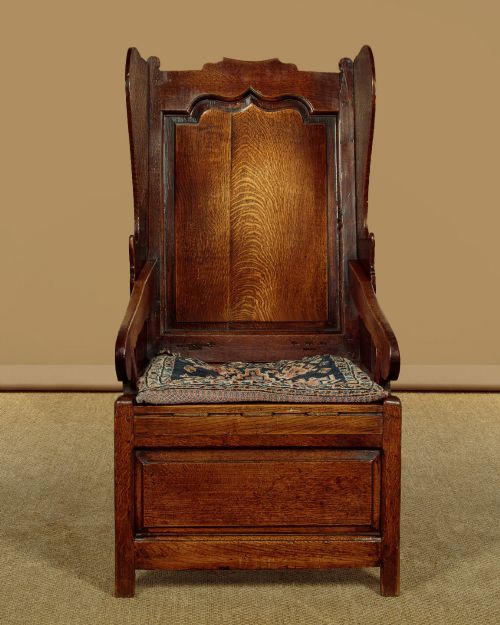
- A vernacular form of armchair, typically featuring a solid wooden lower section and high panelled sides or wings. These pieces were traditionally used in farmhouses near hearths.
- Carolean style
- A revival design echoing the decorative arts of the reign of Charles II, marked by rich carving and scrolled woodwork. It appears frequently in nineteenth-century interpretations of earlier seating.
- Damask
- A reversible figured fabric traditionally woven on a drawloom with patterns formed by contrasting warps and wefts. It provides a formal textile finish for upholstered furniture.
- Vernacular
- Objects made by local artisans following regional traditions rather than high-style academic designs. These pieces prioritize practical utility and local materials.
Oak Wingback Chair: Frequently Asked Questions
What is a lambing chair?
A lambing chair is a traditional vernacular seating form characterised by solid wooden lower panels and high protective wings. These enclosed chairs were built to keep sitters warm near open hearths.
They often feature simple wooden seats and sturdy oak construction designed for daily farmhouse use.
How old are these chairs?
The pieces span multiple periods, ranging from eighteenth-century provincial work to nineteenth-century interpretations and early twentieth-century Edwardian examples. Each piece carries structural characteristics specific to its era of manufacture.
Looking at the joinery and timber condition helps determine the approximate age of individual items.
Where were they used?
These chairs were primarily placed close to fireplaces in domestic settings to provide shelter from cold draughts. Their enclosed winged design trapped heat around the occupant.
Over time, the form transitioned from utilitarian farmhouse seating into general domestic and reading chairs.
Are all the chairs upholstered?
Not all pieces feature full upholstery, as many early regional examples rely on solid oak panels for the lower back and sides. Other items incorporate leather, fabric, or damask padding.
Upholstery styles range from simple hessian backing to elaborate leather and textile finishes found on later pieces.