
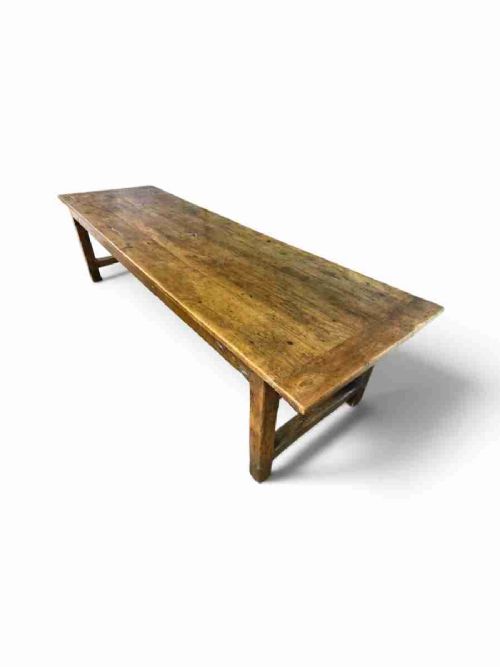
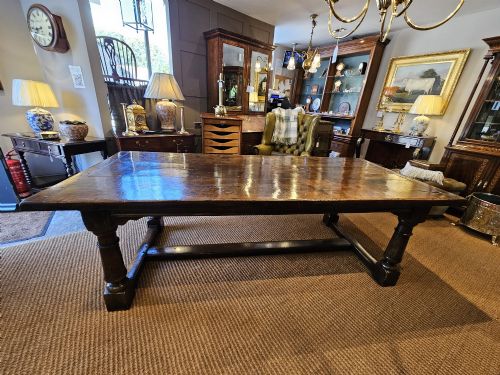
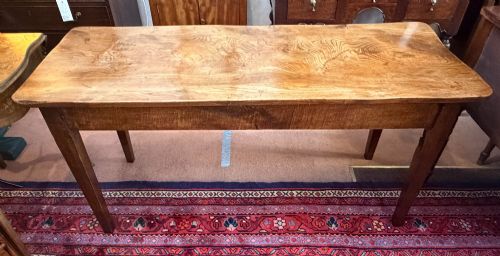
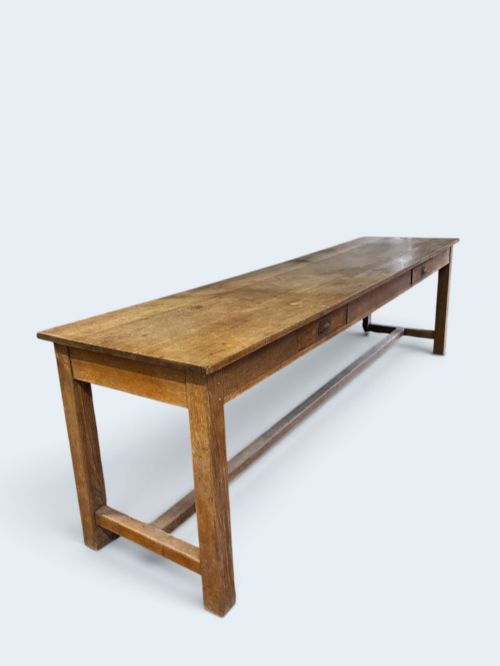
Country Oak Farmhouse Table
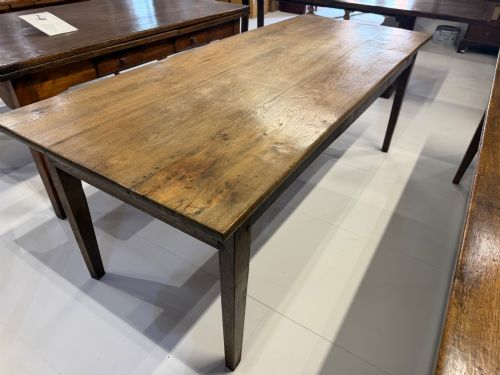
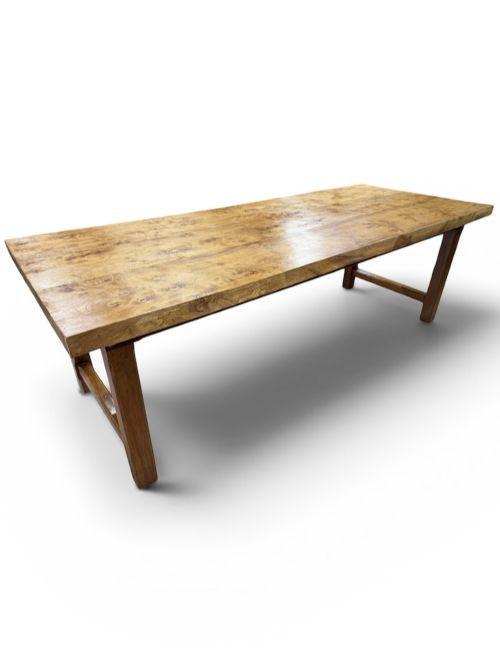
A country oak farmhouse table anchors a room with working history, offering solid timber boards built for daily family life.
Country Oak Farmhouse Table
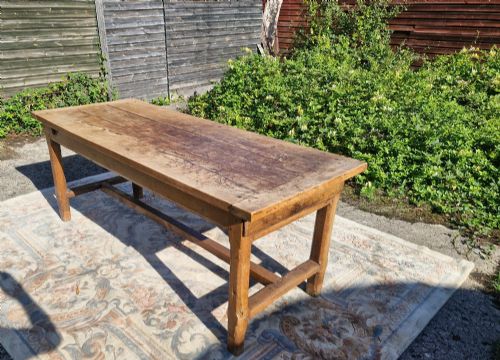
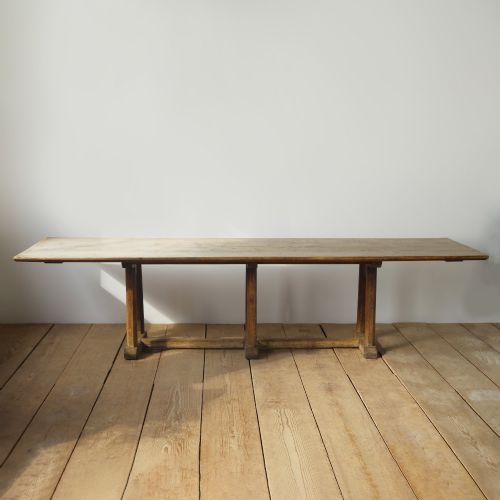
A country oak farmhouse table represents a sturdy utilitarian form designed for heavy daily use in kitchens and dining rooms. These pieces combine simple carpentry with robust timber tops, often showing the marks of generations of preparation and gatherings.
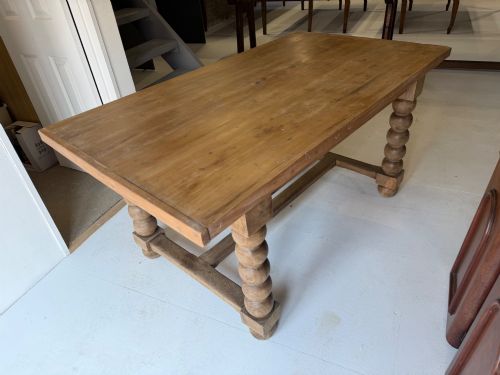
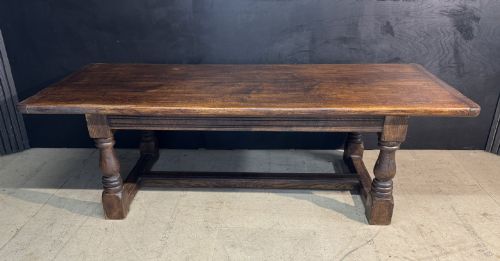
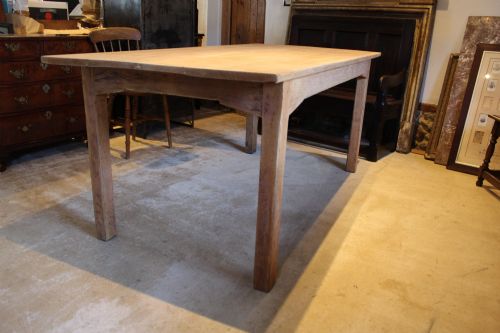
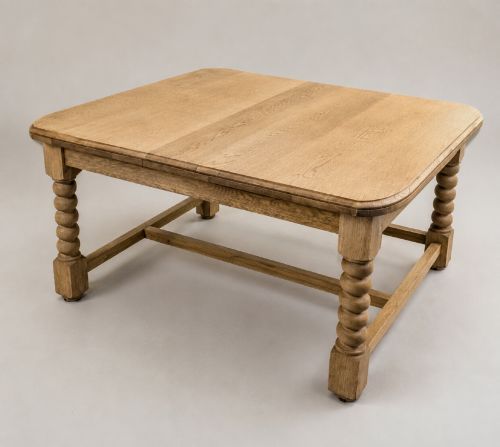
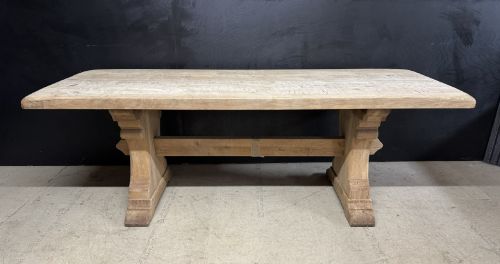
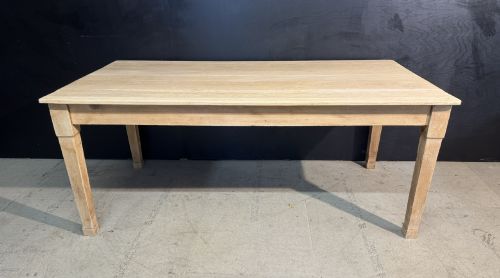
Most examples found here date from the eighteenth and nineteenth centuries, originating from English and French provincial workshops. Dining tables, refectory styles, and kitchen tables dominate the selection, frequently paired with tapered legs, bobbin turnings, or sturdy stretcher bases.
Makers built these tables for practical utility rather than formal display, resulting in honest construction using solid oak planks. Buyers frequently encounter longer formats designed to seat eight or ten people comfortably, alongside deeper French variants suited for communal meals.
Distinguishing Quality and Character
Quality rests in the integrity of the original timber boards and the honesty of the underlying structure. Tables retaining their unreduced thickness of oak top and original stretcher bases command greater appreciation than those altered by later height reductions or surface stripping.
Subtleties of proportion, such as generous depth and balanced leg turnings, separate standard utility tables from finer regional expressions. The depth of the natural patina accumulated over centuries of use dictates the visual warmth of the finished surface.
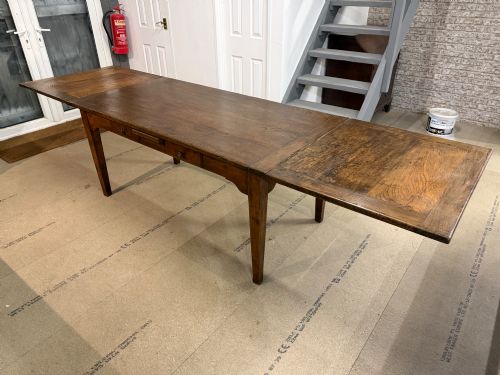
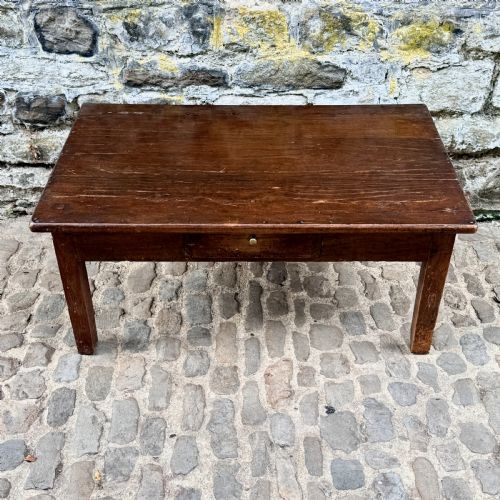
Available forms include extending refectory tables, coffee tables, serving tables, and traditional kitchen benches.
The Country Oak Farmhouse Table Glossary
- Refectory table
- A long dining table historically used in communal dining halls and adopted for large domestic kitchens. These pieces feature substantial length supported by low connecting stretchers.
- Gateleg table
- A drop-leaf table with hinged flaps supported by swing-out legs that resemble a swinging gate. This design allowed tables to expand for dining and fold down against walls when space was required.
- Bleached oak
- Timber treated to lighten the natural dark tones of aged oak, creating a pale, neutral surface popular in French provincial interiors. This finish highlights the grain while modernising the overall appearance.
- Stretcher
- A horizontal timber beam connecting the legs of a table near the base to provide structural rigidity. These rails often show distinct foot-wear from generations of diners resting their feet.
- Pegged joint
- A traditional method of securing mortise and tenon connections using wooden dowels rather than metal nails. This technique accommodates the natural seasonal expansion and contraction of solid timber.
Country Oak Farmhouse Table: Frequently Asked Questions
How do I clean a historic oak table?
Maintain the surface using a soft cloth and natural beeswax to nourish the dry timber without damaging the historic finish. Avoid modern chemical sprays that strip the aged patina.
Keep the timber away from direct heat sources and excessive moisture to prevent the heavy oak boards from splitting or warping over time.
Can I use a farmhouse table daily?
These tables were originally built for heavy daily labour and dining, making them exceptionally durable for modern family life. The existing marks and scars simply add to the working history of the piece.
Use coasters and placemats to protect the historic surface from deep stains while continuing to enjoy the table as the centrepiece of your kitchen.
How do I date an antique oak table?
Examine the construction methods beneath the top, looking for hand-cut joints, wooden pegs, and the tool marks left by early carpenters. Hand-planed boards and irregular plank widths often indicate eighteenth or early nineteenth-century origins.
Compare the leg style, such as tapered posts or bobbin turnings, against regional workshop traditions from the Georgian or Victorian periods.
What is the difference between French and English tables?
French provincial tables often feature fruitwood or lighter oak timbers with deeper proportions designed for large family gatherings. English country examples tend toward denser dark oak with simpler tapered or turned leg supports.
English pieces frequently incorporate extending mechanisms or drop leaves, reflecting the spatial demands of smaller nineteenth-century dining rooms.