
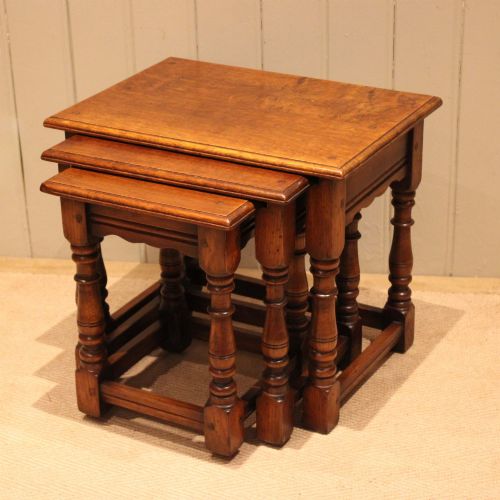
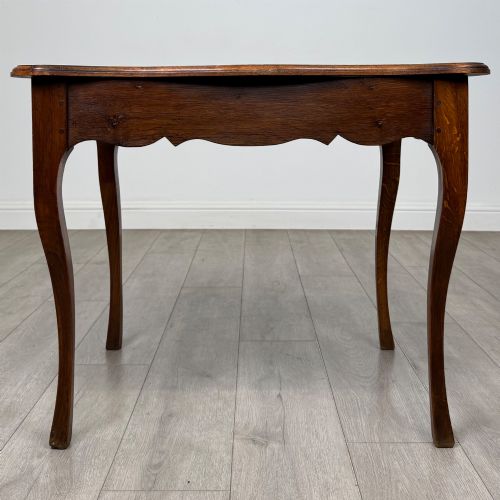
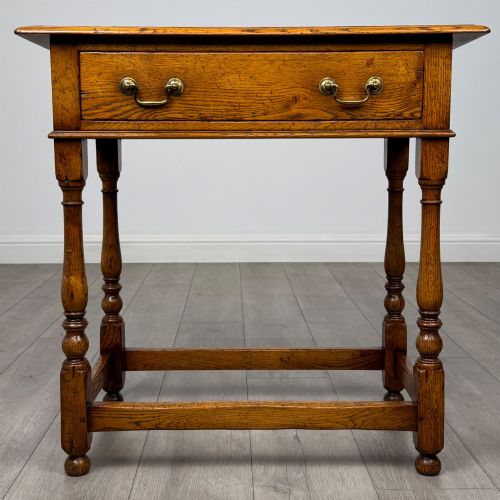
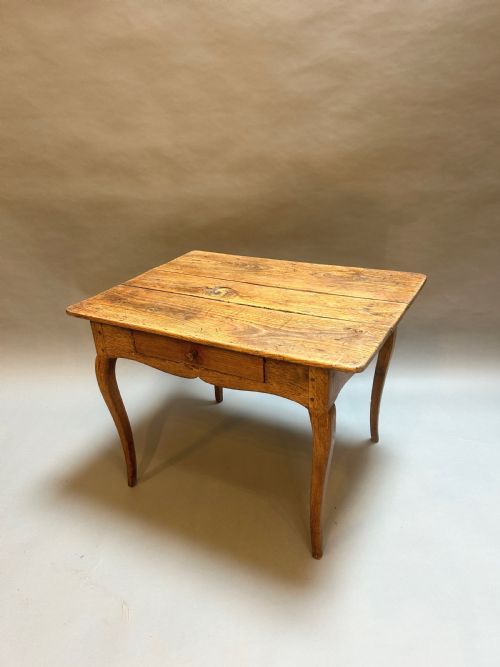

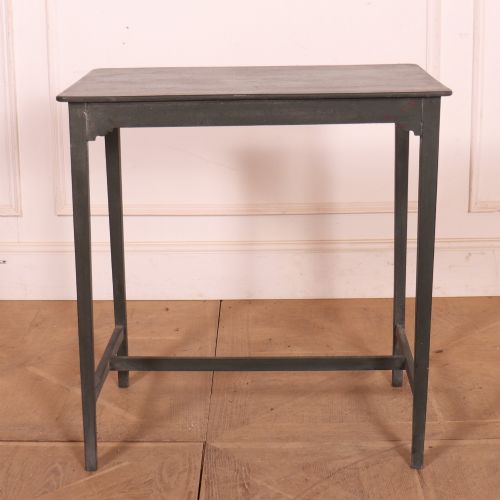


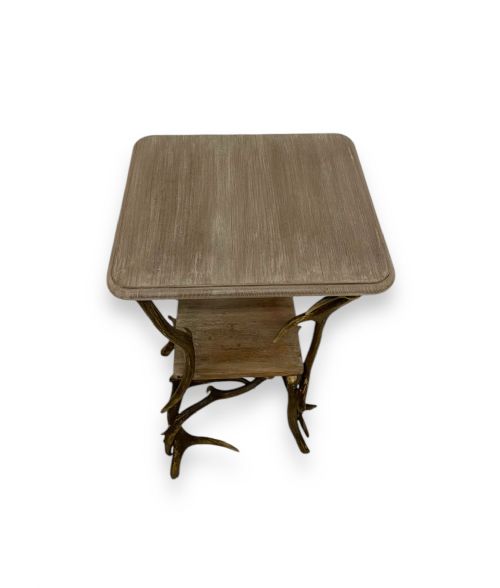
Country Oak End Table
These country oak end tables bring honest timber and unpretentious form to a room, offering a sturdy surface for daily use.
Country Oak End Table
A country oak end table represents a sturdy piece of domestic furniture designed to hold objects beside a chair or bed. The examples seen here encompass side tables, lamp tables, and occasional tables spanning from the eighteenth century into the twentieth century.
Most pieces encountered on this page date from the eighteenth and nineteenth centuries, alongside regional interpretations like French provincial and English country styles. These utilitarian items served everyday roles in farmhouses and country houses before finding a place in modern sitting rooms.
Makers shaped these utilitarian surfaces primarily from solid timber, incorporating elm and pine alongside oak. They range from simple gateleg forms to bobbin-turned supports and painted finishes.
Construction and Materials
Carpenters built these tables using solid timbers, predominantly oak paired occasionally with elm for secondary parts or tops. Construction methods relied on traditional joinery such as pegged mortise and tenon joints to withstand heavy domestic service.
Surface treatments vary from polished finishes that display the natural grain to painted coats and bleached treatments. Iron and brass hardware occasionally appear on hinges, drops, and adjustable elements.
Listings feature oak, pine, elm, and painted finishes across periods from the seventeenth century through to 1930.
Judging Quality and Character
The distinction between tiers rests upon the choice of timber figure, the crispness of turned details like bobbin legs, and the integrity of the original construction. Tables retaining their early surface patination hold greater visual depth than those stripped down or heavily restored.
Proportion and balance dictate the success of each piece, where well-considered leg placements and restrained joinery mark the better examples. Modest country items achieve their standing through honest wear and the warmth accumulated over centuries of use.
The Country Oak End Table Glossary
- Gateleg table
- A table with hinged flaps supported by swing legs that pull out to hold the leaves. This clever mechanism allows the surface area to expand when needed.
- Bobbin turning
- A form of lathe-turned decoration consisting of rounded spheres or discs carved in a repeating sequence along a length of wood. It appears frequently on seventeenth and eighteenth-century furniture legs.
- Occasional table
- A small, movable table intended for intermittent use around a room rather than a fixed dining or desk purpose. These pieces serve well beside seating for holding lamps or books.
- Refectory table
- A long, narrow dining table traditionally used in communal halls and large country houses. They display substantial timber construction designed to seat many guests.
- Patina
- The surface sheen and colour acquired by wood and metal over long periods of handling and exposure to light. This quality develops naturally through age and regular polishing.
Country Oak End Table: Frequently Asked Questions
What is a country oak end table?
A country oak end table is a utilitarian small surface constructed from solid timber for domestic utility. These pieces include lamp tables, side tables, and occasional tables.
Originating largely in English and French rural contexts, they bring straightforward craftsmanship and durable materials to living spaces.
How do I date an oak table?
Dating relies upon observing the construction methods, tool marks left by early saws, and the type of hardware used. Hand-pegged joints and the wear patterns on the wood indicate considerable age.
Stylistic cues such as bobbin turning or gateleg mechanisms further narrow the period of manufacture.
Where should I place an occasional table?
An occasional table suits positions beside armchairs, sofas, or beds where a reachable surface is practical. Their compact dimensions allow them to fit into corners and narrow gaps.
They function well holding lamps, books, or decorative objects without dominating the room.
How do I care for antique oak?
Caring for antique oak involves dusting with a dry cloth and occasionally applying natural beeswax to nourish the timber. Direct sunlight and excessive heat sources should be avoided to prevent splitting.
Maintaining a stable room environment preserves the original finish and patination.