

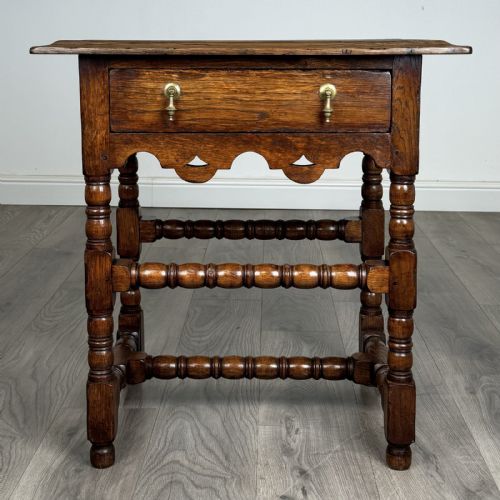
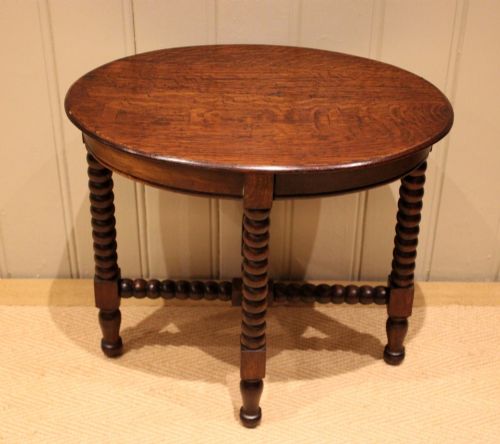


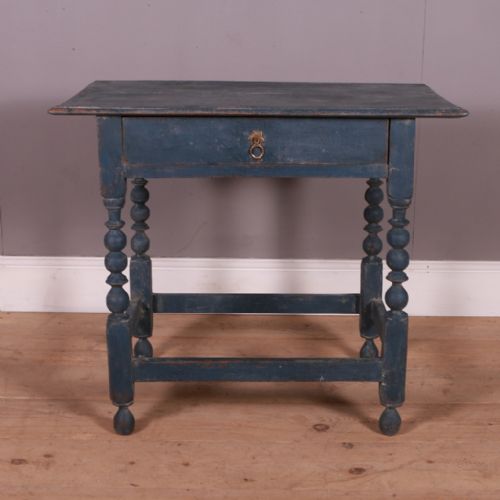
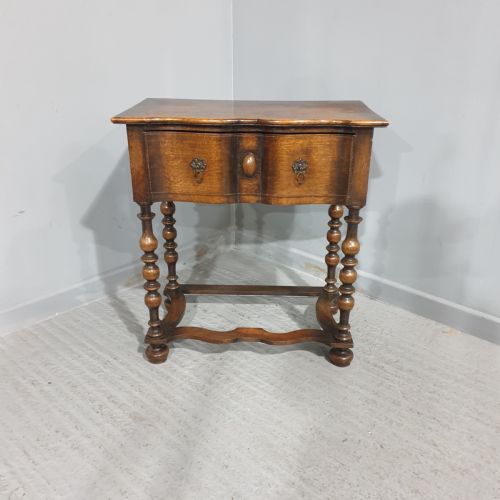
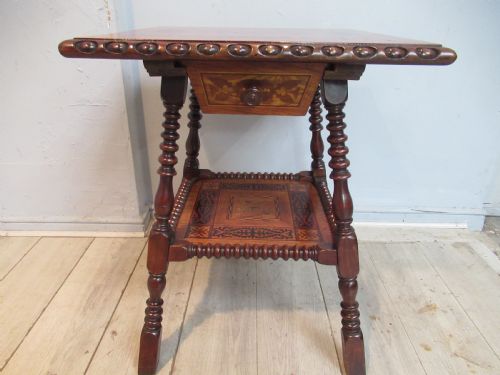


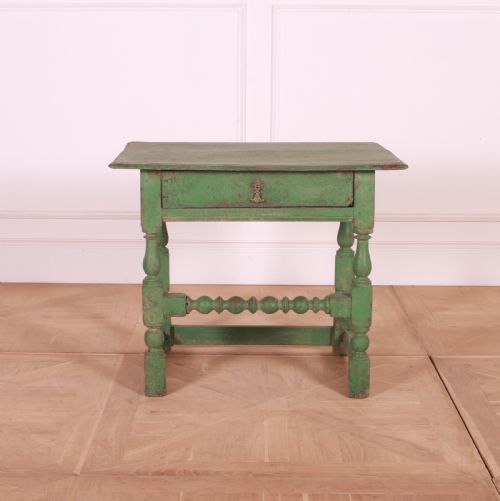

Bobbin Turned Nightstand
A bobbin turned nightstand brings tactile seventeenth-century character and sturdy timber construction directly to a bedside.
Bobbin Turned Nightstand
A bobbin turned nightstand is represented on this page by side tables, lamp tables, and occasional tables that feature distinctive spool-moulded legs. These items span periods from the seventeenth century through the Edwardian era and the nineteen-twenties, drawing on styles such as Jacobean Revival and English Country. Oak forms the primary material framework across these examples, alongside pine, walnut, and mixed woods.
Buyers searching for this form encounter pieces designed for practical bedside placement, often sharing the compact proportions of side tables. The surviving inventory shows formats ranging from plain timber surfaces to leather-topped examples and designs incorporating drawers. Origins stretch from the eighteen-hundreds back to seventeen-hundred, providing a solid historical range of turned-leg occasional furniture.
How they were made
Makers utilised solid timbers such as oak and walnut, shaping supports with repeated spool turnings on a lathe. Carpenters assembled these frames using traditional joinery methods suited to supporting heavy tabletops.
Surfaces feature applied veneers, painted finishes, or inset leather panels depending on the period. Brass hardware appears on drawer fittings, complementing the dense grain of the hardwood structures.
Bobbin Turned Nightstand Retail Price Guide 2026
Typical asking prices for bobbin turned nightstand among the pieces listed under this phrase on Sellingantiques today, from the lower quarter to the upper quarter. They describe what is for sale here now, not the wider market.
Some tables retain their original leather tops, ready to absorb the midnight ink stains of a very organised sleeper.
What varies in quality
The distinction between standard utility items and finer examples rests on the crispness of the lathe work and the selection of timber grain. Uniform spool profiles require precise hand-turning skill, whereas mechanical production yields softer edges.
Construction integrity separates sturdy early timber frames from later revival pieces. Original brass fittings and well-fitted drawer boxes elevate the standing of an individual table.
The Bobbin Turned Nightstand Glossary
- Bobbin turning
- A form of woodturning characterised by a sequence of rounded spool shapes resembling bobbins of thread. This decorative moulding appeared frequently on seventeenth-century furniture and later revival pieces.
- Jacobean Revival
- A nineteenth-century stylistic movement that copied the heavy oak construction and turned ornamentation of the early seventeenth century. Pieces from this period borrow heavily from seventeenth-century forms.
- Veneer
- A thin layer of choice hardwood applied to a secondary timber base to create a decorative surface pattern. Cabinetmakers utilised this technique to display fine grain figures without using solid expensive wood.
- Occasional table
- A small, moveable table designed for specific, intermittent use within a room rather than permanent placement. These items function equally as lamp tables or bedside stands.
Bobbin Turned Nightstand: Frequently Asked Questions
What is a bobbin turned nightstand?
A bobbin turned nightstand is a compact table featuring legs shaped with repetitive rounded spool turnings. These pieces function well beside a bed for holding a lamp or small items.
Most examples on this page date from the seventeenth century up to the nineteen-twenties and use timbers such as oak, walnut, and pine.
How do I date a turned leg table?
Dating relies upon examining the timber species, joinery methods, and the style of the turnings. Earlier seventeenth-century pieces show hand-tool marks and dense oak, while later revivals use machine-cut components.
Hardware styles and secondary woods also provide clear clues to the exact manufacturing era of the table.
Where should I place an antique side table?
An antique side table suits smaller spaces where a sturdy surface and distinct timber texture are required. They sit comfortably beside a bed or in a hallway as a lamp table.
The compact proportions of these tables allow them to integrate easily into various room layouts without dominating the floor space.
What woods were used for these tables?
Makers constructed these tables primarily using oak, along with pine, walnut, hardwood, and mixed woods. Painted wood and brass elements also appear across the surviving inventory.
Solid oak frames provide the heavy structure seen in the earlier seventeenth-century and revival pieces.