




17th Century Style Oak Table
A 17th century style oak table brings robust construction and rich grain into a room, offering enduring utility for dining or working.
17th Century Style Oak Table
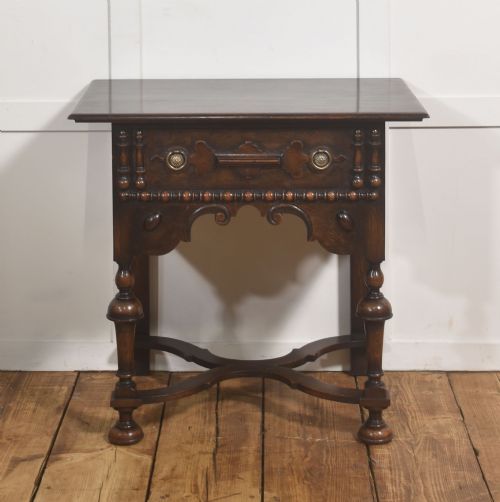
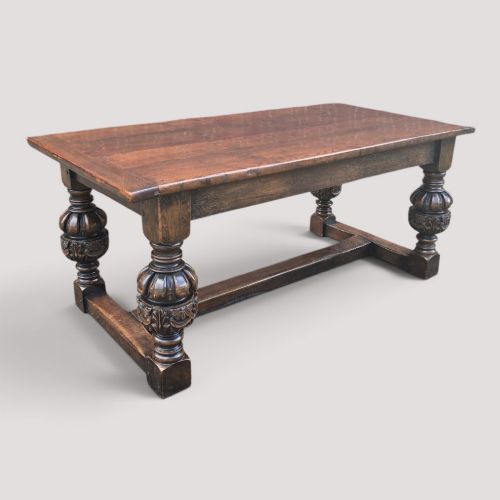
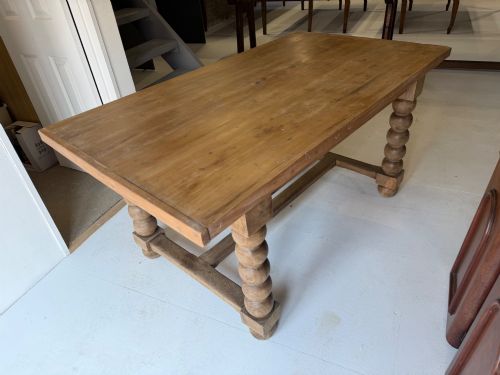
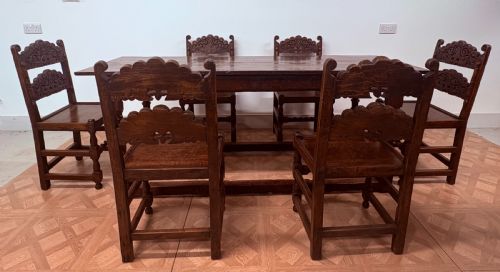
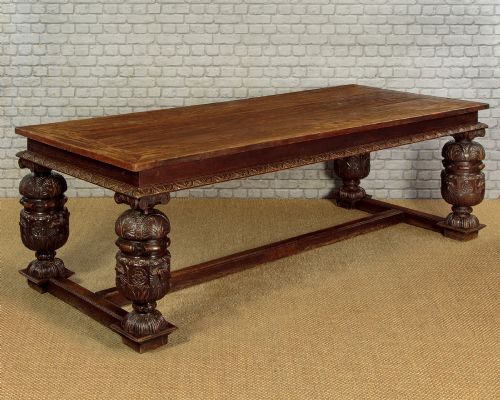
A 17th century style oak table encompasses refectory designs, gateleg tables, and side tables built from durable timber. Buyers investigating this phrase most frequently encounter revival pieces produced during the nineteenth and early twentieth centuries alongside genuine seventeenth-century examples.
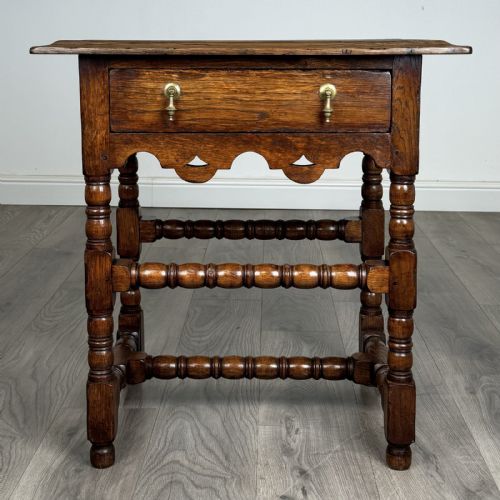
The selection ranges from large dining surfaces intended for communal meals to smaller side and lamp tables. Formations include trestle bases, bobbin-turned supports, and traditional gateleg frames developed for versatile domestic spaces.
Evaluating the Build
Quality rests upon the proportion of solid timber utilised and the firmness of the frame construction. Heavy, stable dining surfaces with tight joints represent superior craftsmanship compared to lighter revival interpretations.
The crispness of hand-carved details and the integration of turned legs distinguish finer pieces. Honest patination on the timber surface reflects age and careful use rather than artificial distressing.
17th Century Style Oak Table Retail Price Guide 2026
Typical asking prices for 17th century style oak table among the pieces listed under this phrase on Sellingantiques today, from the lower quarter to the upper quarter. They describe what is for sale here now, not the wider market.
Periods represented span from the seventeenth century through Georgian eras and into early twentieth-century revival movements.
The 17th Century Style Oak Table Glossary
- Refectory table
- A long, narrow dining table traditionally used in monasteries and large halls. These heavy pieces feature stretcher rails for stability.
- Gateleg table
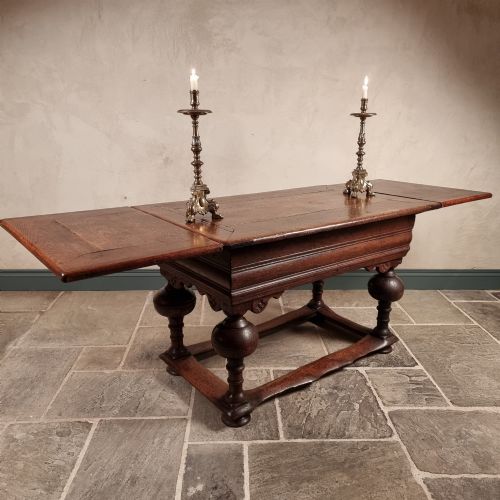
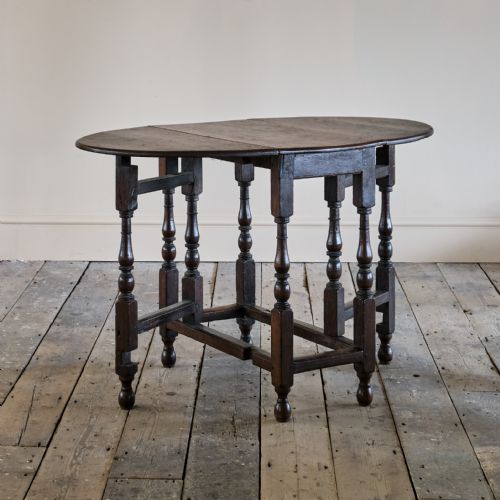
- A drop-leaf table with hinged flaps supported by legs that swing outward like gates. This design allows the surface area to expand or contract.
- Bobbin-turned
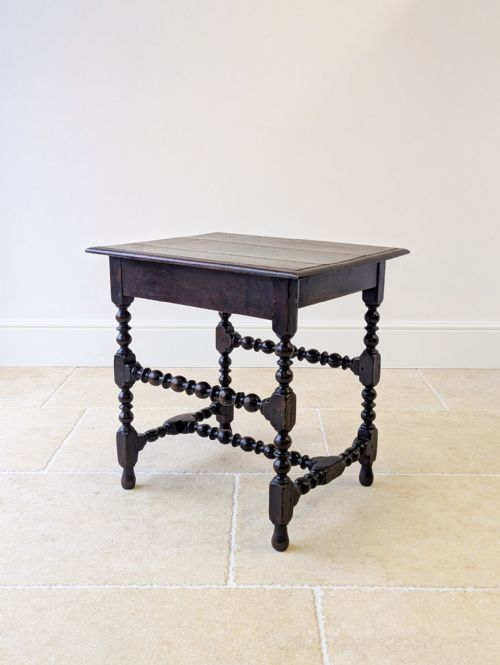
- A style of wood turning that produces a series of rounded, spool-like shapes along the length of a leg or stretcher. It appears frequently on seventeenth-century and revival supports.
- Joint stool
- A sturdy, low wooden stool constructed with pegged mortise and tenon joints. They provided flexible seating around early dining tables.
- Dresser base
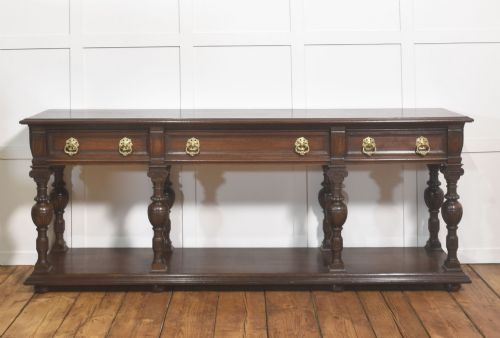
- A low wooden storage unit featuring drawers and sometimes cupboards beneath a flat top. They served functional storage roles in traditional kitchens and dining rooms.
17th Century Style Oak Table: Frequently Asked Questions
How do I spot a revival piece?
Revival items often exhibit machine-cut marks, standardised turning, and lighter secondary woods like beech within their underframes. Closer inspection of tool marks and timber shrinkage helps clarify the age.
Twentieth-century interpretations borrow seventeenth-century motifs while retaining the cleaner interior construction methods typical of their actual period of manufacture.
Are these tables suitable for daily dining?
Solid oak construction provides the durability required for everyday family meals and regular domestic use. Their sturdy frames handle heavy loads without losing structural stability.
Placing protective mats under hot dishes preserves the waxed or polished finish against moisture marks and heat damage over time.
What maintenance does solid oak need?
Routine dusting with a dry cloth keeps the surface clear of grit that might scratch the polished timber. Periodic application of quality beeswax maintains the moisture and natural sheen of the wood.
Keeping the furniture away from direct heat sources and dramatic humidity shifts prevents the solid planks from warping or splitting.
How do gateleg tables function?
Gateleg designs utilise hinged side flaps supported by pivoting leg assemblies that swing outward to lock the leaves in place. This mechanism provides an expandable surface suitable for smaller rooms.
When not entertaining guests, the drop leaves fold down to reduce the footprint of the furniture against a wall.