
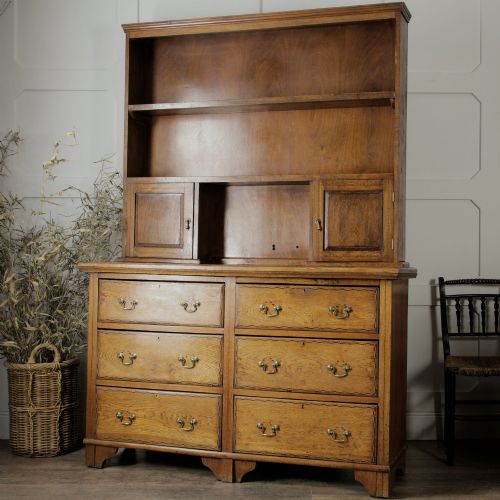

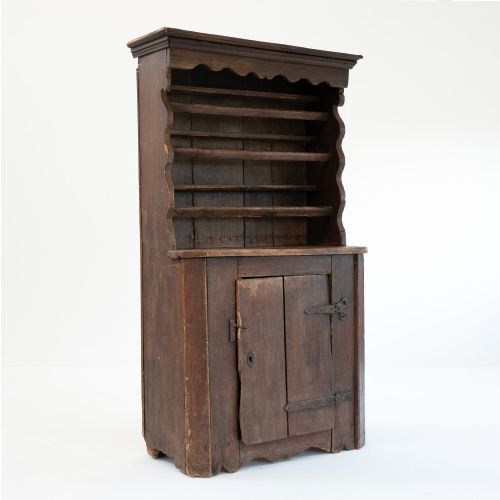
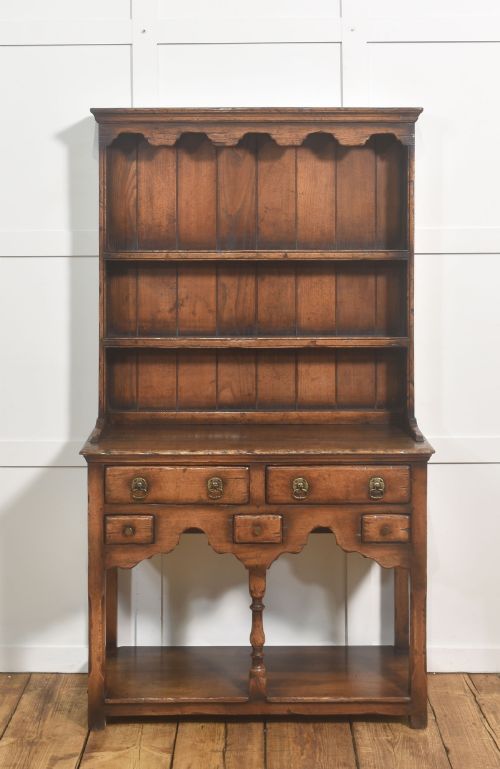
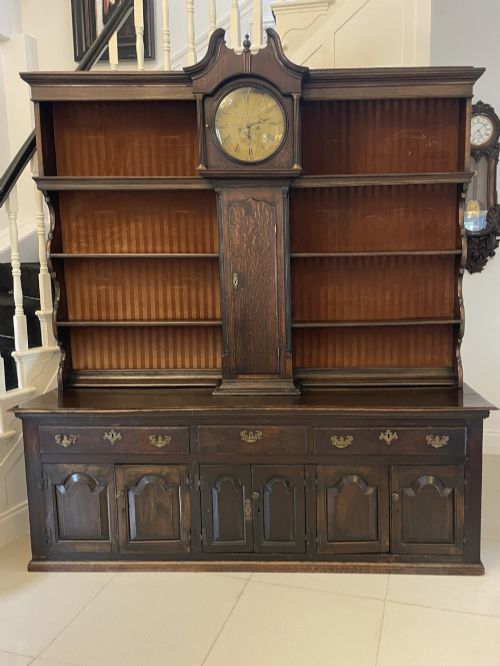
Country Kitchen Plate Rack
A country kitchen plate rack brings practical display and honest vernacular charm to a wall, holding everyday earthenware securely.
Country Kitchen Plate Rack
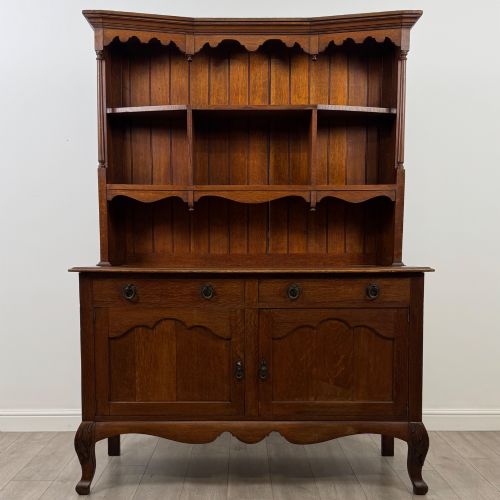
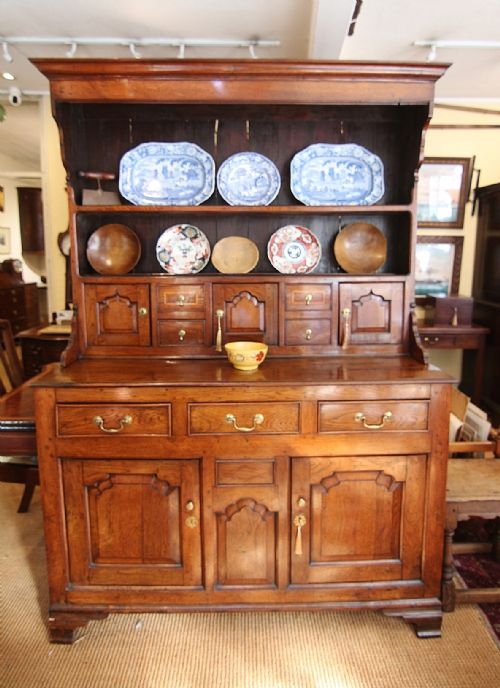
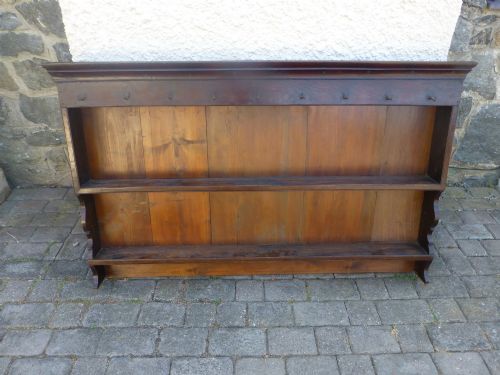
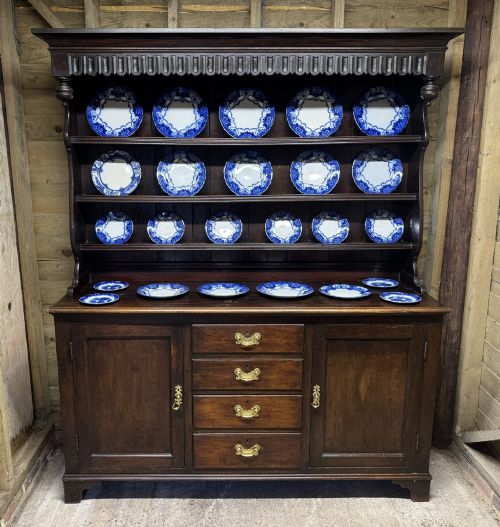
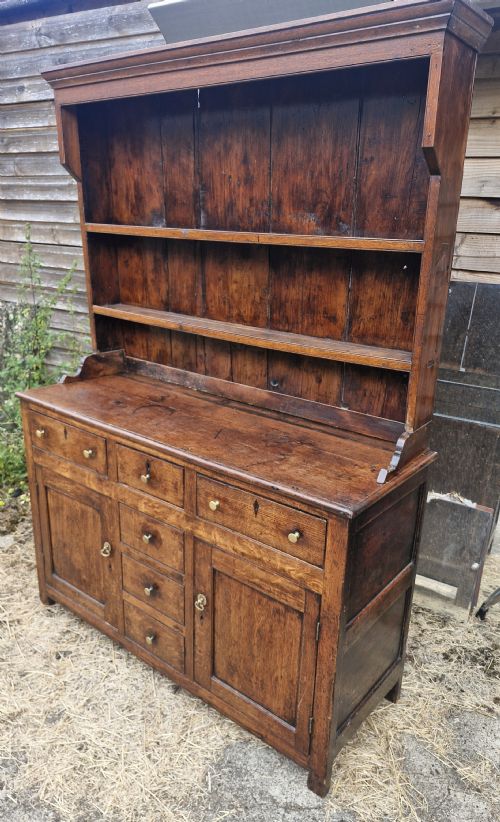
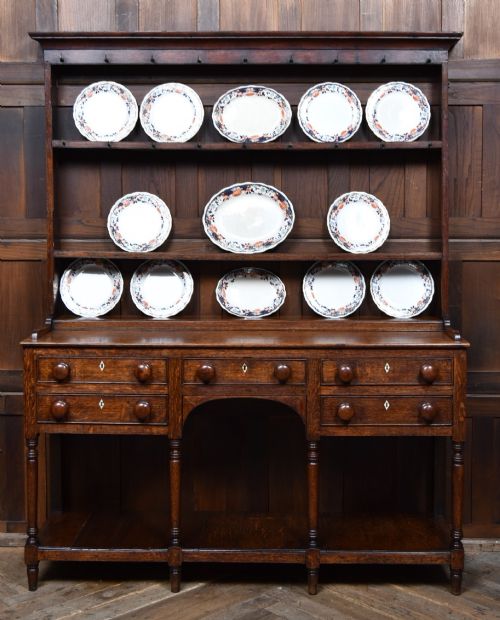
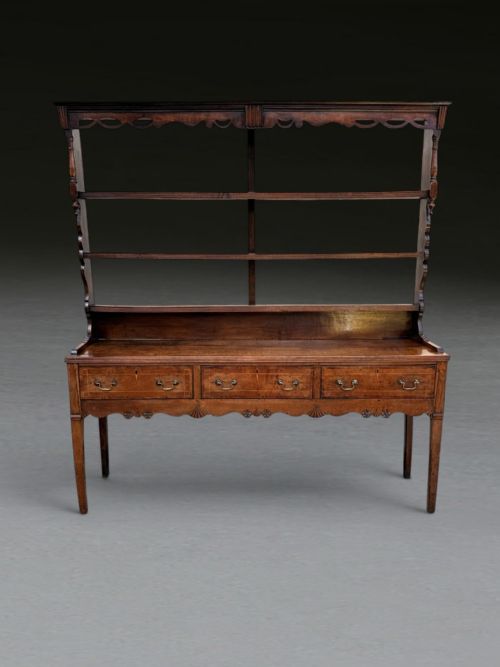
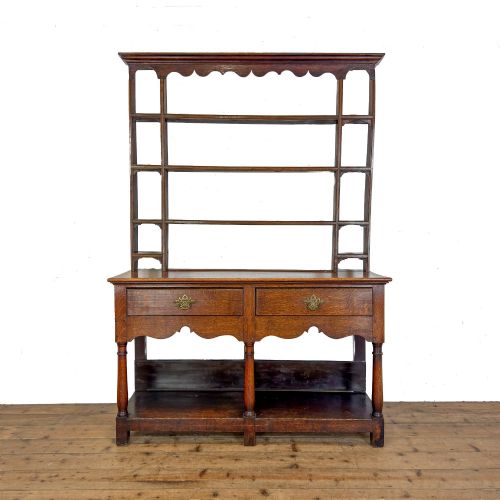
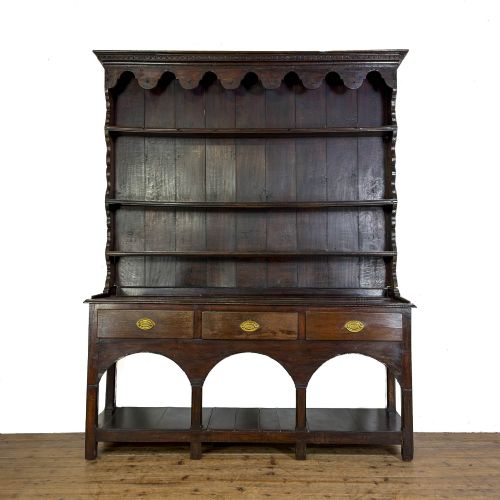
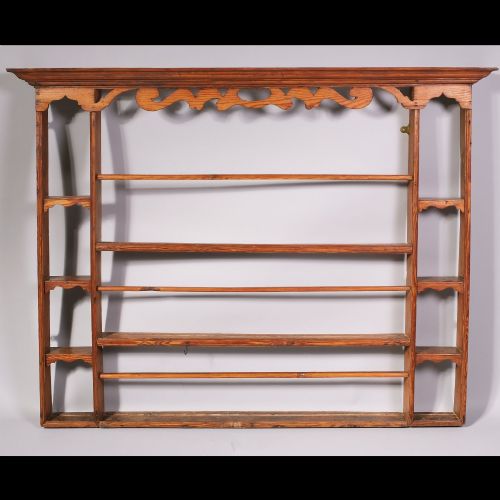
A country kitchen plate rack serves as a utilitarian wall hanging or the upper tier of a traditional dresser, designed to store ceramics upright so they dry and display properly. Buyers searching for this phrase encounter sturdy timber frames with open slats or grooved shelves intended to keep heavy plates from slipping.
The examples gathered here span centuries of domestic life, with oak and pine appearing most frequently in the listings. Many items reflect regional British vernacular traditions, particularly from Wales and the English provinces, where local joiners built furniture to fit low-ceilinged farmhouses and cottages.
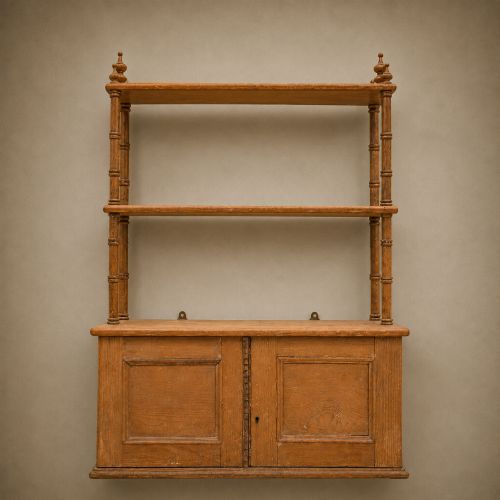
Most pieces date from the eighteenth and nineteenth centuries, ranging from plain Georgian wall shelves to full Welsh dressers complete with integrated racks. The forms vary from compact single-tier wall units to large architectural structures designed to carry extensive sets of tableware.
How they were made
Joiners relied primarily on solid native timbers, selecting oak for durability in earlier centuries and pine for more accessible utility. Boards were hand-planed and joined using traditional pegging or dovetailing methods suited to weight-bearing domestic duty.
Surface treatments remained simple, involving natural wax, plain oil, or historical painted finishes that weathered through generations of kitchen use. Iron and brass hardware, such as original hinges and hanging hooks, appear securely fastened into the main structural uprights.
Current listings feature pieces constructed from oak, pine, mahogany, and painted wood across the eighteenth, nineteenth, and early twentieth centuries.
What varies in quality
The calibre of a piece depends heavily on the integrity of the timber and the restraint of subsequent restoration. Original backboards, undisturbed pegging, and retention of the earliest surface patination distinguish superior examples from heavily altered survivors.
Proportion and architectural detail separate standard utility items from finer workshop pieces. Well-balanced cornices, cleanly shaped friezes, and original plate retaining rails demonstrate the care taken by the original maker.
The Country Kitchen Plate Rack Glossary
- Potboard
- A low lower shelf built between the feet of a dresser base, traditionally used for storing heavy pots and pans. This open board sits close to the floor and provides structural rigidity.
- Delft rack
- An open wall-mounted shelving unit specifically designed for displaying tin-glazed earthenware plates. The forward-facing grooves prevent fragile ceramics from sliding forward.
- Vernacular
- Furniture built by local tradesmen following regional functional traditions rather than grand architectural pattern books. These pieces prioritise practical utility and local timber availability.
- Breakfront
- A piece of furniture featuring a central section that projects forward from the flanking wings. This configuration adds visual depth to larger dresser bases.
- Pegging
- The traditional method of securing timber joints using wooden pins rather than modern metal fasteners. Visible pegged joints indicate older hand-assembled construction.
Country Kitchen Plate Rack: Frequently Asked Questions
How do I hang a heavy wooden plate rack safely?
Secure the main back frame directly into masonry or timber wall studs using appropriate heavy-duty fixings. Distribute the weight evenly across multiple structural points to support the load of ceramics.
Avoid relying solely on plasterboard, as centuries-old oak and pine units carry substantial dead weight. Consult a professional joiner if the wall substrate requires specialist reinforcement.
Are these racks suitable for modern kitchen walls?
These practical wall units integrate well into contemporary spaces by providing functional vertical storage for everyday tableware. The warm tones of aged pine and oak soften minimalist kitchen designs.
Ensure adequate clearance above work surfaces so plates can be lifted in and out of the slats without obstruction. Measure the depth carefully to prevent head height clashes in compact rooms.
How can I tell an eighteenth-century rack from a later copy?
Examine the timber surfaces for tool marks, nail types, and the natural oxidation that occurs over generations of exposure. Hand-cut dovetails and irregular board widths point towards earlier craftsmanship.
Look for consistency in wear patterns around the plate retaining grooves and hanging points. Later reproductions often display uniform machine sanding and artificial distressing.
Should I wax or oil an antique pine rack?
Apply a traditional beeswax sparingly to nourish dry timber and maintain a soft protective sheen. Avoid modern varnishes or polyurethane coatings that trap moisture and alter the historical surface.
Clean the wood gently with a dry or barely damp cloth before applying any maintenance wax. Allow the natural patina developed over centuries to remain undisturbed.