

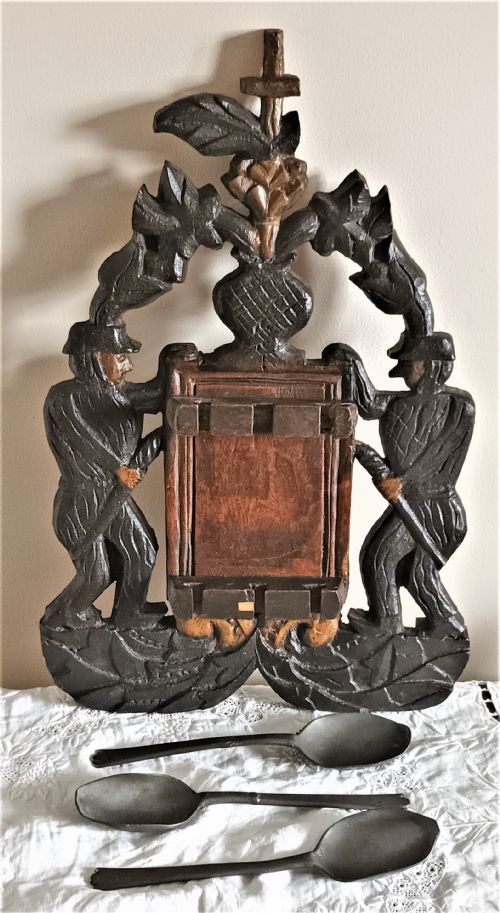
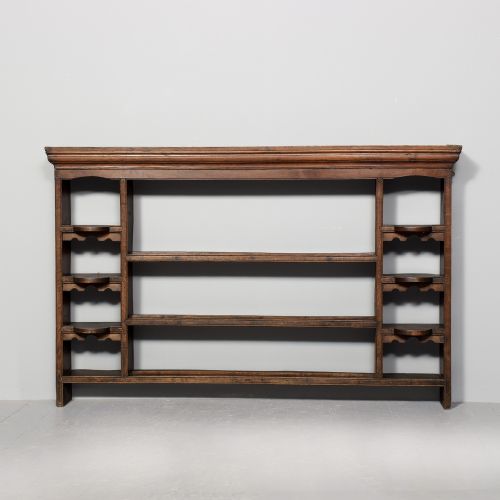
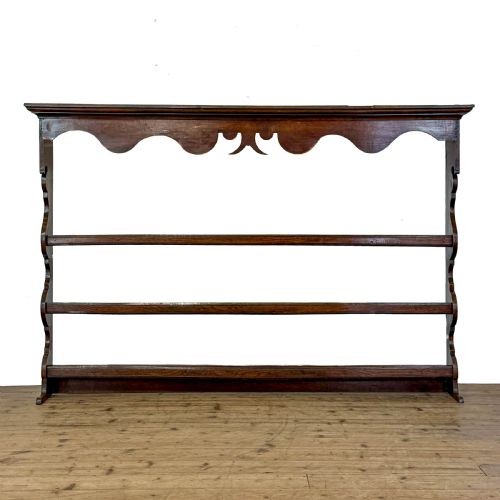


Georgian Wall Mounted Rack
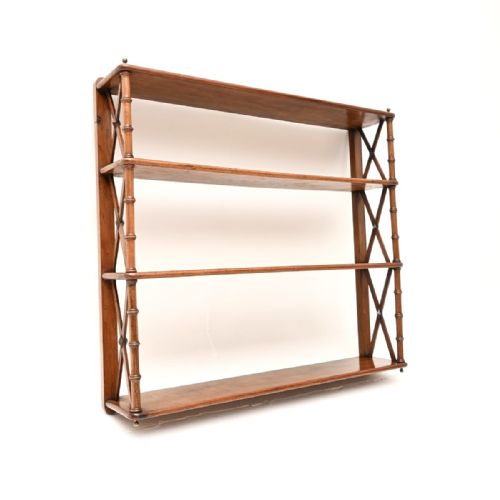
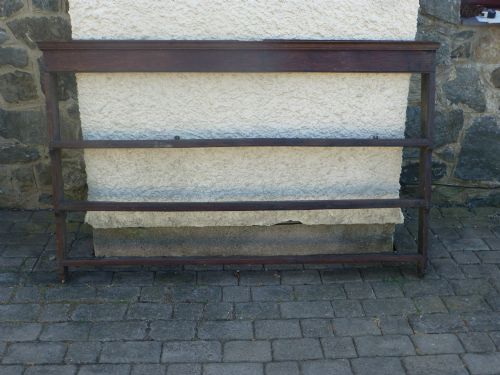
These georgian wall mounted rack examples are practical timber storage pieces built to hold plates, books or spoons.
Georgian Wall Mounted Rack
A georgian wall mounted rack is a timber furnishing designed to mount directly onto a wall to save floor space while displaying household items. The selections on this page include oak and mahogany hanging shelves, plate racks, and spoon racks.
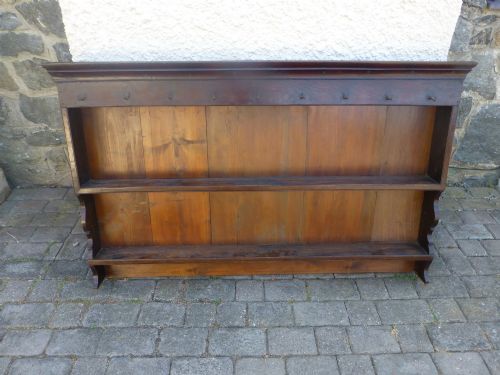
Most pieces date from the eighteenth century into the regency period, spanning styles from rustic country oak to refined George III mahogany. Common domestic forms range from small plate racks to larger delft racks fitted with columns and hanging hooks.
Materials and Construction
Cabinetmakers and country joiners built these racks primarily using native timbers such as oak, mahogany, and pine, occasionally incorporating walnut. Secondary woods like pine frequently appear in backing boards and hidden structural elements.
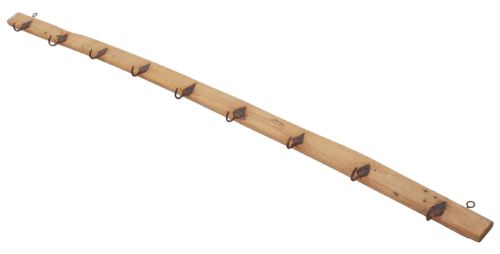
Metal fittings such as brass and wrought iron provide structural support and hanging capability, seen in hooks and brackets. Joinery methods reflect period cabinetmaking standards, securing shelves and plate rails to vertical uprights.
Georgian Wall Mounted Rack Retail Price Guide 2026
Typical asking prices for georgian wall mounted rack among the pieces listed under this phrase on Sellingantiques today, from the lower quarter to the upper quarter. They describe what is for sale here now, not the wider market.
Assessing Quality and Character
Quality separates through the selection of timber and the sophistication of the joinery, moving from plain rustic pine and oak up to figured mahogany with architectural elements like Corinthian columns. Finer examples retain original surfaces and period brass or iron hardware.
Proportion and structural integrity dictate the distinction between simple utilitarian kitchen storage and formal parlour shelving. The presence of integrated elements such as spoon slots or Delft plate grooves adds specific functional value.
The Georgian Wall Mounted Rack Glossary
- Delft rack
- A wall-mounted wooden shelving unit specifically designed to display ceramic plates upright against a backboard. These typically feature narrow wooden ledges and plate retaining rails.
- George III
- The stylistic period spanning from 1760 to 1820, characterised by refined proportions and the frequent use of mahogany. Pieces from this era often display classical architectural influences.
- Hanging shelves
- Open wooden shelving units built with back panels or hanging brackets to secure directly to a wall. They provide accessible display space without requiring floor support.
- Trefid spoon
- An early form of dining spoon featuring a flattened, three-lobed terminal handle. These occasionally accompany period spoon racks.
- Wrought iron
- Iron heated and hammered into shape by a blacksmith to create durable hardware. It appears in kitchen game hook racks and structural hanging brackets.
Georgian Wall Mounted Rack: Frequently Asked Questions
How do I hang a wall rack safely?
These timber racks require secure fixing into wall studs or solid masonry using appropriate brackets and screws. Weight distribution across the mounting points prevents the wood from pulling away under the load of plates or books.
Professional installation is advisable due to the combined weight of hardwood timber and displayed ceramics. Checking the structural integrity of the antique hanging points ensures safe long-term display.
What is the difference between plate racks and bookshelves?
Plate racks incorporate narrow wooden ledges or shallow grooves specifically engineered to hold ceramic plates at an upright angle. Bookshelves feature flat, deeper boards designed to support volumes standing vertically or stacked.
Both forms utilise wall-mounting configurations, but plate racks prioritise display visibility over deep enclosed storage capacity.
Can I use an antique rack in a modern kitchen?
These timber racks integrate easily into contemporary spaces by providing functional wall storage for everyday dishware, mugs, or cookbooks. Oak and mahogany surfaces complement modern interiors while introducing historical texture.
Placing wooden racks away from direct moisture sources protects the antique timber and historical finishes from warping.
How do I distinguish eighteenth-century oak from later pine?
Eighteenth-century oak displays distinct medullary rays, a heavy grain density, and a deep warm patina accumulated over centuries of use. Pine presents a softer, lighter timber grain with smaller knots and a paler natural colouration.
Joinery techniques and tool marks further help differentiate hand-planed country oak from later manufactured softwood alternatives.