

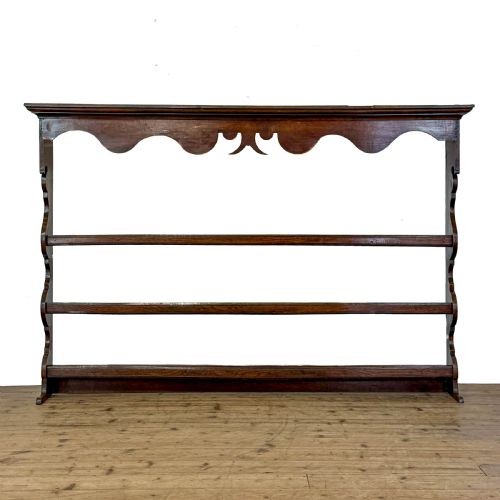


Hanging Oak Dresser Rack
These hanging oak dresser racks bring practical wall storage and period character into a room.
Hanging Oak Dresser Rack
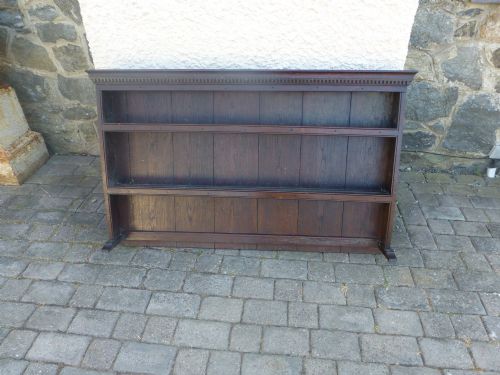
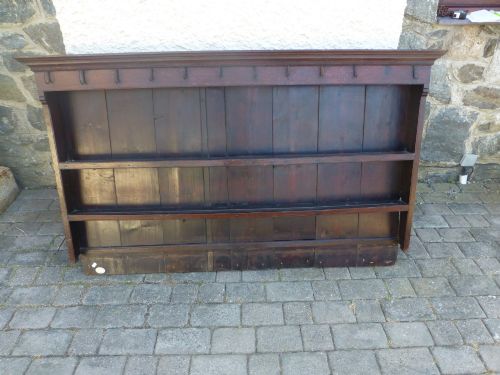
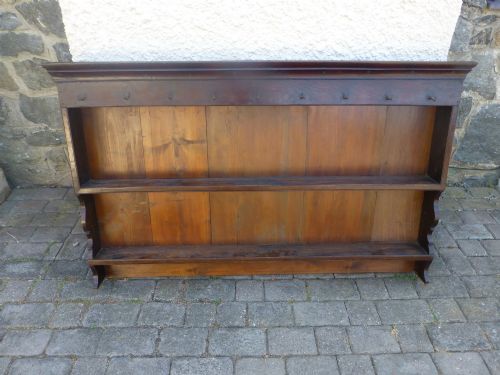
A hanging oak dresser rack is a wall-mounted shelving unit designed to display and store ceramics, particularly plates and platters. The pieces seen on this page span the seventeenth, eighteenth, and nineteenth centuries, with Georgian examples appearing frequently.
Most items take the form of delft racks or wall-hanging shelves, reflecting traditional English country interiors. They provide open storage that turns utilitarian kitchenware into a display feature.
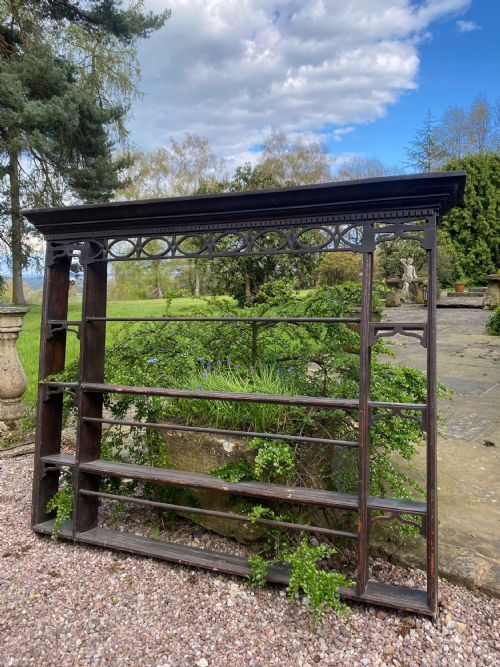
Makers historically constructed these racks to mount directly onto dining room or kitchen walls above a baseboard or serving table. The forms range from simple boarded shelves to carved architectural formats.
How they were made
The primary material across these listings is solid oak, sometimes showing a stained finish or accompanied by iron fixings. Artisans joined heavy timber boards using traditional pegged and framed construction methods suitable for wall-mounted weight.
Surface decoration appears on specific examples through carved detail, aligning with styles such as Gothic Revival and Renaissance Revival. The construction relies on durable joinery that has survived centuries of domestic use.
Hanging Oak Dresser Rack Retail Price Guide 2026
Typical asking prices for hanging oak dresser rack among the pieces listed under this phrase on Sellingantiques today, from the lower quarter to the upper quarter. They describe what is for sale here now, not the wider market.
The object types recorded under this heading comprise wall shelves, plate racks, and delft racks.
What varies in quality
Quality in a hanging oak dresser rack rests on the crispness of the timber grain, the depth of the colour, and the integrity of the original construction. Finer examples display thoughtful proportions and careful board selection rather than plain utilitarian assembly.
Carved details and architectural mouldings elevate certain pieces above standard vernacular furniture. The presence of original backboards and undisturbed hanging points distinguishes superior survivals from later adaptations.
The Hanging Oak Dresser Rack Glossary
- Delft plate rack
- A wall-mounted wooden shelving unit specifically designed with grooved plate rails to hold ceramic dishes upright. These racks formed a standard feature in historic dining spaces.
- Georgian
- A design period spanning the eighteenth century characterised by classical proportions and restrained ornament. Pieces from this era often balance utility with refined joinery.
- Gothic Revival
- A nineteenth-century style that reinterprets medieval architectural motifs such as pointed arches and heavy tracery. Furniture in this taste uses dramatic form and shadowed carving.
- Oak
- A hard, durable timber native to Britain that forms the structural basis of vernacular furniture. It yields a pronounced grain pattern that deepens in tone over centuries.
Hanging Oak Dresser Rack: Frequently Asked Questions
How are hanging oak dresser racks mounted?
These racks attach directly to walls using built-in fixing points or heavy brackets integrated into the frame. Because solid oak is heavy, secure anchoring into wall studs or masonry is essential.
Historic pieces often retain their original hanging battens or holes positioned to distribute the weight evenly across the backboards.
What is the difference between an 18th-century and 19th-century rack?
Eighteenth-century examples typically display simpler, utilitarian construction built for domestic plate storage in country houses. They rely on pegged joinery and exhibit natural timber ageing.
Nineteenth-century pieces sometimes incorporate revival styles like Gothic or Renaissance details, introducing more pronounced carving and decorative mouldings.
Can these racks hold heavy ceramic plates?
Yes, they were originally built to support rows of heavy earthenware and delftware platters during daily use. The integrated plate grooves and wooden rails keep heavy ceramics secure against the wall.
Modern placement should still account for the weight of the timber frame combined with heavy tableware.
How do I care for antique oak furniture?
Maintain the timber by keeping it away from direct heat sources and sudden humidity changes that cause wood to split. A light application of appropriate wax polish helps preserve the surface sheen.
Avoid commercial liquid cleaners which can strip the historic patina accumulated over centuries.