
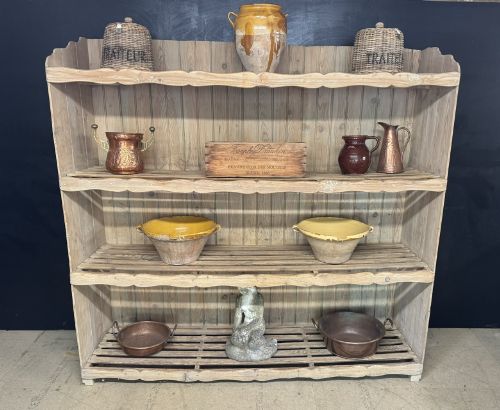
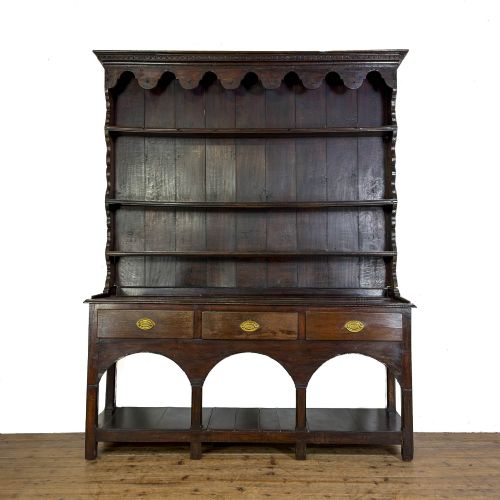
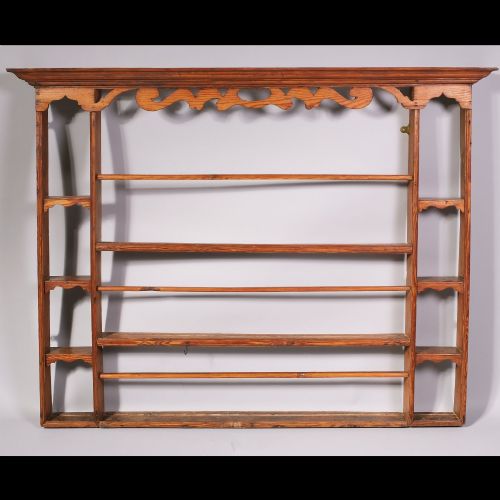
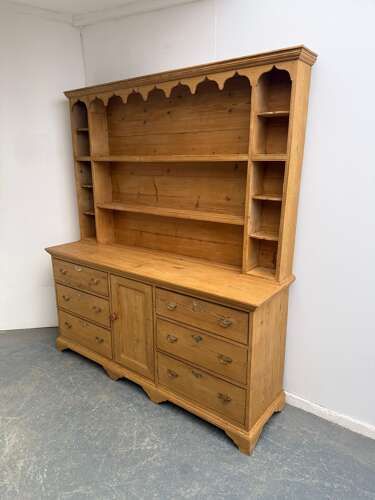
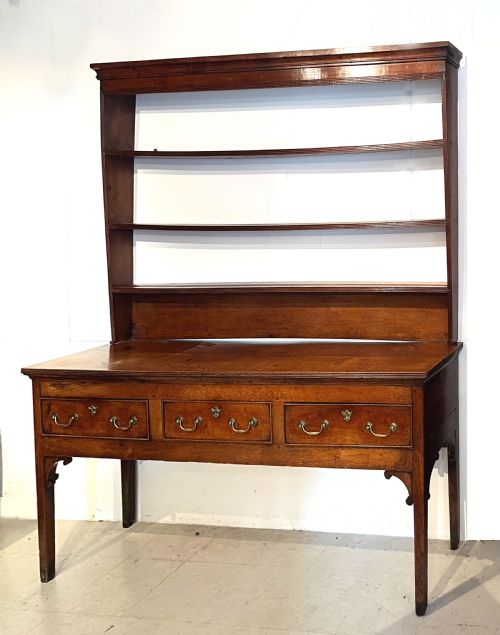

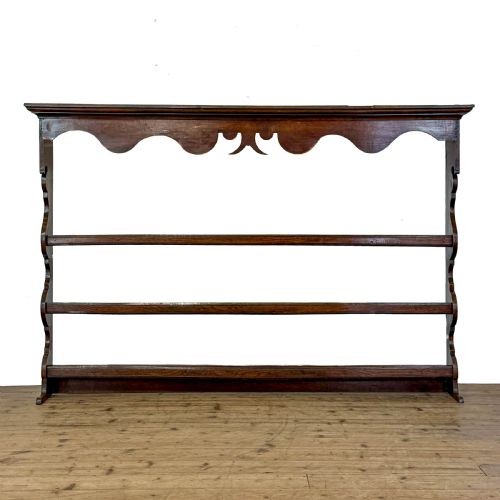

Wooden Kitchen Dresser Rack
These wooden kitchen dresser rack examples provide traditional shelving for displaying ceramics, uniting everyday utility with centuries of domestic craftsmanship.
Wooden Kitchen Dresser Rack
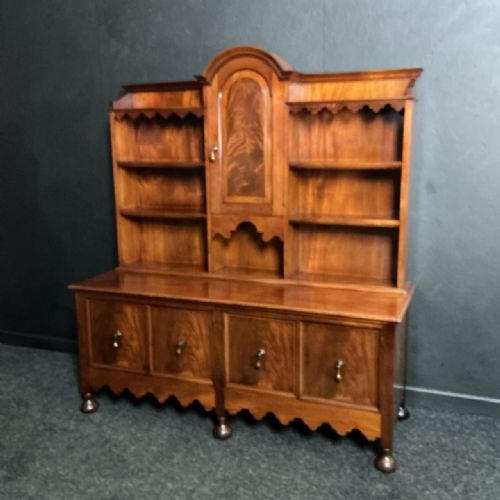
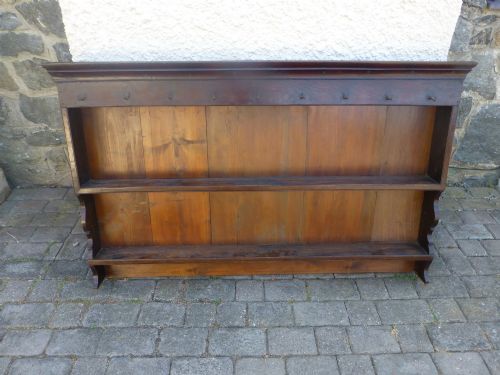
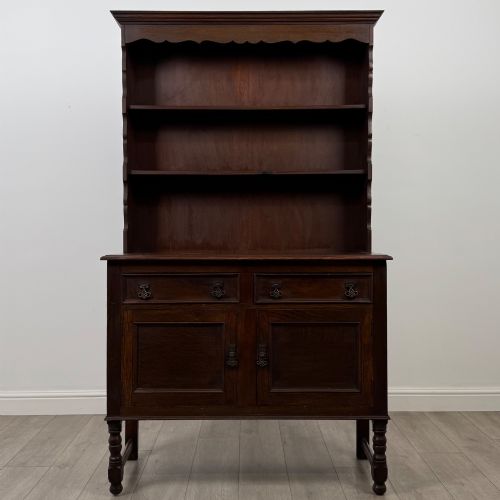
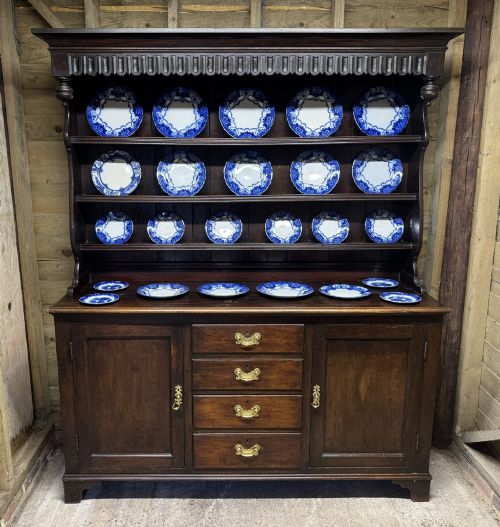
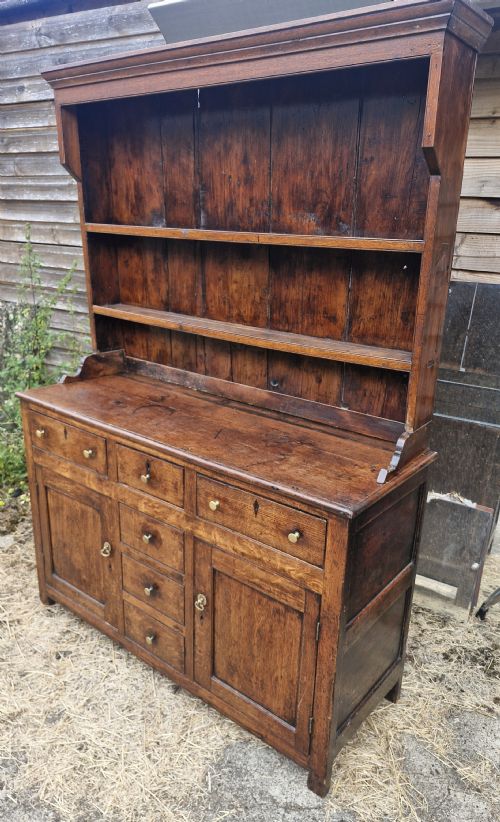
When you search for a wooden kitchen dresser rack, you encounter wall-mounted plate shelves and the upper tiers belonging to complete Welsh dressers. These pieces originate across the eighteenth and nineteenth centuries, spanning Georgian, Victorian and Edwardian periods.
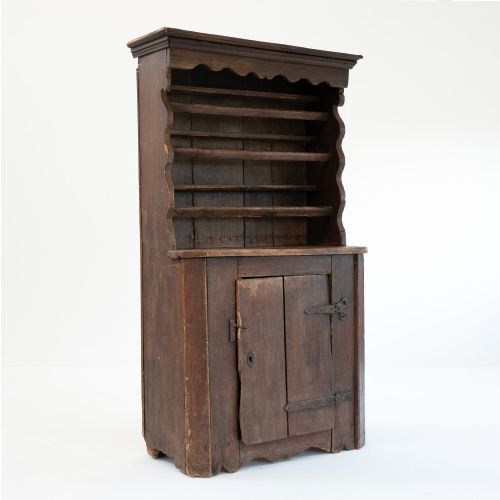
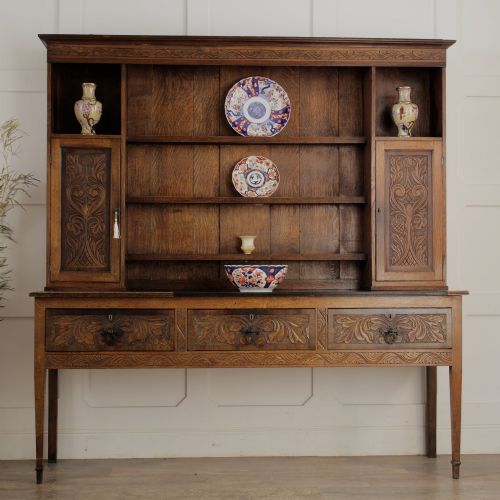
The version you most frequently meet on this page is constructed from oak or pine, designed with multiple open shelves to hold plates and dishes in a country kitchen. Regional variations include French provincial models and Irish painted formats.
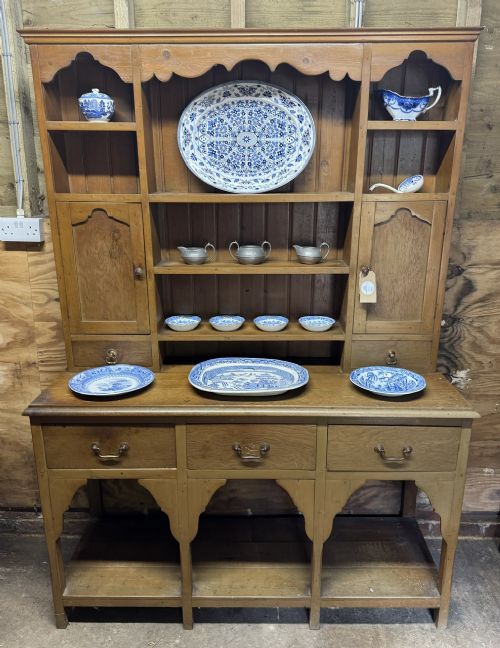
Forms range from dedicated wall shelves to complete two-part dressers featuring integrated plate racks. They reflect domestic habits where kitchen ceramics needed to remain accessible yet secure.
How they were made
Joiners built these racks primarily using solid oak, pine and elm, often securing boards with traditional pegged joints. Surfaces received hand-waxed finishes or historical painted coats that developed rich patinas over generations of use.
Makers incorporated plate grooves into the shelving timber to keep heavy ceramic dishes upright and secure. Brass or iron hooks occasionally appear beneath the lower shelves for hanging jugs and utensils.
Many antique racks still bear the faint crescent grooves worn into the timber by centuries of eager thumbs lifting plates.
What varies in quality
The standard of a wooden kitchen dresser rack depends on the selection of timber and the integrity of the original surfaces. Examples retaining untouched patinas and early painted finishes stand apart from heavily restored or stripped alternatives.
Construction detail differentiates regional country pieces, where subtle moulding profiles and original pegging indicate the work of skilled local joiners rather than factory production.
The Wooden Kitchen Dresser Rack Glossary
- Plate rack
- A wall-mounted or integrated shelving unit featuring grooved plate rails designed to display ceramic dishes vertically. These racks form the upper section of traditional dressers or hang independently.
- Delft rack
- An alternative term for a plate rack, named after the popular blue and white tin-glazed earthenware displayed upon them. They are typically found in eighteenth and nineteenth-century country kitchens.
- Pot board
- The lower open shelf situated near the floor on traditional dressers, originally intended for storing heavy pots and pans. It forms a solid structural base beneath the main counter surface.
- Patina
- The deep surface sheen and mellow colour developed by wood over centuries through handling, waxing and ageing. Original patinas are highly valued by collectors.
- Welsh dresser
- A large kitchen storage unit combining base cupboards or drawers with an open plate rack above. They appear frequently in oak and pine from the Georgian and Victorian eras.
Wooden Kitchen Dresser Rack: Frequently Asked Questions
Are dresser racks separate from the base?
Many eighteenth and nineteenth-century dressers were constructed in two separate parts, with the upper rack resting securely upon the lower base cabinet. This made transportation through cottage doorways manageable for rural joiners.
Standalone wall shelves also exist as dedicated plate racks designed to be mounted directly onto kitchen walls without a lower cabinet.
How do I date an oak plate rack?
Dating relies on examining the timber grain, tool marks, construction methods and jointing techniques visible on the reverse and interior surfaces. Eighteenth-century examples often display hand-sawn board marks and pegged joinery.
Later Victorian and Edwardian pieces show more uniform machining and machine-cut screws. Original surface finishes and historical paint layers further help anchor the period.
What is a belly rack dresser?
A belly rack refers to a regional dresser design featuring a prominent swelling or shaped frieze beneath the counter or rack structure. These eighteenth-century forms showcase regional cabinet-making quirks.
They combine practical storage with decorative vernacular styling typical of Welsh and English country workshops.
Can these racks support heavy ceramics?
Solid oak and pine construction provides substantial structural strength capable of holding heavy stoneware and ceramic collections. The internal plate grooves prevent dishes from sliding forward.
Wall-mounted versions require secure fixing to solid masonry or wall studs to safely bear the combined weight of timber and heavy plates.