


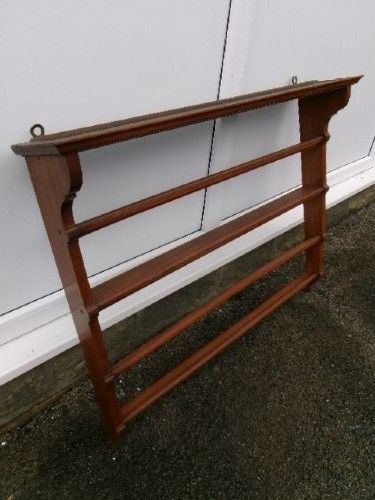

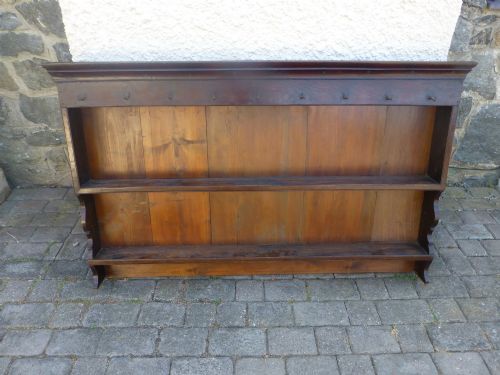
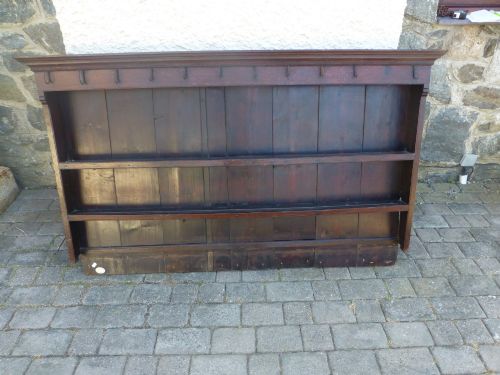
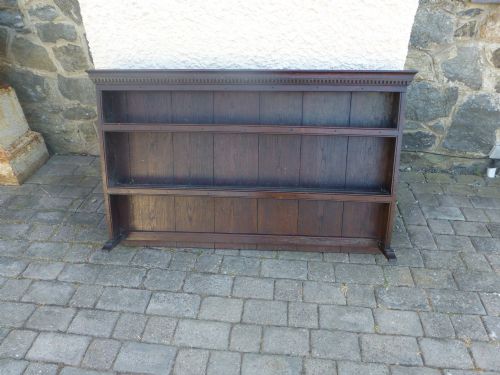
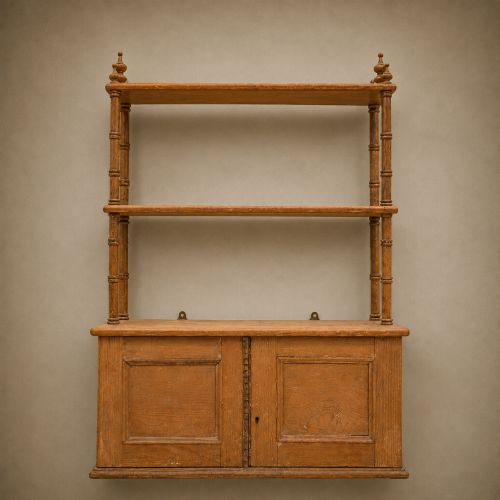
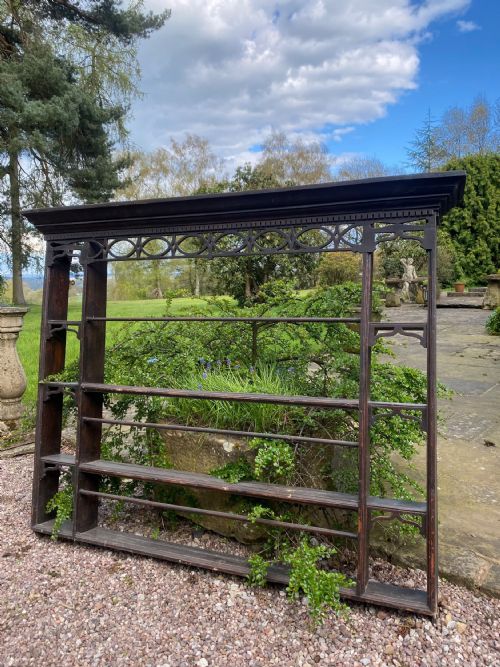
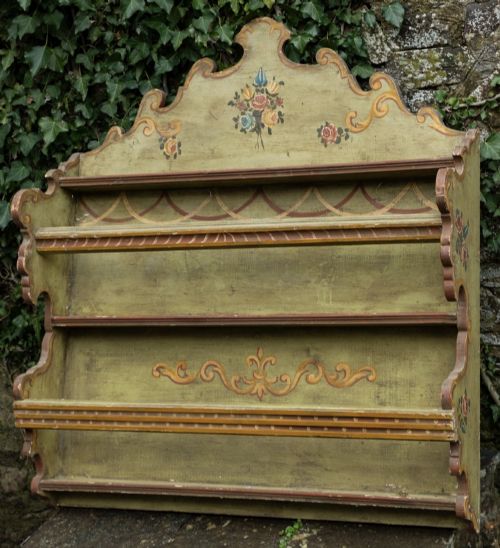
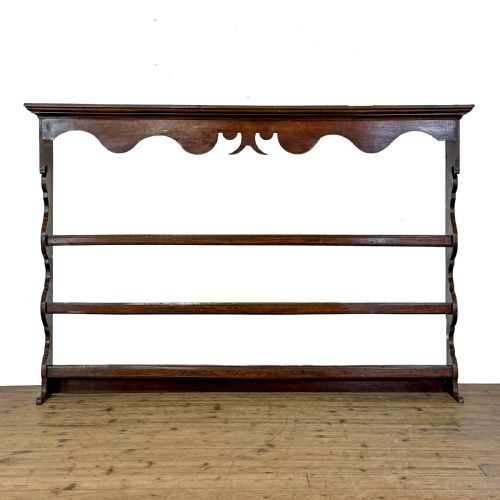


Hanging Plate Rack
A hanging plate rack organises and displays earthenware with undeniable utility, combining simple wall storage with period character.
Hanging Plate Rack
A hanging plate rack is a wall-mounted shelving unit designed to display and store ceramics safely in domestic spaces. These pieces turn utilitarian kitchen storage into a display feature, keeping everyday crockery accessible while freeing up surface space on tables and counters.
The versions met most frequently on this page span the seventeenth, eighteenth, and nineteenth centuries, taking forms such as oak delft racks, pine wall shelves, and mahogany hanging display units. Makers from these eras constructed pieces to fit specific domestic needs, ranging from plain country pine to formal George III mahogany designs.
Styles vary from straightforward English and French country utility to more decorative Victorian and Gothic Revival expressions. Examples often feature integrated elements such as iron cup hooks, fretwork, or small lower cupboards and drawers for supplementary storage.
Assessing Quality
Quality rests upon the selection of timber and the integrity of the original construction rather than mere decorative elaboration. Dense, well-figured oak or finely grained mahogany distinguishes the finer Georgian workshops from everyday utilitarian output.
The survival of original surfaces and fittings, such as untouched iron cup hooks or early painted finishes, elevates a piece above those altered or stripped down over time. Refined proportions, balanced fretwork, and clean joinery demonstrate the maker's competency within both country and formal traditions.
Hanging Plate Rack Retail Price Guide 2026
Typical asking prices for hanging plate rack among the pieces listed under this phrase on Sellingantiques today, from the lower quarter to the upper quarter. They describe what is for sale here now, not the wider market.
Listings feature oak, pine, and mahogany as the primary woods, spanning the seventeenth through to the early twentieth century.
The Hanging Plate Rack Glossary
- Delft rack
- A wall-mounted shelving unit specifically designed with narrow plate grooves and retaining rails to display tin-glazed earthenware plates safely. These fixtures form a staple of historic kitchen and dining room storage.
- Fretwork
- Openwork ornamentation cut into thin wood panels using a fretsaw, frequently seen along the cornice or apron of eighteenth-century racks. This technique adds lightness and decorative interest to otherwise utilitarian furniture.
- George III
- The stylistic period spanning the reign of George III from seventeen sixty to eighteen twenty, characterised by refined proportions and classical restraint. Mahogany hanging shelves from this era often display particularly sophisticated joinery.
- Marquetry
- The art of applying decorative veneer pieces in geometric or pictorial patterns onto a structural wood base. Examples featuring this technique show a higher level of workshop skill than standard solid wood construction.
- Wall shelves
- General domestic shelving designed to be hung directly from structural wall fixings rather than standing on the floor. This category includes open plate racks, display bookcases, and enclosed cupboard combinations.
Hanging Plate Rack: Frequently Asked Questions
How do I hang a heavy antique plate rack safely?
Secure the hanging points directly into the wooden studs or masonry behind the wall rather than relying solely on surface plaster. Use robust fixings capable of supporting the combined weight of the timber frame and heavy ceramic plates.
Distribute the weight evenly across the mounting brackets to prevent the frame from twisting or pulling away from the wall over time.
Were these racks used only in kitchens?
While primarily designed for storing kitchen earthenware and delftware within easy reach of the hearth, these shelves also appeared in dining rooms and parlours. Finer mahogany and painted versions served to display decorative porcelain and books rather than working kitchenware.
Country pine and oak iterations typically remained in domestic food preparation spaces where utility dictated placement.
How do I distinguish eighteenth-century oak from later pine?
Eighteenth-century oak exhibits a dense, heavy grain structure with distinct medullary rays, often developing a rich, dark patina through age and smoke exposure. Pine is a softer, lighter softwood with a more uniform yellowish grain that reacts differently to historic paint or wax finishes.
Examining the tool marks on the hidden backboards and underside of the shelves also reveals whether hand saws or later industrial machinery shaped the timber.
Can these shelves support modern heavy dinnerware?
Most antique racks handle standard modern ceramics comfortably, provided the timber remains structurally sound and securely fastened to the wall. However, extremely heavy stoneware or oversized contemporary platters may exceed the depth of historic plate grooves.
Check the depth of the display ledges and the tightness of the retaining rails before loading the shelves with heavy crockery.