


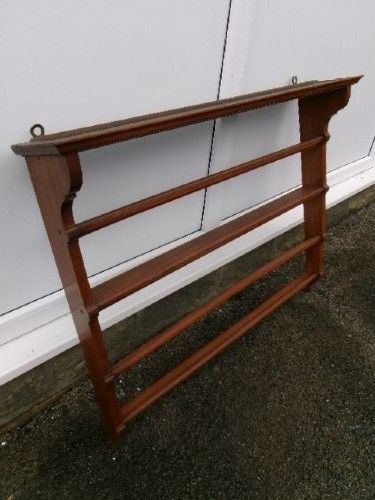

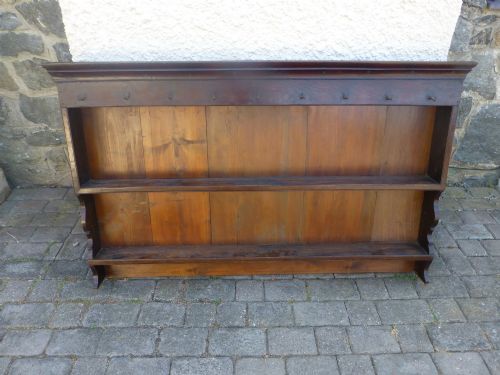
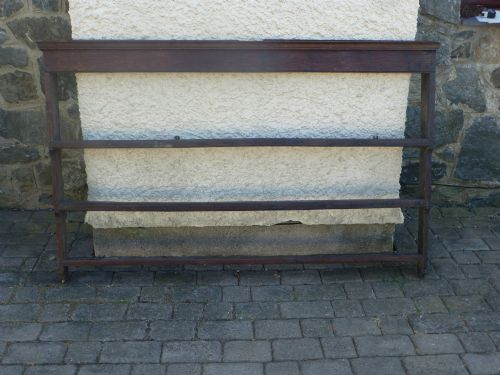
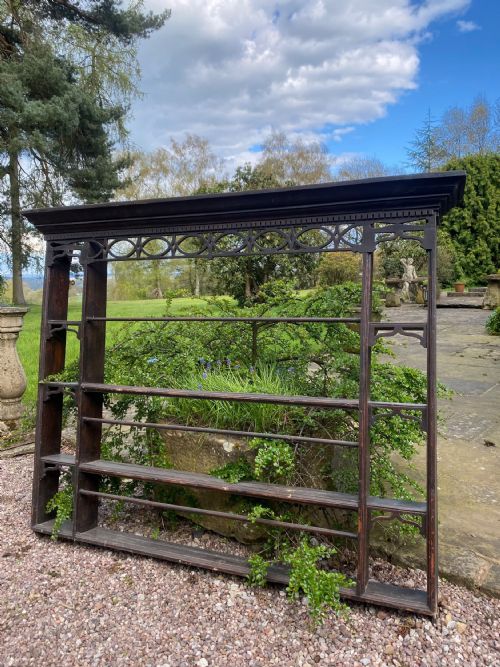
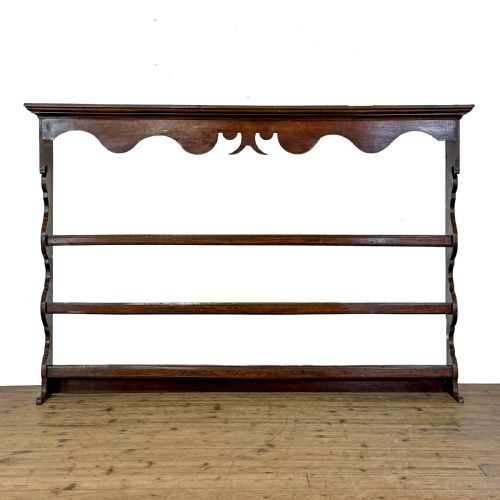
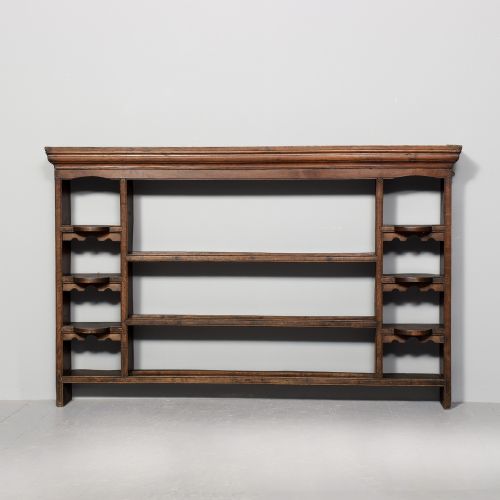


Wall Mounted Plate Shelf
A wall mounted plate shelf organises crockery in plain view while adding functional display space to a room.
Wall Mounted Plate Shelf
A wall mounted plate shelf serves to display and hold domestic ceramics upon walls rather than floor standing furniture. The versions encountered here range from simple country pine and oak racks to formal Georgian mahogany hanging shelves.
Most examples originate from the eighteenth and nineteenth centuries, taking forms such as delft racks, dresser racks and hanging display shelves. Pieces span English and French country styles alongside more decorative Arts and Crafts and Gothic Revival iterations.
Buyers select these items to store plates safely while bringing historical character to kitchens, dining rooms and hallways. The surviving pieces utilise durable timbers suited to supporting heavy earthenware over generations of daily use.
Materials and construction methods
Makers constructed these racks predominantly using solid timbers like oak, mahogany, pine and cherry wood, often pairing structural oak with softer pine for internal sections. Selected items incorporate brass or iron fixings and hinges alongside decorative elements such as marquetry and Corinthian columns.
Joinery techniques relied on traditional hand tools to shape timber boards into functional tiers, plate slots and hanging backs. Surfaces were left in natural finishes, stained, painted or polished depending on the domestic setting and period fashion.
Wall Mounted Plate Shelf Retail Price Guide 2026
Typical asking prices for wall mounted plate shelf among the pieces listed under this phrase on Sellingantiques today, from the lower quarter to the upper quarter. They describe what is for sale here now, not the wider market.
One unexpected survival pairs traditional oak and pine with carved Corinthian columns for an architectural touch.
Distinguishing quality across examples
The standard of craftsmanship shows in the selection of timber and the precision of the joinery used to assemble the shelves and plate supports. Superior items feature finely figured mahogany, carefully carved details like columns, and intact original hanging mechanisms.
Proportion and timber preservation distinguish better pieces from simpler utilitarian ones, with undisturbed surfaces and minimal timber replacement holding greater appeal for collectors of period country furniture.
The Wall Mounted Plate Shelf Glossary
- Delft rack
- A wall mounted wooden shelving unit specifically designed with narrow ledges and retaining rails to display tin-glazed earthenware plates upright.
- Hanging shelves
- Open wooden shelving fitted with brackets or fixing points to suspend directly from a wall rather than resting upon the floor.
- Marquetry
- Decorative inlay work using various coloured wood veneers to create geometric or floral patterns on the surface of furniture.
- Corinthian columns
- Classical architectural upright supports featuring ornate carved capitals decorated with acanthus leaves, sometimes applied as decorative details on larger racks.
- George III
- The stylistic and historical period spanning from 1760 to 1820, characterised in these listings by refined mahogany or robust oak construction.
Wall Mounted Plate Shelf: Frequently Asked Questions
How do I hang a heavy antique plate rack safely?
These shelves require secure fixing into solid wall studs or masonry using appropriate wall plugs and screws matched to the weight of the timber and ceramics.
Professional installation ensures the substantial load of oak or mahogany alongside heavy plates is supported safely without straining the historical joints.
Were these shelves originally meant for kitchens?
Many examples served in kitchens and sculleries to hold everyday earthenware plates and platters within easy reach of the hearth.
Finer mahogany versions often hung in dining rooms or parlours to display imported porcelain and decorative ceramics for guests.
How do I tell an 18th-century rack from a 19th-century one?
Eighteenth-century examples typically display robust oak construction with hand-planed surfaces, pegged joinery and simpler country proportions.
Nineteenth-century pieces frequently utilise mahogany or painted pine, sometimes incorporating decorative marquetry, finer mouldings or Arts and Crafts styling.
Can these shelves hold modern dinner plates?
Many older racks feature shallow plate grooves intended for thinner antique ceramics rather than heavy modern stoneware.
Checking the depth of the display ledges and the height clearance between tiers helps determine whether contemporary tableware will fit securely.