
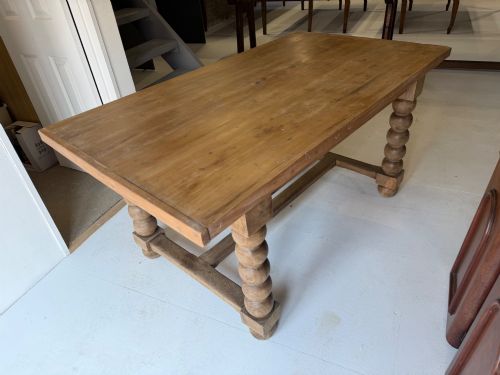
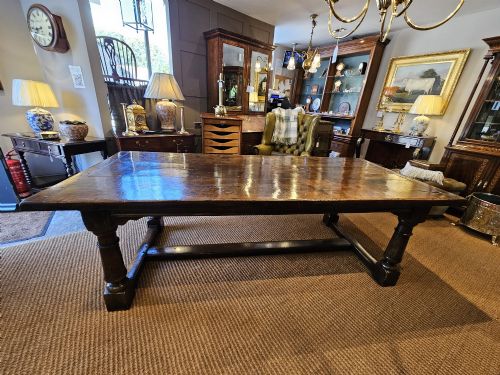
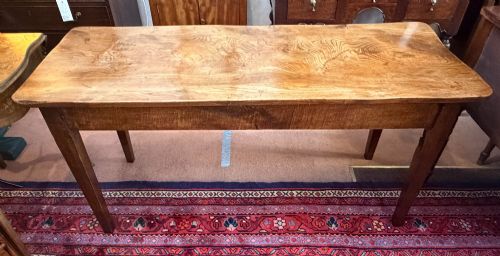
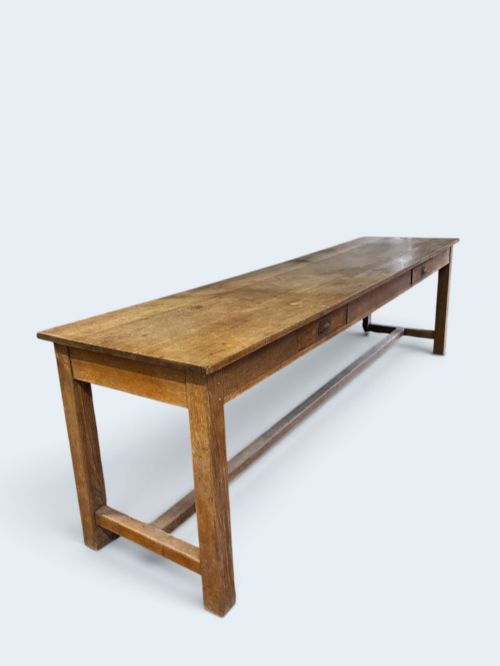
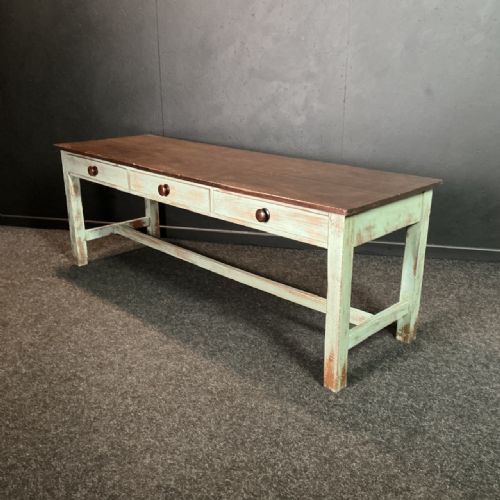
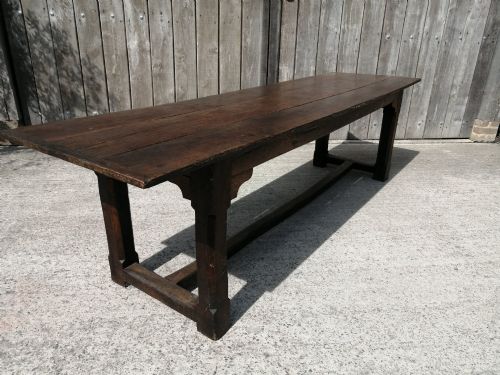
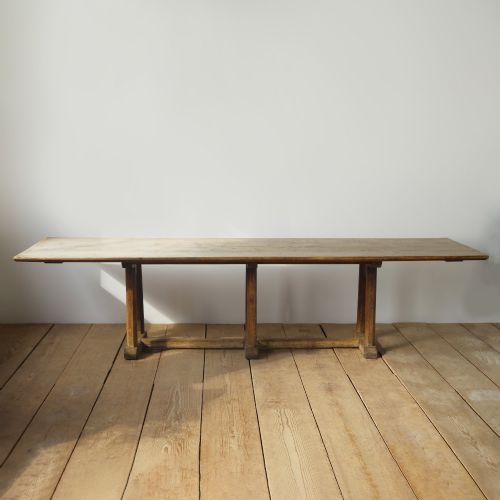
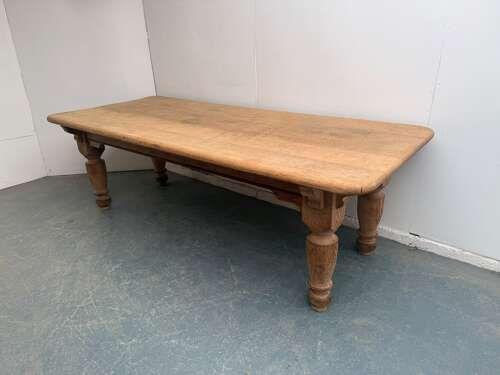
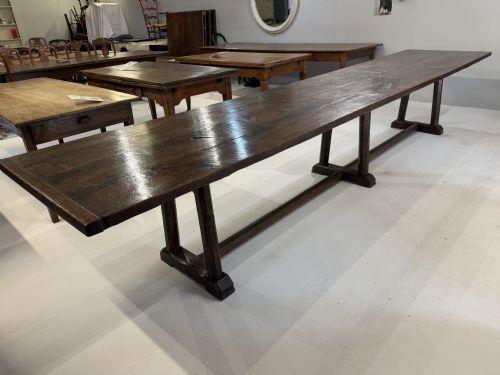
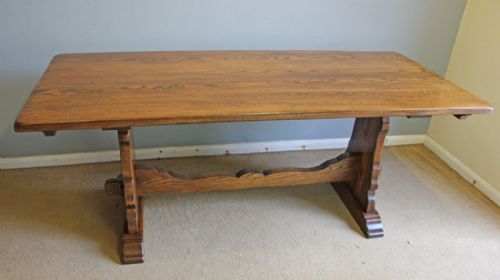
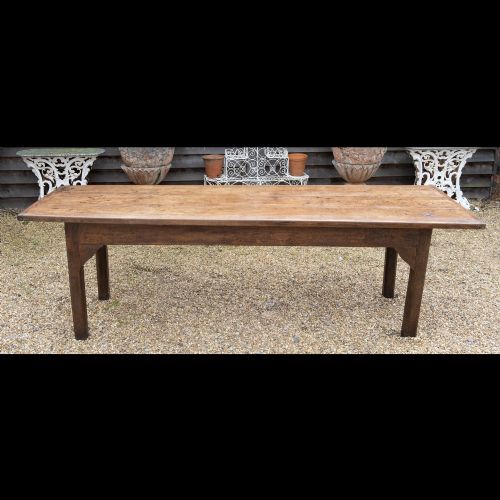
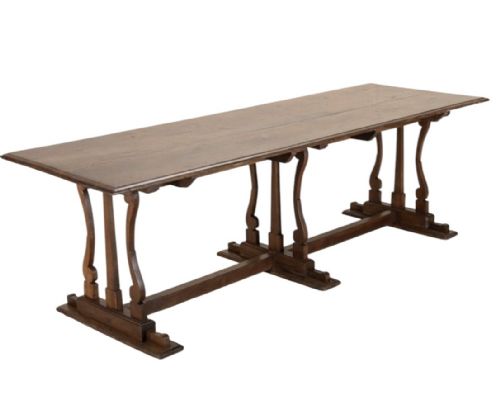
Country House Refectory Table
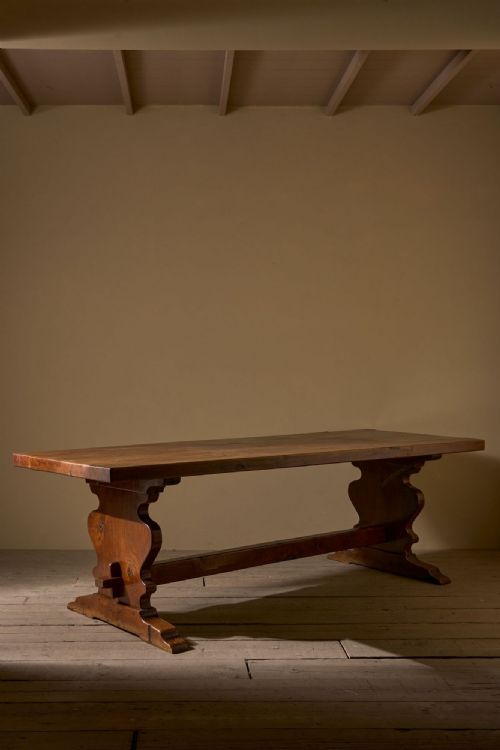
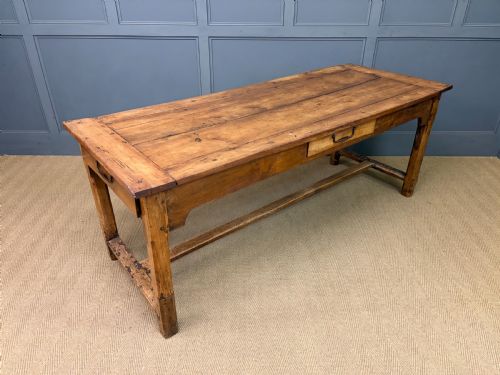
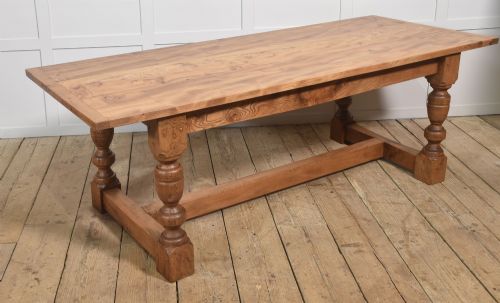
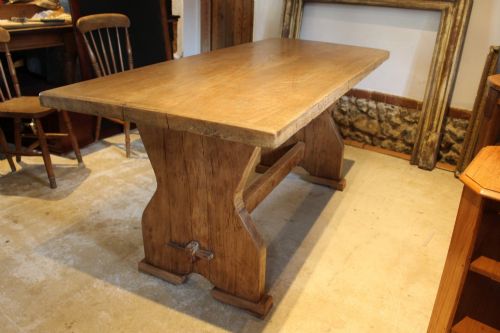
A country house refectory table brings monumental scale and honest domestic history into a room, designed to seat large gatherings around a substantial timber top.
Country House Refectory Table
A country house refectory table is a long, linear dining surface built to accommodate substantial households, emerging from historical monastic and communal dining traditions. When searching for this phrase, a buyer encounters heavy timber frames designed for daily domestic use rather than formal entertaining.
The most common versions on this page span the eighteenth and nineteenth centuries, often showing regional English, French, or Swedish origins. These pieces frequently manifest as farmhouse or refectory hybrids utilising enduring hardwoods like oak and elm.
Makers constructed these boards for active kitchens and dining halls, resulting in utilitarian proportions that easily span six to ten seats or more. Their survival reflects robust structural engineering meant to endure generations of heavy employment.
What Varies In Quality
Quality rests in the integrity of the timber selection and the degree of original construction that survives intact beneath subsequent restorations. Tables featuring thick, single-board tops command greater regard than those assembled from mismatched planks.
Proportion and stance separate standard utility pieces from exceptional examples, particularly where stretcher placement allows comfortable legroom alongside impressive overall length. The depth of the natural patina built up across centuries of use further defines the upper tier of these boards.
The Country House Refectory Table Glossary
- Refectory table
- A long dining table originally built for monastic dining halls. These pieces evolved into domestic fixtures found in large country houses.
- Stretcher
- A horizontal wooden brace connecting the legs of a table for structural stability. On country tables, end stretchers often show heavy wear from resting feet.
- Patina
- The surface sheen and colour developed by wood over years of handling, polishing, and exposure. This depth of finish indicates age and continuous domestic use.
- Mortise and tenon
- A traditional joint where a projecting tongue fits snugly into a corresponding cavity. This method locks timber frames together without relying on metal fasteners.
- Trestle table
- A board supported by two or more upright frames connected by a longitudinal beam. This design provides maximum leg clearance along the length of the table.
Country House Refectory Table: Frequently Asked Questions
What defines a country house refectory table?
These tables are distinguished by their generous length, heavy timber construction, and straightforward utilitarian design. They were built to serve communal dining needs in large domestic settings.
Most examples utilise regional hardwoods such as oak, elm, or fruitwood, supported by robust stretcher bases. Their appearance reflects decades or centuries of practical daily employment.
How were these large tables originally used?
Families, servants, and guests gathered around these surfaces for daily meals, food preparation, and household administration. Their immense scale made them the literal and social centre of the kitchen or dining hall.
Over time, the wear from heavy platters, elbows, and constant cleaning shaped the character of the wood. They functioned as permanent fixtures rather than movable furniture.
How do I style a refectory table today?
Pairing these monumental tables with mismatched chairs or simple benches allows the historic timber to remain the visual focus of the room. Their scale suits large open-plan kitchens or dedicated dining spaces.
Keeping surfaces largely unadorned highlights the natural grain and historic patina. Daily use continues their long domestic history without requiring delicate handling.
How can I tell the period of the table?
Dating relies on observing construction marks, timber choice, and leg styling, such as bobbin turnings or simple square posts. Earlier eighteenth-century iterations often display pegged joints and wider single-board tops.
Nineteenth-century adaptations frequently incorporate regional European styles like French provincial or Gothic revival influences. Examining the underside reveals the tool marks and joining methods characteristic of specific eras.