
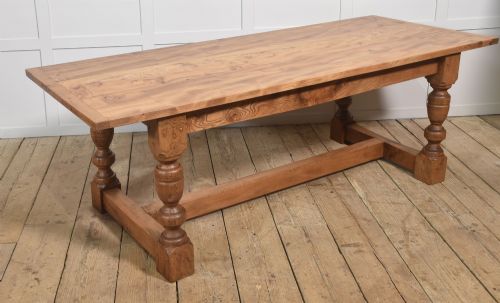


Elm Refectory Dining Table
An elm refectory dining table brings solid timber grain and centuries of domestic utility straight into a modern dining room.
Elm Refectory Dining Table
An elm refectory dining table stands as a substantial communal board, designed originally for long halls and large kitchens. These pieces combine sturdy timber frames with broad surfaces suited to daily household gathering.
The versions most common on this page span from nineteenth-century English and French farmhouse examples to earlier eighteenth-century forms. Makers frequently combined elm tops with supporting structures of oak or other resilient woods.
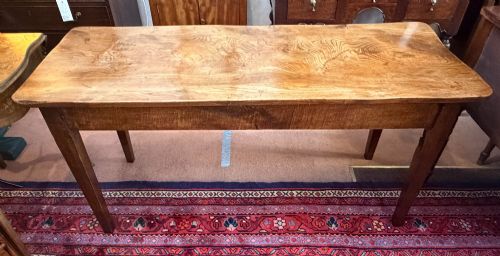
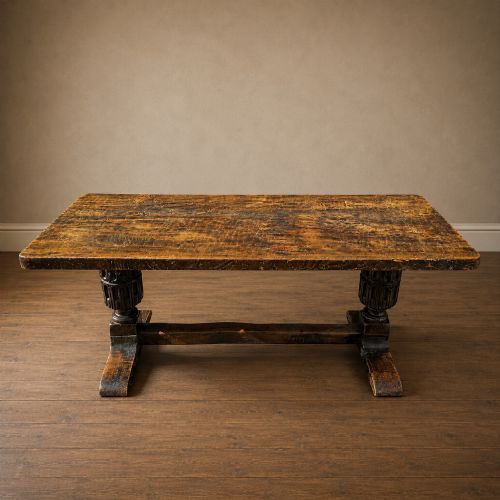
Buyers encounter long rectangular formats, occasionally featuring single plank or two-board surfaces. Certain regional variants incorporate side drawers or turned legs for added domestic utility.
Materials and construction methods
Elm timber provides the primary surface material across these listings, valued for its dense grain and resistance to splitting under heavy use. Cabinet makers frequently paired these thick elm tops with oak underframes and structural supports.
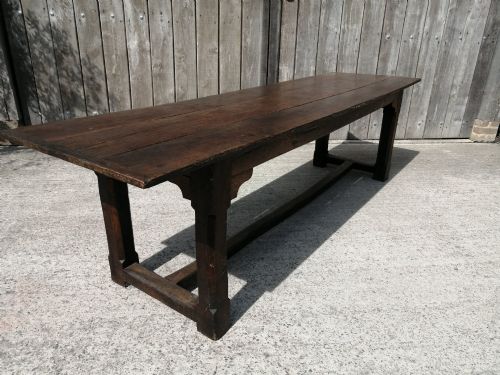
Joinery methods rely on traditional pegged joints, mortise and tenon frames, and hand-planed timber boards. Carpenters selected individual planks for width and grain pattern, securing tops to heavy stretchers and legs.
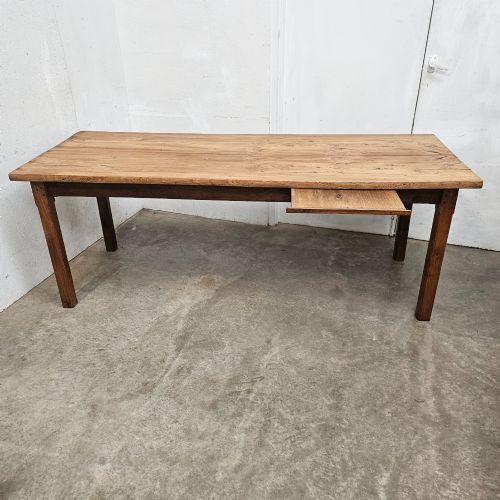
Some hardworking nineteenth-century examples retain a solitary side drawer for stashing table linen or bread knives.
What separates examples by quality
Quality rests upon the thickness and integrity of the timber top, particularly where single-board or two-board surfaces survive intact. Superior examples display deep patination and harmonious grain alignment across the whole span.
The structural robustness of the underframe and the retention of original pegged joinery dictate an authentic piece's standing. Tables featuring integrated drawers and well-balanced proportions command greater regard among collectors.
The Elm Refectory Dining Table Glossary
- Refectory table
- A long, narrow dining table traditionally used in communal dining halls and large country kitchens. These boards typically feature heavy stretcher bases for stability.
- Plank top
- A table surface constructed from individual long boards of timber joined edge to edge. Single plank and two-board variants are particularly prized for their unbroken grain.
- Patina
- The surface sheen and colour developed over decades of use, cleaning, and exposure to light. This visual depth indicates genuine age.
- Stretcher
- A horizontal timber rail connecting the legs of a table to provide rigidity and structural support. They often run low near the floor on traditional farmhouse forms.
Elm Refectory Dining Table: Frequently Asked Questions
How do I clean an old elm table?
Wipe surfaces down using a damp cloth without harsh chemical detergents or abrasive pads. Dry the timber thoroughly immediately afterwards.
Apply occasional coats of natural beeswax to nourish the wood and maintain its protective finish.
Can these tables seat large families?
Many examples measure over six feet in length and comfortably accommodate eight to ten diners. Their open underframes allow chairs to tuck in easily along the sides.
Buyers should verify specific length and clearance measurements against their dining space before purchase.
How do I date an elm table?
Examine the underside of the top and the joinery methods for hand-tool marks and pegged tenons. Wood shrinkage patterns and surface wear offer reliable clues regarding age.
Compare the leg turnings and timber combinations against documented period styles like George I or Victorian farmhouse designs.
Will elm wood warp over time?
Elm timber possesses a notoriously interlocking grain that resists splitting but can move with significant humidity shifts. Keeping the table away from direct heat sources prevents excessive drying.
Allowing the wood to acclimate to a stable indoor environment preserves the alignment of the boards.