

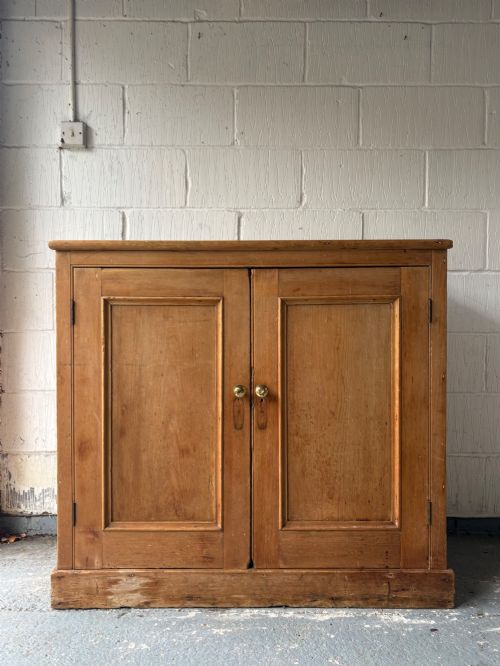
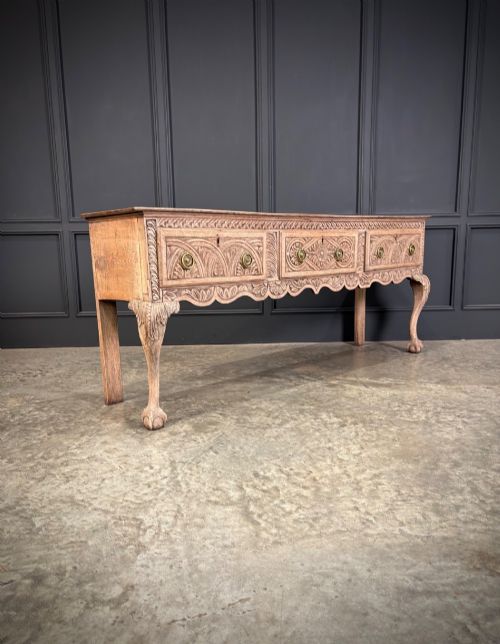
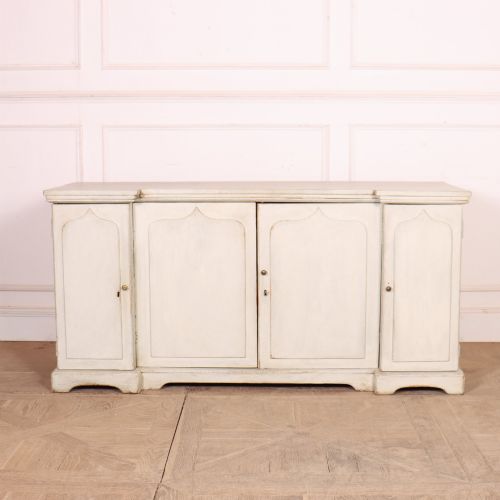
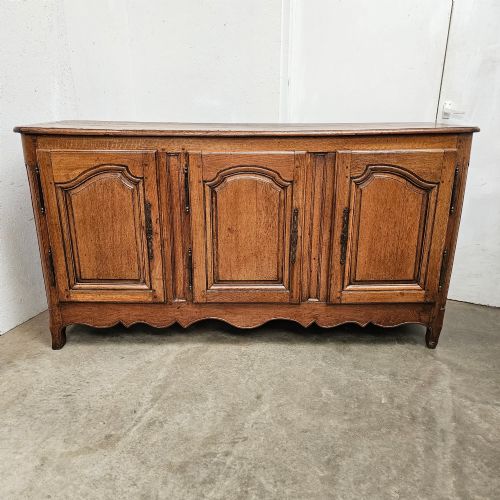




Country House Low Sideboards
Country house low sideboards bring honest utility and warm timber tones into a room, offering sturdy surfaces and generous storage built for daily use.
Country House Low Sideboards
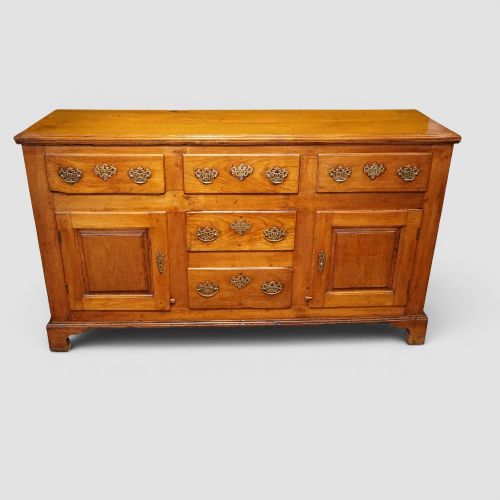
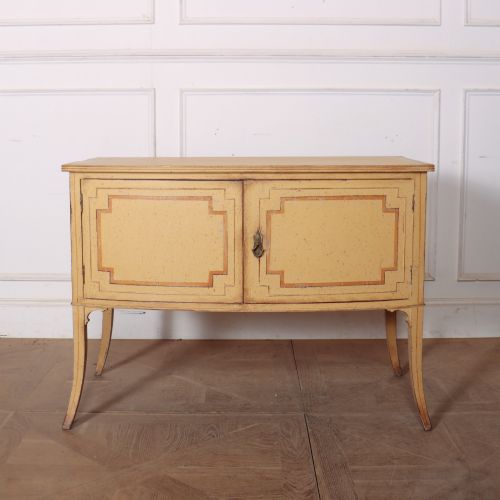
Country house low sideboards encompass robust oak and fruitwood dresser bases, enfilades, and side cabinets designed for practical service rather than formal display. These low-slung pieces frequently date from the eighteenth and nineteenth centuries, emerging from English, Welsh, and French provincial workshops.
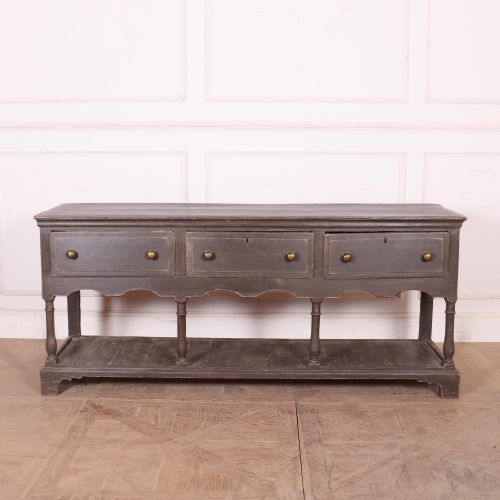
The versions most commonly met on this page are sturdy oak dresser bases and potboard bases spanning the Georgian era and the wider nineteenth century. They provide long, low timber surfaces paired with deep drawers or cupboard doors.
Makers in these rural and provincial settings prioritized heavy timber construction, utilising local hardwoods to build functional storage units for kitchens, dining rooms, and service hallways.
How they were made
Construction relies heavily on native timbers such as oak, walnut, and fruitwood, often joined with pegged mortise and tenon joints to withstand decades of heavy use. Potboard bases and dresser bases feature thick plank tops above hand-planed drawer fronts.
Hardware typically consists of wrought iron or brass drop handles and hinges, while some regional examples display painted finishes over timber or incorporate earlier panels into later frameworks.
Country House Low Sideboards Retail Price Guide 2026
Typical asking prices for country house low sideboards among the pieces listed under this phrase on Sellingantiques today, from the lower quarter to the upper quarter. They describe what is for sale here now, not the wider market.
Regional forms span English, Welsh, and French provincial traditions, including potboard bases and enfilades.
What varies in quality
Quality rests in the integrity of the timber, the thickness of the top boards, and the retention of original surface patination. Pieces that maintain their untouched timber surfaces and original iron or brass fittings sit clearly above those with heavy modern replacements.
Structural honesty and regional character dictate desirability, where straightforward provincial joinery and well-proportioned potboards outweigh later alterations or composite construction.
The Country House Low Sideboards Glossary
- Dresser base
- A low wooden storage unit featuring drawers and sometimes a lower potboard shelf, historically used for food preparation and serving.
- Potboard
- An open slatted lower shelf built into the base of a dresser to hold heavy pots and domestic utensils.
- Enfilade
- A long low storage cabinet featuring a succession of doors in a row, common in French provincial rooms.
- Fruitwood
- Dense timber harvested from fruit-bearing trees such as pear or cherry, utilised for provincial cabinetry and fine turned details.
- Breakfront
- A piece of furniture featuring a central section that projects forward beyond the flanking cabinets.
Country House Low Sideboards: Frequently Asked Questions
Where were these low sideboards used?
They originated in kitchens, dining rooms, and service corridors of country houses and provincial farmhouses for storing tableware and provisions.
Their low profiles allowed them to sit comfortably beneath windows or along heavy stone walls.
How do I date a timber dresser base?
Dating relies on observing construction methods, tool marks on the timber, and the style of the drawer framing and hardware.
Earlier eighteenth-century pieces often show hand-planed boards and pegged joints, whereas nineteenth-century examples display tighter machine assistance.
How do I care for antique oak furniture?
Protect the timber by keeping it away from direct heat sources and sudden humidity changes that cause wood to warp.
Feed the dry surface occasionally with a traditional beeswax polish to maintain the natural patina of the wood.