

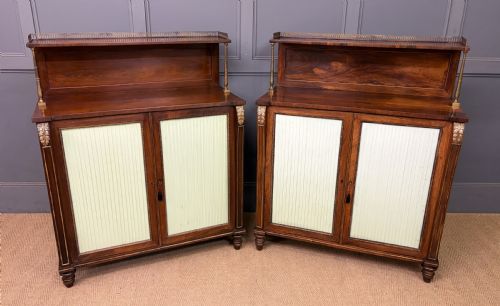


Pair Low Cabinets
These pair low cabinets span centuries of fine timberwork, offering matched utility and symmetrical presence for discerning rooms.
Pair Low Cabinets
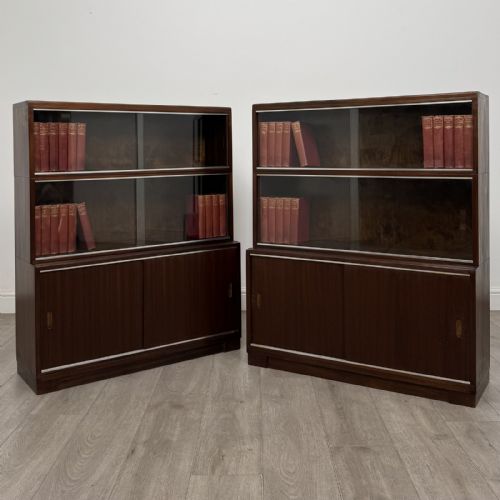
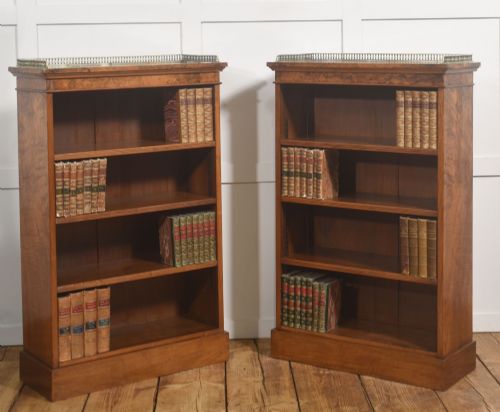
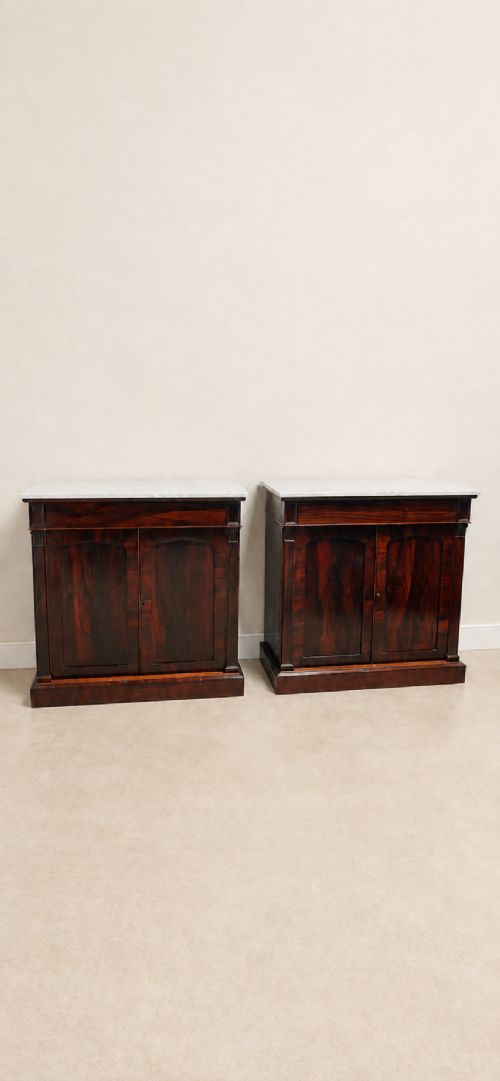
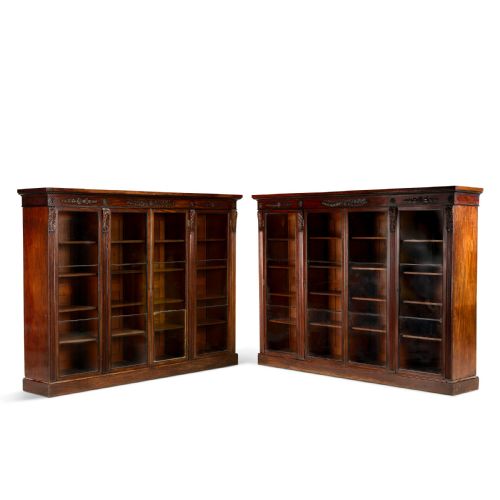
When you search for pair low cabinets, you encounter matching sets of short storage pieces designed for domestic utility and symmetry. The listings reveal a strong showing of bedside cabinets, open bookcases, and side cabinets standing at reduced heights.
The periods represented stretch from the eighteenth century through the nineteenth century into the twentieth century, including Regency, Victorian, Edwardian, and Art Deco eras. Regency and nineteenth-century examples appear frequently, often executed in rich timbers.
Forms vary from open library bookcases and breakfront designs to door-enclosed side cabinets and pot cupboards. Many retain their original matched proportions, making them well suited for flanking a bed, fireplace, or low wall space.
Materials and construction
Cabinet makers relied heavily on dense hardwoods such as mahogany, rosewood, walnut, and burr walnut, often selecting figured veneers to create striking surface patterns. Oak and satinwood also feature prominently in both country house pieces and urban workshop productions.
Metalwork played a key structural and decorative role, utilising brass for inlays, handles, and grilles, alongside cast ormolu mounts on select refined examples. Marble tops appear on several bedside and side cabinets, adding weight and durable finished surfaces.
Pair Low Cabinets Retail Price Guide 2026
Typical asking prices for pair low cabinets among the pieces listed under this phrase on Sellingantiques today, from the lower quarter to the upper quarter. They describe what is for sale here now, not the wider market.
The archive and current listings record pair low cabinets executed in mahogany, rosewood, walnut, oak, and satinwood across eight distinct historical periods.
Factors of quality
The standard of a pair rests primarily on the choice of timber and the precision of matched veneers. Pieces utilising highly figured mahogany, burr walnut, or richly grained rosewood demonstrate superior initial selection by the maker.
Integration of secondary materials such as finely chased ormolu mounts, intricate brass inlay work, and robust internal carcase construction elevates an example. Consistency between both pieces in the pair determines their success as matched furnishings.
Richard Bridgens·Gillows·Waring and Gillow·Heals
The Pair Low Cabinets Glossary
- Breakfront
- A piece of furniture where the central section projects forward from the flanking sides. This architectural arrangement creates depth and visual interest across larger cabinet fronts.
- Ormolu
- Gilded bronze applied as decorative mounts on furniture. It gained widespread use during the Regency and French Empire styles to accentuate corners and panels.
- Pier cabinet
- A low cabinet designed specifically to fit against the wall space between windows. Victorian examples often incorporated glazed doors to display books or small objects.
- Figured
- Wood grain containing attractive patterns such as curls, flames, or mottling caused by irregular growth. Cabinet makers reserved these choice sections for prominent door and drawer surfaces.
Pair Low Cabinets: Frequently Asked Questions
What rooms suit pair low cabinets?
These cabinets suit bedrooms as matched bedside tables or libraries as low open bookcases.
Their reduced height also allows placement beneath windows or along hallways without blocking light.
How do I date a pair?
Dating relies on timber choices, secondary woods, and stylistic motifs such as Regency brass inlay or Art Deco geometry.
Construction methods inside drawers and carcases provide further clues to the period of manufacture.
Are matched pairs always identical?
Many pairs are made together by the same workshop to ensure identical dimensions and grain patterns.
Some older sets are assembled later as matched pairs based on compatible size, timber, and period style.
How should I care for timber surfaces?
Polishing with traditional wax preserves the natural finish of mahogany, walnut, and rosewood surfaces.
Keeping pieces away from direct heat sources prevents timber shrinkage and veneer lifting.