



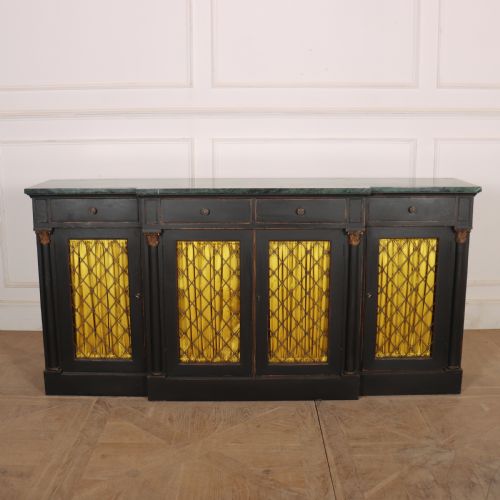


Antique Wire Door Credenzas
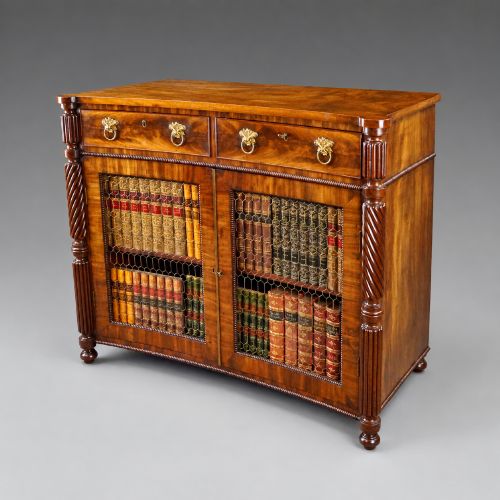
These antique wire door credenzas and related cabinets bring architectural timber and fine metalwork straight into a room.
Antique Wire Door Credenzas
When buyers search for antique wire door credenzas, they find low-profile storage furniture designed to display and protect contents behind mesh or grille panels. The pieces on this page span the eighteenth and nineteenth centuries, taking the form of side cabinets, chiffoniers, and low bookcases rather than fitted office credenzas.
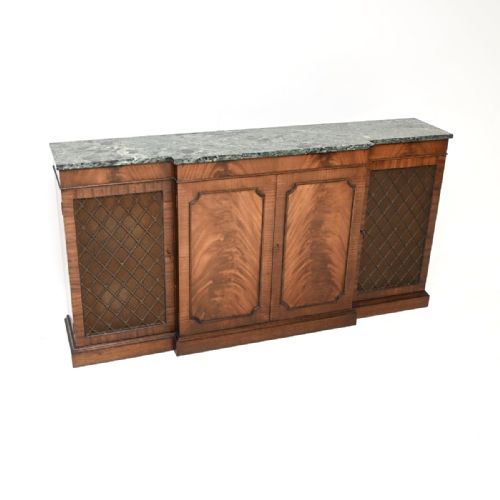
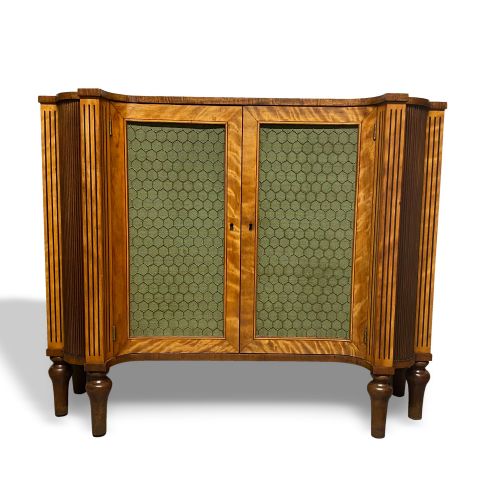
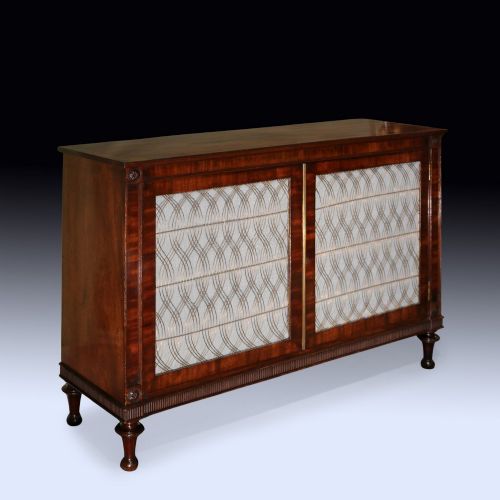
The Regency period dominates the selection, accompanied by George III, William IV, and later nineteenth-century examples. These cabinets typically feature mahogany or satinwood carcasses, often paired with brass wire grilles in place of solid timber or glass doors.
Formats range from breakfront dresser bases to compact two-door cabinets and pairs of side pieces. They function well in dining rooms or living spaces where low storage and visual lightness matter.
How they were made
Cabinet makers utilised dense hardwoods such as mahogany, rosewood, and satinwood, often applying brass inlay or decorative grilles to the door panels. These materials provided the structural stability needed for long side cabinets and low bookcases.
Mesh and fabric components were integrated behind brass wire grilles to soften the interior view while keeping contents secure. Marble tops appear on specific cabinet variations, adding weight and a cool horizontal surface to the timber frame.
Antique Wire Door Credenzas Retail Price Guide 2026
Typical asking prices for wire door credenzas among the pieces listed under this phrase on Sellingantiques today, from the lower quarter to the upper quarter. They describe what is for sale here now, not the wider market.
Fabric linings occasionally hide behind the brass wire doors, proving that past owners liked to keep their linen secrets.
What varies in quality
The refinement of the timber figures and the crispness of the brass inlay set finer examples apart from simpler country house pieces. Cabinet makers who worked in the manner of established designers achieved greater harmony in proportion and joinery.
The retention of original brass wire grilles and marble tops alters the character and integrity of a piece. Subtle details such as concave curves and painted finishes distinguish bespoke commissions from standard workshop production.
Ince and Mayhew
The Antique Wire Door Credenzas Glossary
- Credenza
- A low dining room or side cabinet used for serving or storage. It sits lower than a traditional sideboard.
- Chiffonier
- A compact sideboard developed in the early nineteenth century, typically featuring shelves or enclosed cupboards beneath.
- Grille
- A lattice of metal wire or brass fitted into cabinet doors to allow visibility into the interior while protecting the contents.
- Breakfront
- A piece of furniture where the central section projects forward from the flanking outer sections.
- Satinwood
- A light-coloured, lustrous timber from tropical trees, favoured for fine veneer work in high-status furniture.
Antique Wire Door Credenzas: Frequently Asked Questions
What are antique wire door credenzas?
These pieces are low nineteenth-century and eighteenth-century storage cabinets featuring mesh or wire grilles on the doors. They combine timber frames in mahogany or satinwood with practical display space.
Buyers encounter formats ranging from chiffoniers to breakfront sideboards designed for domestic display and storage.
How were these cabinets used originally?
Dining rooms and libraries utilised these low cabinets to store porcelain, linen, and bound volumes out of direct dust yet within reach. The enclosed mesh doors kept contents secure while allowing air circulation.
Their low height also provided a surface for serving dishes or displaying decorative objects in principal rooms.
How do I live with one today?
These cabinets fit neatly beneath wall art or flat screens in living areas, offering concealed storage for media or tableware. The mesh doors soften the visual weight of timber in a modern interior.
Placing them in hallways or dining spaces preserves their traditional role as functional low side storage.
How do I tell Regency pieces apart from other periods?
Regency items display classical restraint, often incorporating brass inlay, rosewood, and distinctive concave timber forms. They reflect early nineteenth-century tastes influenced by archaeological discoveries.
Earlier Georgian pieces lean towards satinwood and architectural proportions, while William IV furniture tends to feature heavier mahogany construction.