



Country House Equestrian Painting
These country house equestrian painting works capture the power and prestige of horses, hounds, and riders across centuries of sporting life.
Country House Equestrian Painting
A country house equestrian painting brings the energy of the stable, the racecourse, and the hunt directly onto the wall. Buyers exploring this phrase encounter works dominated by nineteenth century and Victorian canvases, alongside occasional Edwardian pieces and revival mirrors.
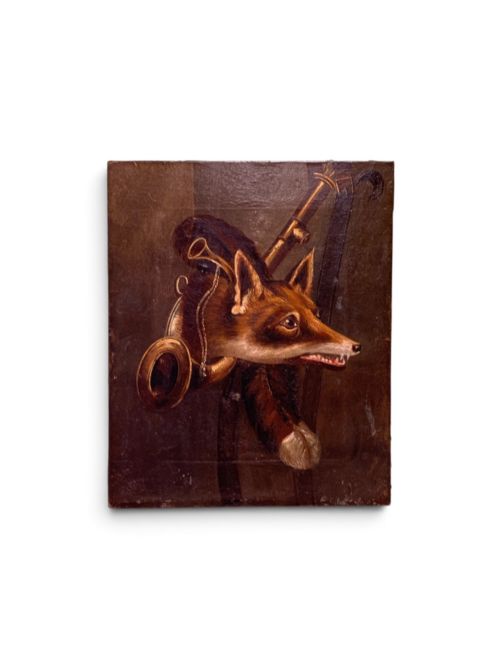
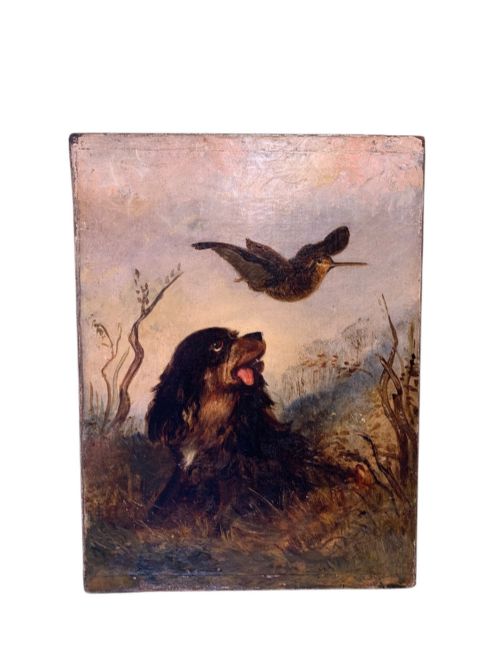
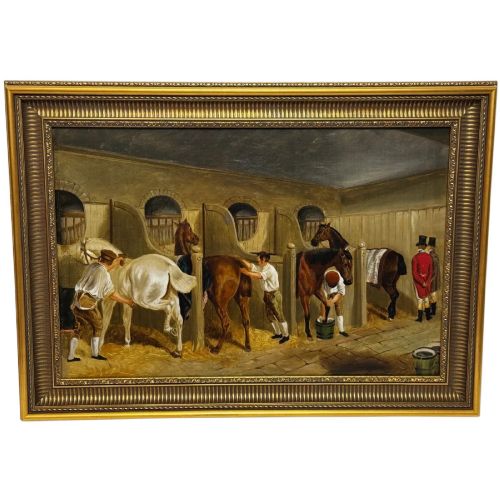
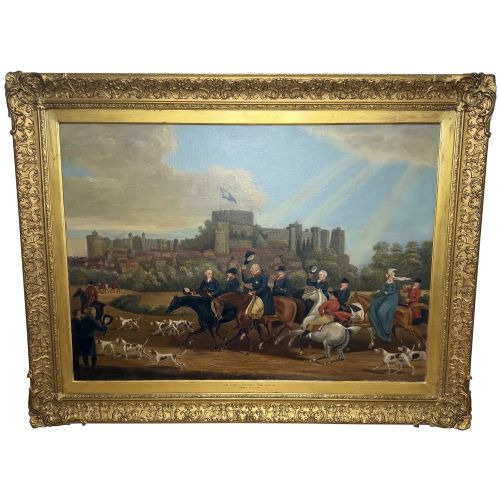
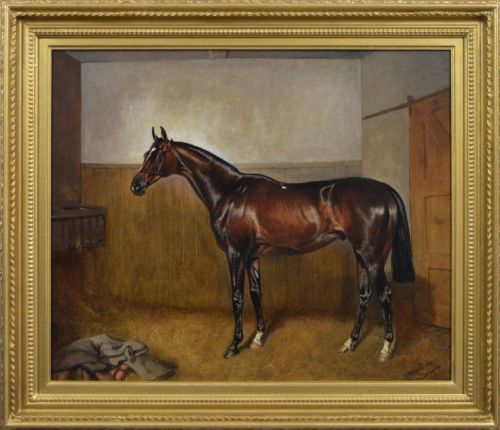
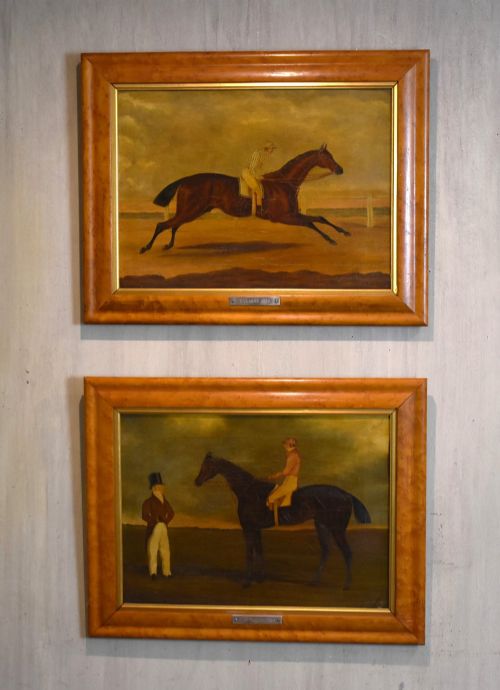
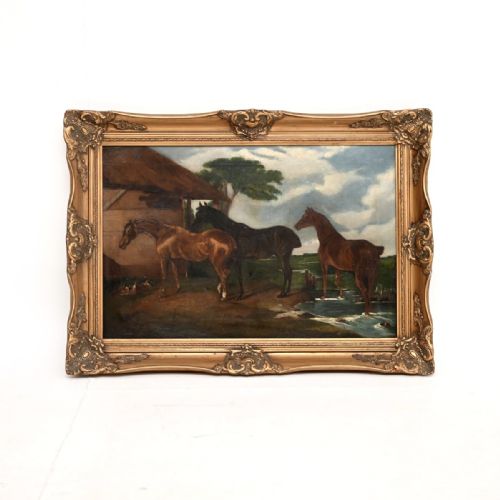
The subjects range from named racehorses and loyal hunters standing in landscapes to sweeping fox hunting scenes and farmyard views. Most pieces on this page are oil on canvas, though watercolour paintings and oil on panel also appear.
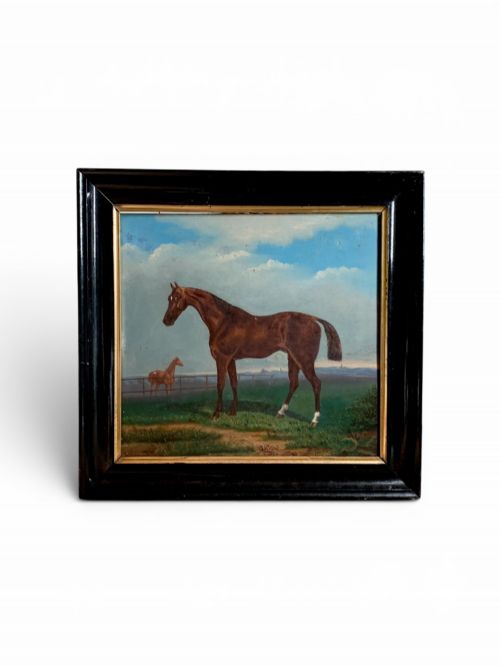
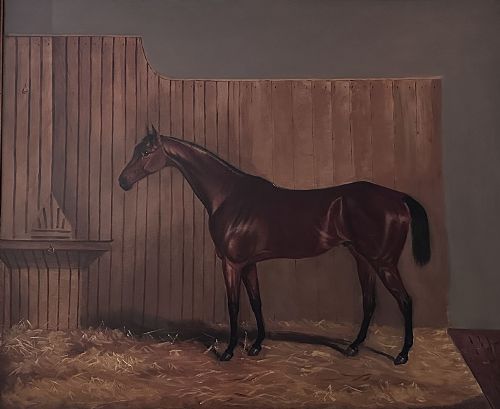
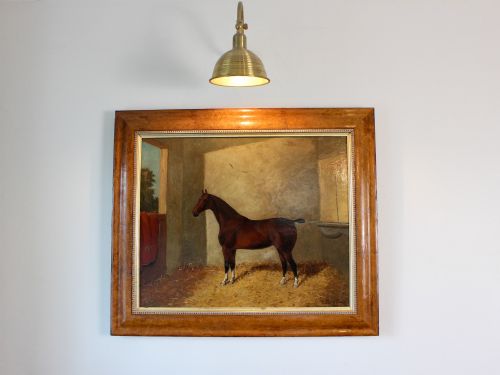
Portraits of single bay horses or prized champions share space with complex hunting parties and racing scenes. These works reflect a long British and French tradition of celebrating sporting life through fine art.
Materials and Technique
Artists relied primarily on oil paint applied to canvas or wood panels, building rich layers of colour to render the sleek coats of horses and the textures of hunting hounds. Gilt wood and giltwood frames, often accented with gold leaf, complete the construction of many period works.
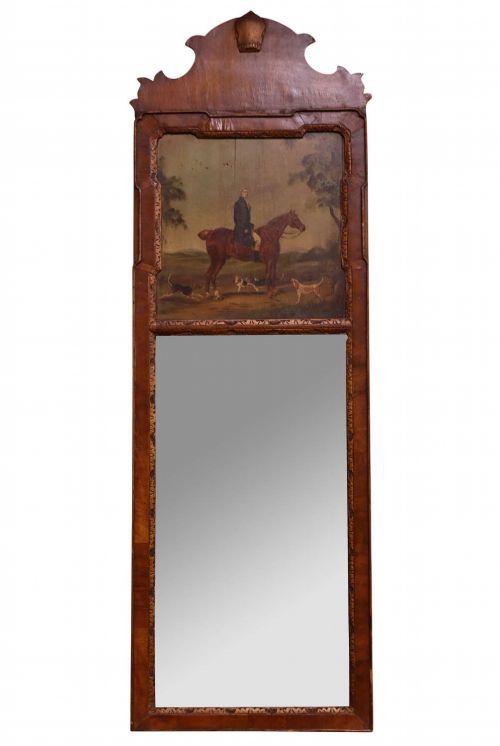
Watercolour paintings on paper offer a lighter alternative to heavy oils, while walnut pier glass mirrors occasionally incorporate oil paintings directly into their frames. The application of paint varies from smooth, detailed horse portraits to more dynamic brushwork in hunting scenes.
The listings on this page span the Victorian and Edwardian eras, featuring oil on canvas, wood panels, and gilt wood frames.
Assessing Quality
Quality rests upon the artist's ability to render the precise anatomy and movement of the horse, distinguishing accomplished hands from more generic studio productions. A well-executed piece captures the intelligent eye, muscle tone, and specific conformation of the animal rather than a generalised silhouette.
The handling of the surrounding landscape and secondary figures, such as hounds and riders, further elevates a work. Original framing, particularly period gilt wood matching the age of the canvas, adds to the integrity of the piece.
John Alfred Wheeler·John Frederick Herring Snr·Philip Henry Rideout·John Frederick Herring Jnr·Guillaume Urban Régamey
The Country House Equestrian Painting Glossary
- Oil on Canvas
- A traditional painting medium where pigments bound in oil are applied to stretched fabric. This combination allows for deep blending of colours and lasting durability.
- Pier Glass Mirror
- A tall mirror designed to hang on the wall between windows, sometimes featuring an integrated artwork above the glass.
- Victorian Sporting Art
- A genre of nineteenth-century painting dedicated to equestrian subjects, hunting, and animal portraits. It reflects the era's deep enthusiasm for country sports and prize animals.
- Giltwood
- Wood that has been thinly coated with gold leaf or gold paint. It provides an ornate, reflective border typical of nineteenth-century framing.
Country House Equestrian Painting: Frequently Asked Questions
How do I identify a Victorian equestrian painting?
Look for specific clues in the clothing, framing styles, and subject matter that point to the nineteenth century. Many works feature detailed portraits of named racehorses or hunting scenes popular during the reign of Queen Victoria.
Examine the back of the canvas and the stretcher bars for old labels, stamps, or handwritten inscriptions. These often reveal the horse's name, the artist, or the estate where the painting once hung.
Where were these paintings displayed originally?
These works traditionally hung in the halls, libraries, and dining rooms of large country estates. They served as proud displays of the owner's sporting achievements, prized livestock, and passion for the hunt.
Today, they suit similar prominent spaces in homes, working well above mantelpieces or anchoring a gallery wall of complementary portraits and landscapes.
What is the difference between a racehorse portrait and a hunting scene?
A racehorse portrait typically focuses on a single animal, often shown standing proudly in a stable or posed against an open landscape. These paintings celebrate the individual conformation and lineage of a prized champion.
By contrast, a hunting scene captures action and narrative, showing riders, hounds, and horses navigating fields, hedges, or tracks in pursuit of the quarry.