




Country House Dresser Base
A country house dresser base offers deep utility and grounded style, functioning as a sturdy serving piece or storage hub.
What They Are
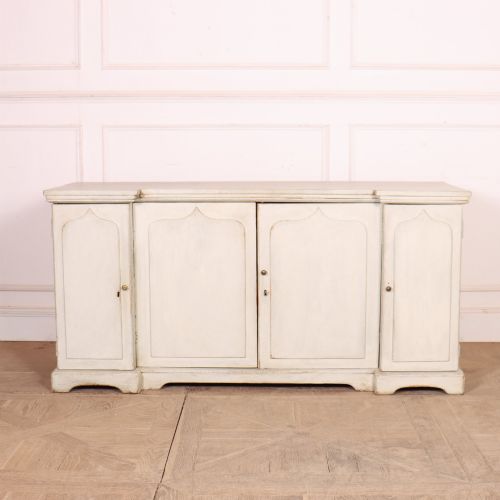
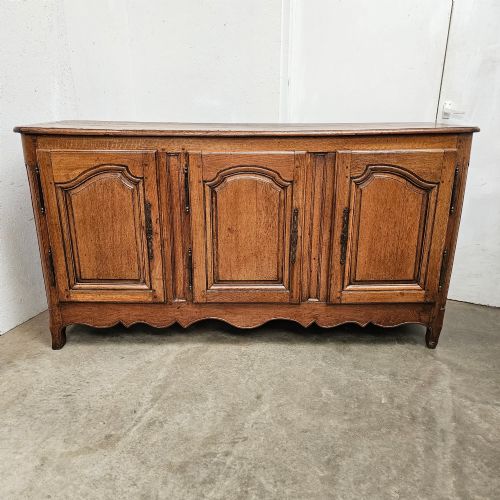
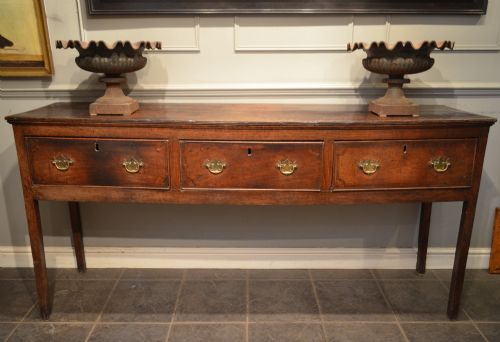
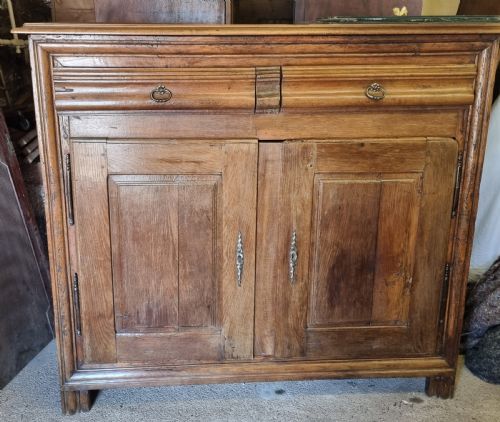
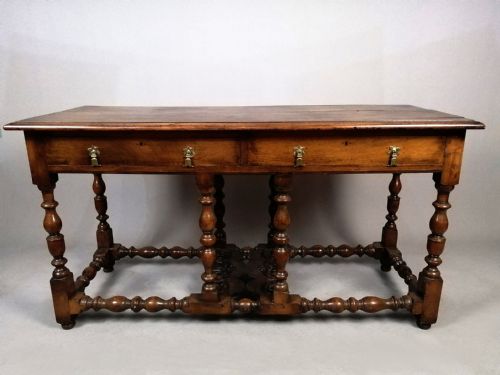
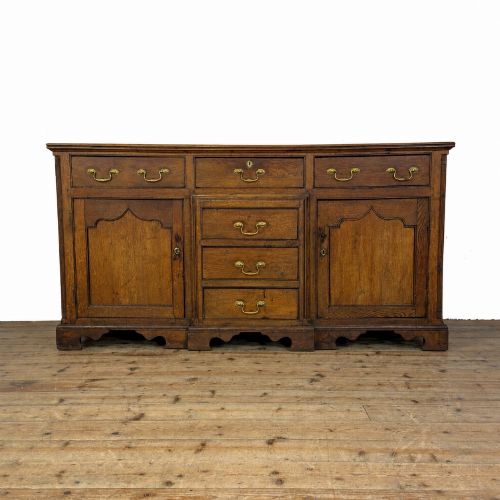
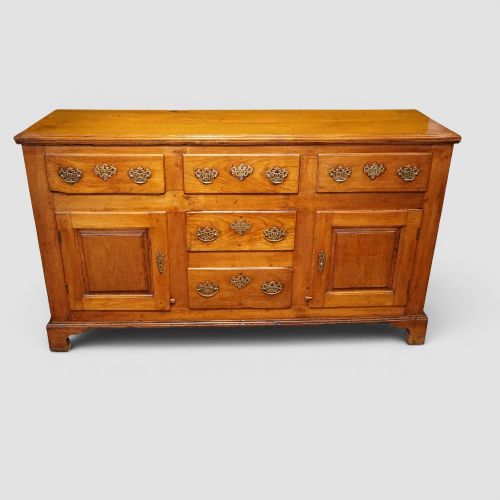
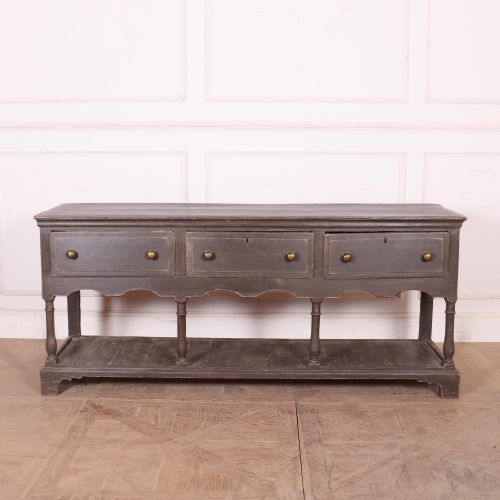
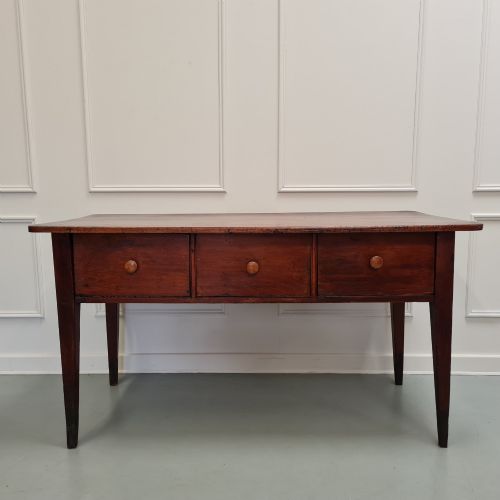
A country house dresser base provides substantial surface space and lower storage, often functioning as a serving sideboard in domestic interiors. These low timber units typically lack the upper plate rack of a traditional dresser, leaving a clean top surface above cupboards and drawers.
The pieces on this page span the seventeenth, eighteenth, and nineteenth centuries, capturing vernacular English and Irish furniture traditions. You will encounter forms styled in the George III, Georgian, and Jacobean manners, alongside unpretentious English country designs.
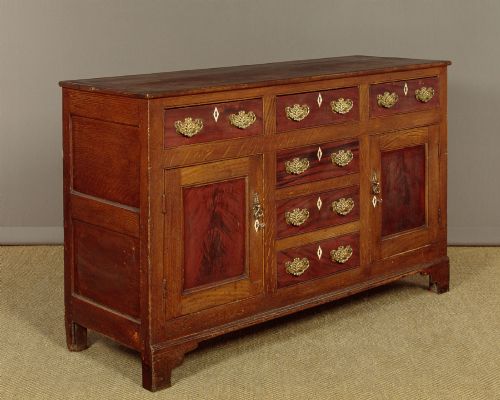
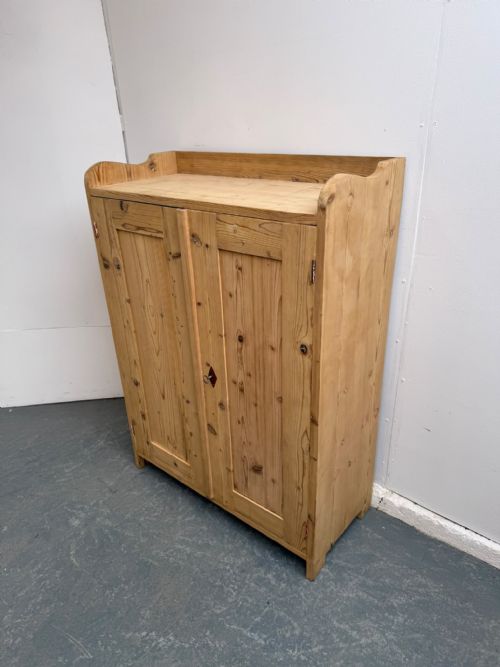
Proportions range from compact cupboards to enormous serving bases spanning over two metres. Many retain their original working configurations, featuring banks of drawers alongside panelled doors designed to hold heavy kitchen or dining equipment.
How They Were Made
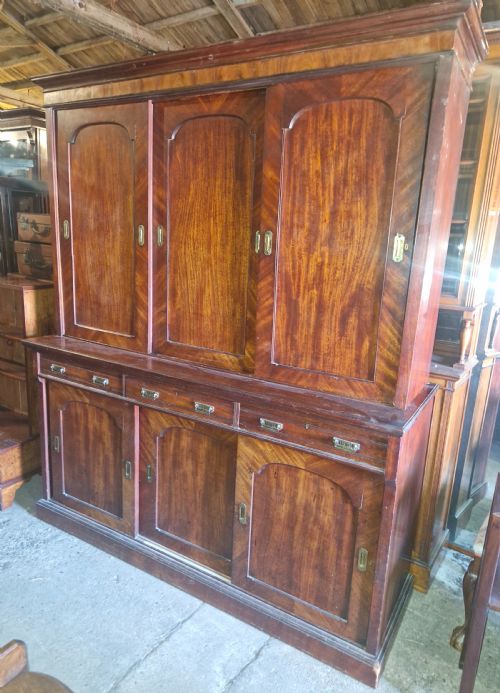
Constructed primarily from sturdy timber, these bases utilise native woods including oak, fruitwood, pine, poplar, and mahogany. Carpenters selected these durable materials to withstand decades of daily use in busy domestic settings.
Surfaces frequently display historic paint finishes, ranging from stripped wood showing natural grain to layered painted pine and painted oak. Original brass hardware, including drop handles and keyplates, often accompanies these timber constructions.
Retail Price Guide 2026
Typical UK retail prices for country house dresser base, calculated from the Sellingantiques database of over a million retail prices indexed since 2003. This retail price guide relies exclusively on Sellingantiques data; no external sources or auction records are used, so the figures do not describe the wider market.
Some nineteenth-century examples are large enough to feed an entire parish estate.
What Varies in Quality
Quality rests in the integrity of the timber and the honesty of the surfaces. Pieces retain greater character when they preserve their original patination, depth of colour, and untouched structural joinery rather than overly restored elements.
Finer examples demonstrate considered proportions, such as breakfront facades or well-balanced potboards, coupled with timber selection that shows careful grain matching across the drawer fronts and cupboard doors.
The Country House Dresser Base Glossary
- Dresser base
- A low freestanding cabinet featuring drawers and cupboards, originally used in kitchens or dining rooms for food preparation and storage.
- Potboard
- An open lower shelf built into the base of a dresser, historically utilised for storing heavy pots and pans off the floor.
- Breakfront
- A cabinet facade where the central section projects forward from the flanking outer sections, adding architectural depth to the piece.
- George III
- The British design period spanning the mid to late eighteenth century, known for refined classical proportions and quality cabinetmaking.
- Jacobean
- The early seventeenth-century English style characterised by heavy rectilinear construction, geometric mouldings, and robust dark oak.
Frequently Asked Questions
What is a country house dresser base?
A country house dresser base is a heavy lower cabinet built for practical storage and serving in large domestic kitchens or dining rooms. These pieces provide wide flat tops alongside lower drawers and cupboards without the upper shelving of a full dresser.
They reflect regional English and Irish vernacular furniture traditions, using sturdy native timbers built to handle heavy everyday use over centuries.
How do I date an antique dresser base?
Dating relies on observing construction methods, timber choices, hardware, and stylistic details. Seventeenth-century examples often display heavy oak framing and geometric mouldings, while eighteenth-century pieces frequently feature refined drawers and Georgian proportions.
Later nineteenth-century versions sometimes utilise softer woods like pine or poplar, occasionally retaining historic painted finishes applied during their working lives.
Where should I place a dresser base at home?
These versatile bases suit dining rooms as serving sideboards, hallways as console storage, or kitchens as food preparation islands. Their generous top surfaces accommodate lamps, serving dishes, and decorative objects while lower cupboards conceal tableware.
Consider the scale of the room, as these pieces range from compact cupboards to monumental structures spanning over two metres in length.
What is the difference between oak and painted bases?
Oak bases highlight the natural grain, warmth, and patination of hardwood built for durability. Painted bases feature historic or later decorative coatings of pigment over pine, oak, or mixed timbers.
Both finishes were practical choices in country houses, with paint often protecting softer woods or updating furniture to match changing interior fashions.