
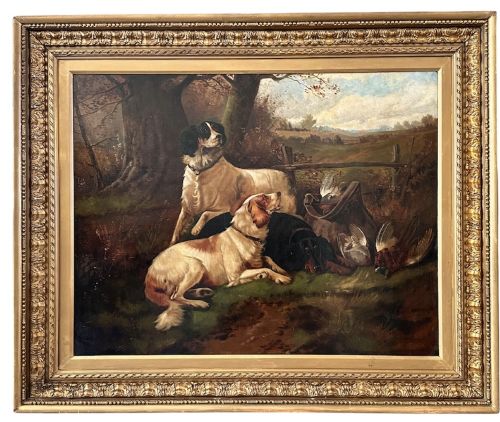


Country House Dog Portrait
A country house dog portrait captures the character and loyalty of prized hounds and terriers in traditional oil on canvas.
Country House Dog Portrait
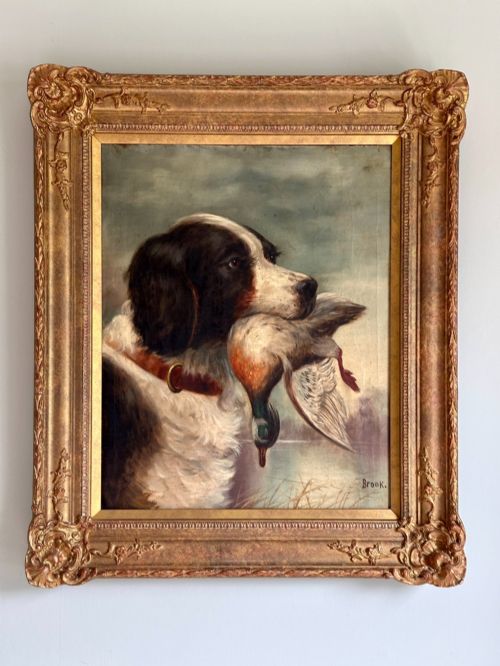
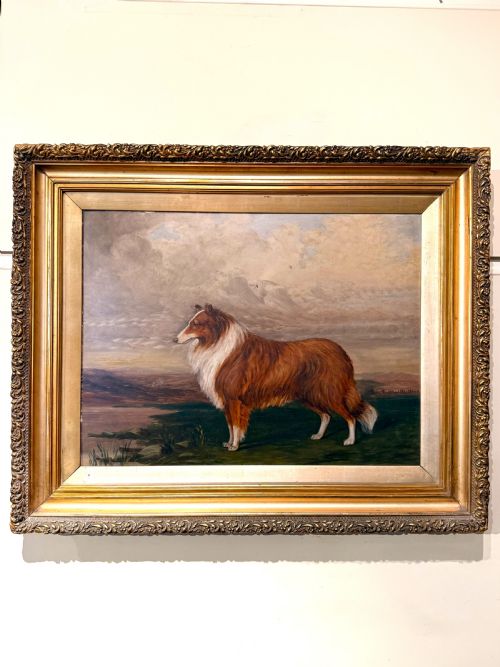
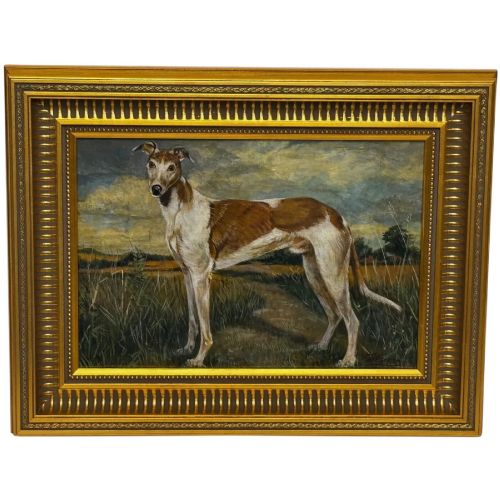
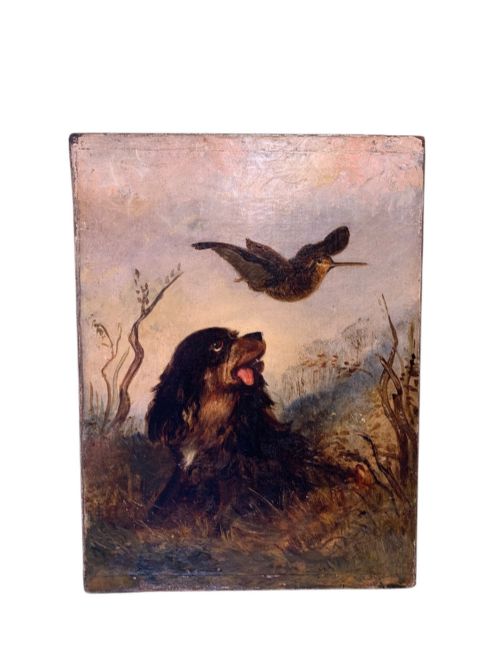
A country house dog portrait depicts valued sporting dogs, terriers, and gun dogs, often set within rural landscapes or domestic interiors. These works reflect the deep connection between country life and animal companionship over past centuries.
Most examples found here date from the nineteenth century, ranging from naive school depictions to accomplished Victorian sporting art. They frequently portray named breeds such as spaniels, greyhounds, and fox terriers alongside horses or game.
The subjects include solitary studies of cherished pets as well as working dogs engaged in ratting or hunting. Each canvas preserves a specific animal's likeness alongside the aesthetic preferences of its period.
Materials and Technique
The majority of these works utilise oil paint applied to canvas or wood board, sometimes housed within period gilded wood frames. Artists employed traditional layering and brushwork to render the texture of animal coats and the soft light of landscape backgrounds.
Supporting materials include stretched canvas and prepared wooden panels, which provide the stable foundation necessary for centuries of preservation. Giltwood frames frequently accompany the paintings, completing the presentation standard of the era.
Several sharp-eyed terriers spend their time guarding cages against trapped rats rather than resting by the hearth.
Assessing Quality and Execution
Quality rests upon the artist's ability to capture anatomical accuracy and individual canine expression rather than mere decorative appeal. Superior works display confident brushwork in the rendering of fur, muscle, and the surrounding environment.
The distinction between a standard piece and a finer example involves the compositional balance between the animal and its landscape setting. Works by recognised Victorian sporting painters typically show superior depth and proportional harmony.
John Sargent Noble·Samuel Raven·George E Sharpe·Colin Graeme Roe·Valentine Thomas Garland·John Alfred Wheeler·Jules Chardigny·Charles Bilger Spalding·John Emms·George Armfield·Robert Cleminson·Edward Armfield
The Country House Dog Portrait Glossary
- Sporting Art
- A genre of painting dedicated to rural sports, hunting, horses, and dogs. It flourished in Britain throughout the eighteenth and nineteenth centuries.
- Oil on Canvas
- Pigments bound in a drying oil medium applied to a stretched woven fabric support. This combination offers durability and rich colour depth.
- Naive School
- Artwork produced by self-taught or informally trained painters. These pieces often feature charming perspective quirks and direct, unpretentious compositions.
- Giltwood
- Wood that has been decorated with a thin layer of gold leaf. Frames finished this way enhance the visual weight of nineteenth-century paintings.
Country House Dog Portrait: Frequently Asked Questions
What breeds appear most often in these paintings?
Terriers, spaniels, and setters dominate the subjects, reflecting their popularity in rural estates. Greyhounds and hounds also feature prominently.
Artists frequently recorded specific working dogs that belonged to landowners or participated in local hunts and game sports.
How do I date a nineteenth-century dog portrait?
Dating relies on the style of the clothing in any accompanying human figures, the frame type, and the canvas preparation. Signature styles of known sporting artists also provide reliable chronological markers.
Inscriptions on the reverse of the canvas or board often supply specific dates or the name of the dog.
Where were these paintings originally displayed?
These portraits hung in country houses, libraries, and estate halls alongside sporting art and family pictures. They served to celebrate prized working animals or beloved household pets.
The scale and framing of the works suited the generous wall spaces of period drawing rooms and country interiors.
How should I care for an antique oil painting?
Keep the artwork away from direct sunlight and dramatic fluctuations in temperature and humidity. Dust the surface gently with a soft, dry brush without applying pressure.
Avoid using liquid cleaners or attempting amateur restorations on the canvas or the historic giltwood frame.