


Traditional Sporting Dog Painting
A traditional sporting dog painting captures the distinct character and working heritage of hounds, spaniels, and terriers in oil or watercolour.
Traditional Sporting Dog Painting
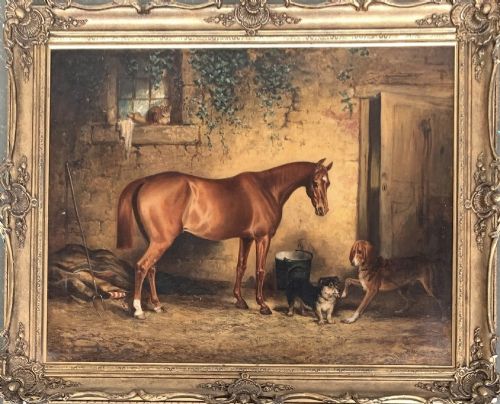
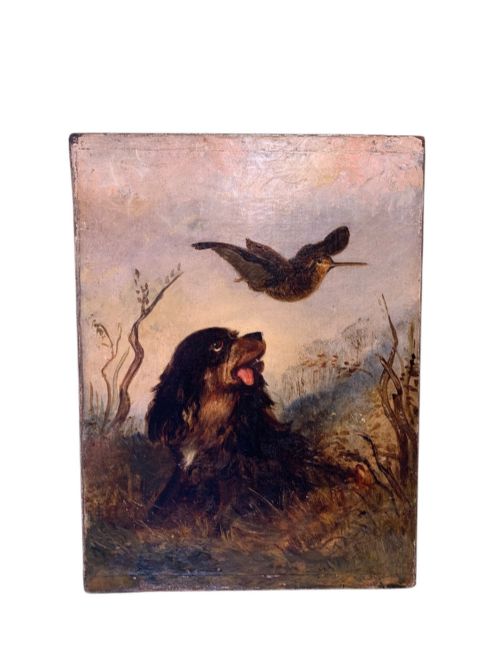
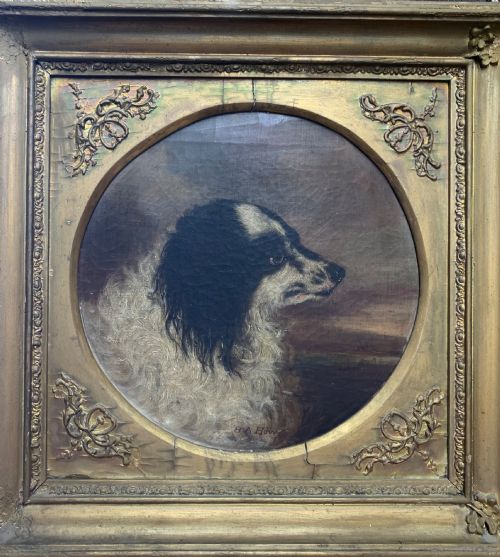
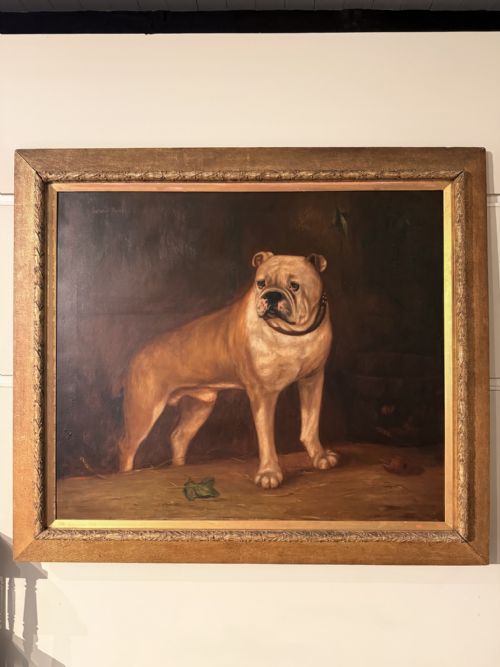
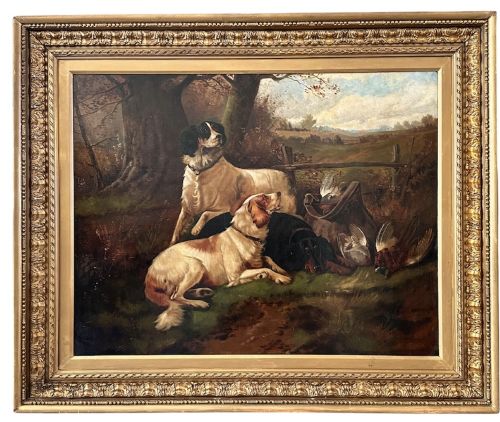
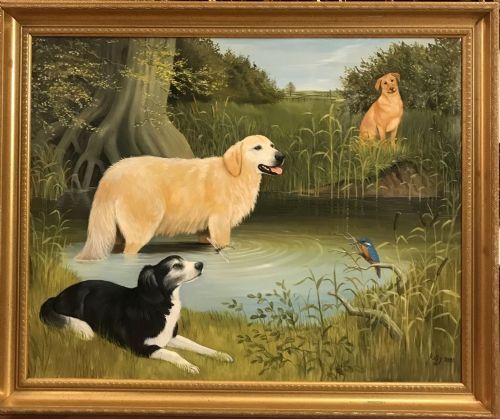
A traditional sporting dog painting depicts hounds, spaniels, setters, and terriers within country and moorland settings. These works record the close relationship between landed society, field sports, and valued working animals across nineteenth-century and mid-twentieth-century Britain.
The pieces on this page appear primarily as oil paintings on canvas or board, alongside occasional watercolours. Subjects range from solitary spaniels and terriers to packs of hunting hounds and gun dogs gathered with their handlers.
Victorian sporting art forms the core of these listings, though mid-twentieth-century works by artists like Michael Lyne and Tom Carr also appear. Canvases are frequently housed in period giltwood frames that complement the traditional realism of the animal portraiture.
How They Were Made
Artists built these compositions using oil paint on stretched canvas or wooden board, applying pigment to capture the gloss of a coat and the texture of a moorland landscape. Watercolour on paper was also utilised, particularly for detailed canine studies and field sketches.
Framing relied on carved wood, gesso, and gilt, creating ornate surrounds that defined the status of the painting in a country house interior.
Several canvases record the specific names of beloved hounds and spaniels, preserving nineteenth-century kennel favourites for posterity.
What Varies in Quality
Quality rests upon the artist's ability to render canine anatomy with precision and capture individual temperament rather than a generic animal form. Masters like John Emms and Thomas Blinks demonstrated a deep understanding of bone structure, posture, and expression that lesser copyists missed.
The treatment of the surrounding landscape and handling of light also divide standard decorative works from fine art pieces. Strong compositions integrate the dog naturally into its sporting environment, balancing the foreground subject with atmospheric skies and country houses.
Henry Barraud·John Sargent Noble·William Barraud·George E Sharpe·Fannie Moody·Edwin Frederic Holt·Colin Graeme Roe·John Charles Tunnard·Michael Lyne·Henri Schouten·John Emms·Tom Carr·Thomas Blinks·James Ward·Charles Bilger Spalding·William Albert Clark·Frank Dadd·Samuel John Egbert Jones·Dean Wolstenholme·George Wright
The Traditional Sporting Dog Painting Glossary
- Oil on Canvas
- Pigment mixed with drying oil applied to a woven fabric support. This technique allowed artists to build rich textures in the fur of the animals and deep tones in the landscape.
- Giltwood
- Wood carved and coated with gold leaf or metallic powder. It provided a traditional, reflective border for Victorian and nineteenth-century paintings.
- Sporting Art
- Genre of art depicting field sports, horses, hounds, and shooting. It developed significantly in Britain during the eighteenth and nineteenth centuries to celebrate country pursuits.
- Watercolour
- Paint consisting of pigment suspended in a water-soluble binder. It was often applied on paper for lighter studies and field works by sporting artists.
Traditional Sporting Dog Painting: Frequently Asked Questions
What subjects appear in these paintings?
These works focus primarily on gun dogs, spaniels, terriers, and hunting hounds shown in moorland, woodland, or country estate settings. Many depict dogs with their day's bag, alongside hunting parties and handlers.
Subjects also include individual champion greyhounds and prized terriers portrayed in walled gardens or domestic interiors.
How do I date a traditional dog painting?
Dating relies on the artist's recorded working dates, stylistic markers of the Victorian or twentieth-century periods, and the construction of the canvas and stretcher. Period framing also offers helpful chronological clues.
Inscriptions on the reverse of the canvas or board frequently name the dog, the owner, or the date of execution.
Where were these paintings displayed originally?
Such works hung traditionally in the libraries, halls, and drawing rooms of British country houses. They served as tributes to prized working dogs, hunting companions, and successful sporting estates.
Today, they suit traditional country house interiors as well as studies and living rooms seeking classic equestrian and sporting character.
What is the difference between oils and watercolours here?
Oil paintings on canvas or board offered durability and rich colour depth, allowing artists to build layered textures in the animal coats and landscape backgrounds. They represent the more substantial finished works.
Watercolours on paper provided a more immediate medium, often utilised for field studies, preparatory sketches, and lighter domestic portraits.