


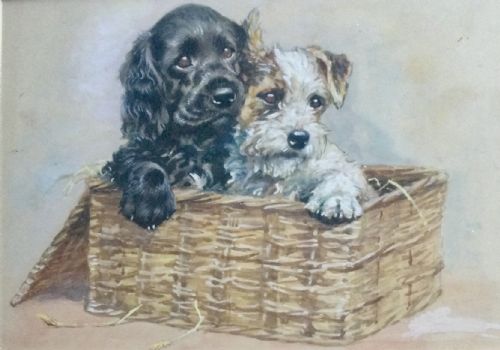


Spaniel Dog Art
Spaniel dog art gathers centuries of canine portraits, capturing the loyal companion in oil, watercolour, pencil, and needlework across British and European traditions.
Spaniel Dog Art
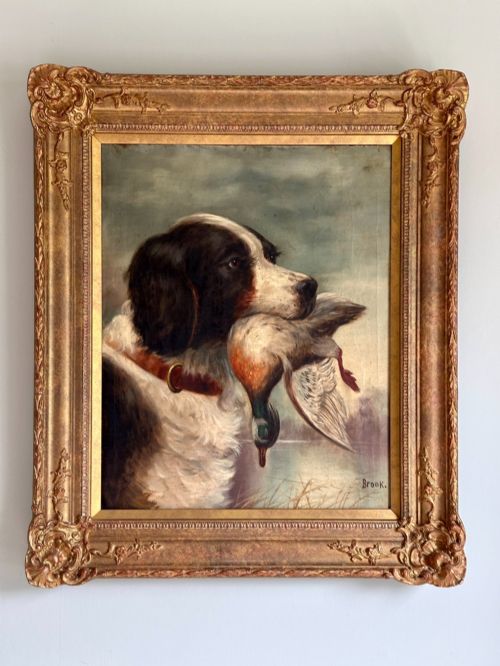
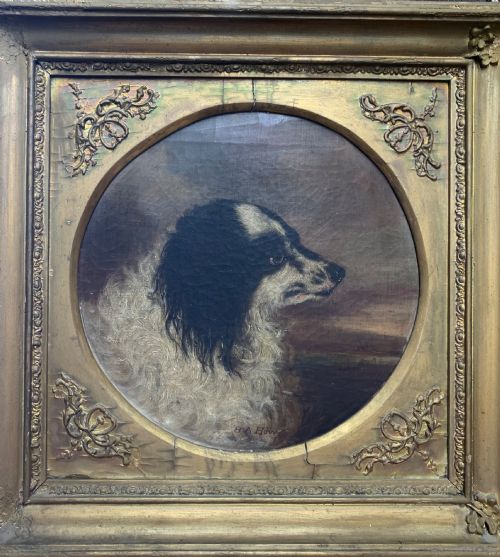
Spaniel dog art encompasses framed paintings, drawings, watercolours, etchings, textiles, and bookends depicting the breed from the seventeenth century through to the mid twentieth century. Buyers encounter oil paintings on canvas or panel most frequently, alongside pencil drawings and watercolours capturing individual animals or dogs alongside their owners.
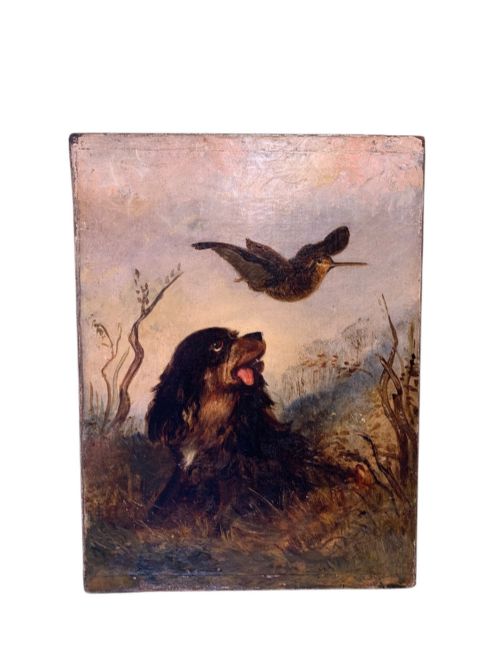
The works span multiple eras including the Regency period, Georgian, Victorian, and Edwardian eras, as well as twentieth century pieces. Subjects range from singular portraits of named pets to sporting art scenes featuring spaniels in landscapes, country house settings, or wooded clearings with game.
Materials and Technique
Artists working on these pieces utilised oil paint on canvas or panel, watercolour on paper, and graphite pencil for detailed preparatory drawings and portraits. Engraved and etched works employed paper, whilst decorative items integrated cast metals or carved materials such as gilded wood and burr maple for frames.
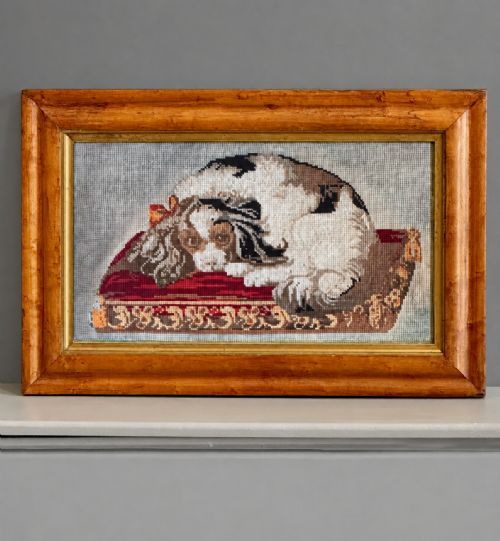
Techniques varied from the fine brushwork of traditional oil portraits and sporting art to delicate pencil shading and needlework Berlin wool work executed within original wooden surrounds.
Materials recorded across the selection include oil paint, watercolour, pencil, glass, paper, wood, and gilded wood.
Quality and Execution
The distinction between standard works and exceptional pieces rests upon the anatomical precision of the dog, the expressiveness of its gaze, and the skill with which the artist renders texture in fur and surrounding fabrics. Masterful handling of light within interior scenes or open landscapes elevates a portrait from a simple record to a compelling work of art.
Provenance, artist attribution, and the survival of original framing, such as burr maple surrounds, further separate notable historical pieces from anonymous decorative items.
B A Howe·Herbert Dicksee·William Barraud·Mary Beale·Mabel Gear·Charles Bilger Spalding·Frederick Tayler·George Stubbs·Samuel John Carter·Frank Owen Salisbury·George Romney·William Albert Clark·Dean Wolstenholme·Francis Alleyne
The Spaniel Dog Art Glossary
- Berlin work
- A type of nineteenth-century needlework using wool on canvas, often following a charted pattern. This technique produced colourful and textured depictions of animals and domestic scenes.
- Sporting art
- Genre of painting and illustration dedicated to rural sports, shooting, and hunting dogs. These works frequently document working spaniels alongside sportsmen in the field.
- Etching
- Printmaking technique where lines are bitten into a metal plate with acid before being inked and pressed onto paper. The method allows for fine, expressive detail in graphic portraits.
- Oil on panel
- Painting executed on a wooden board rather than stretched canvas. This rigid support was common in earlier centuries for smaller cabinet portraits.
Spaniel Dog Art: Frequently Asked Questions
What periods do these pieces cover?
The selection spans from the seventeenth century through the eighteenth, nineteenth, and early twentieth centuries.
Most items originate from the nineteenth century, reflecting the strong Victorian appetite for pet portraiture and sporting art.
How were spaniels depicted in historical art?
Spaniels appear as cherished pets in formal interior portraits alongside children or elegantly dressed ladies.
They also feature prominently in outdoor sporting scenes, depicted flushing game in wooded clearings and country estates.
What mediums are used in these artworks?
Artists employed oil paint, watercolour, graphite pencil, and etching ink on supports of canvas, wood panel, and paper.
Needlework pieces utilise wool on canvas, frequently housed in period wooden frames like burr maple.