


Vintage Working Dog Art
Vintage working dog art brings the sharp focus of field and hearth into your rooms through oil paintings, watercolours and heavy wrought iron.
Vintage Working Dog Art
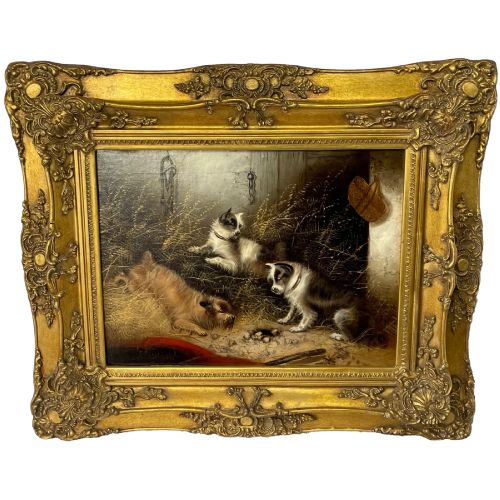
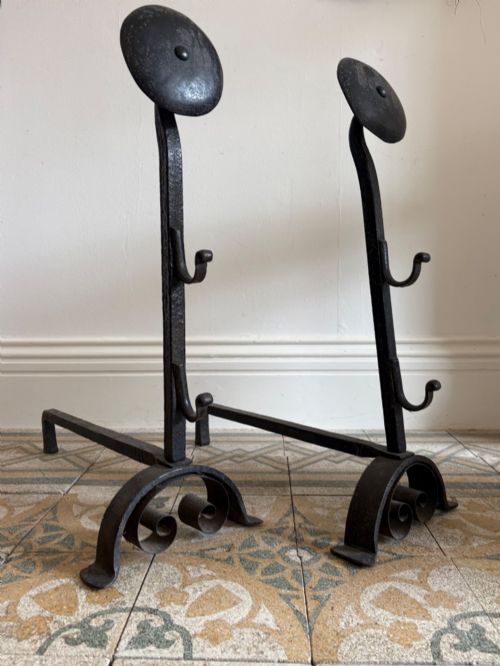
When you search for vintage working dog art, you are looking at visual records of terriers, collies, spaniels and setters depicted in landscapes, rural scenes or domestic service. These pieces span from the mid nineteenth century through the Edwardian era to the mid twentieth century, capturing terriers guarding a trapped rat, spaniels grouped together and setters in the field. The forms vary between fine art paintings on canvas or paper and practical hearth furniture such as wrought iron andirons and fire dogs.
The version you are most likely to meet on this page is an oil painting on canvas from the nineteenth century or around nineteen hundred. These often show terriers or gun dogs by named artists like John Emms and George Wright, alongside hand-forged Arts and Crafts fire dogs that incorporate working canine motifs into functional ironwork. English School sporting art and Victorian rural realism dominate the offerings, uniting utility and portraiture.
Each object reflects a period when working dogs were central to rural life, farming and hunting. Painters recorded the specific physical traits and intense focus of collies, spaniels and terriers rather than generic pets. Whether rendered in oil or forged from wrought iron, these items hold both artistic merit and historical domestic purpose.
How they were made
Painters applied oil and watercolour pigments onto canvas and paper, building depth through layered brushwork to render canine coats and natural landscapes. These works often sit within gilt frames that complement the tones of the oil paintings.
Blacksmiths forged iron by hand, shaping wrought iron and copper to create sturdy fire dogs and andirons designed to hold heavy logs in open hearths. The metalwork displays visible hammer marks and structural rivets typical of the Arts and Crafts approach.
One persistent terrier stands guard over a caged rat, reminding viewers that nineteenth century dogs took their shift duties seriously.
What varies in quality
The skill of the artist dictates the success of a painting, particularly in the accurate rendering of canine anatomy, expression and the surrounding landscape texture. Stronger paintings capture the intense focus and physical posture of a working dog with confident brushstrokes.
In metalwork, the quality depends on the precision of the hand-forging and the proportional balance of the iron andirons. Superior fire dogs show deliberate shaping and robust construction rather than plain, repetitive casting.
John Emms·Arthur Alfred Davis·George Cole·George Wright
The Vintage Working Dog Art Glossary
- Andiron
- A metal support used to hold logs in an open fireplace, frequently paired and sometimes forged into decorative animal shapes.
- Fire Dog
- An alternative term for an andiron, often featuring heavy wrought iron construction designed for daily hearth use.
- Arts and Crafts
- A design movement valuing hand-craftsmanship, simple forms and visible evidence of the maker's hand over industrial mass production.
- Victorian Rural Realism
- An artistic approach that depicted everyday rural life, agricultural labour and working animals with grounded accuracy.
- Gilt
- A thin layer of gold leaf or gold paint applied to wooden frames to enhance their appearance and protect the underlying material.
Vintage Working Dog Art: Frequently Asked Questions
What subjects appear in these paintings?
The paintings depict working breeds such as terriers, spaniels, collies and setters engaged in rural tasks or natural landscapes. Scenes include terriers guarding a trapped rat, spaniels grouped together and setters working in open fields.
Artists also placed dogs into broader agricultural scenes alongside ploughmen and horses. Every subject reflects the practical role of working dogs in nineteenth and twentieth century life.
How do fire dogs function?
Fire dogs sit in pairs inside an open hearth to support logs above the floor of the fireplace. This elevation allows air to circulate underneath the wood for a better burn.
Their heavy wrought iron construction handles high heat and the physical weight of large timber. Many examples pair this utility with decorative ironwork shaped by blacksmiths.
How do I care for oil paintings?
Keep oil paintings out of direct sunlight and away from damp walls or sudden temperature shifts. Dust the canvas gently with a soft, dry brush without applying pressure.
Avoid using water or chemical cleaners on the paint surface or the gilt frame. Professional conservators should handle any deeper cleaning or canvas repairs.
How do I date an iron piece?
Examine the texture of the metal and the methods used to join the parts together. Hand-forged wrought iron from the nineteenth or early twentieth century often displays irregular surface marks from the blacksmith's hammer.
Arts and Crafts pieces from around nineteen hundred typically emphasise honest construction with visible rivets and structural joints rather than hidden welds.