


Country House Ceramics
Country house ceramics bring warmth and lived-in character to an interior through centuries of practical and decorative domestic pottery.
Country House Ceramics
Country house ceramics encompass a diverse range of utilitarian and ornamental wares spanning from the seventeenth century through to the mid-twentieth century. You will encounter functional kitchen and dairy vessels alongside decorative mantel ornaments and tableware.
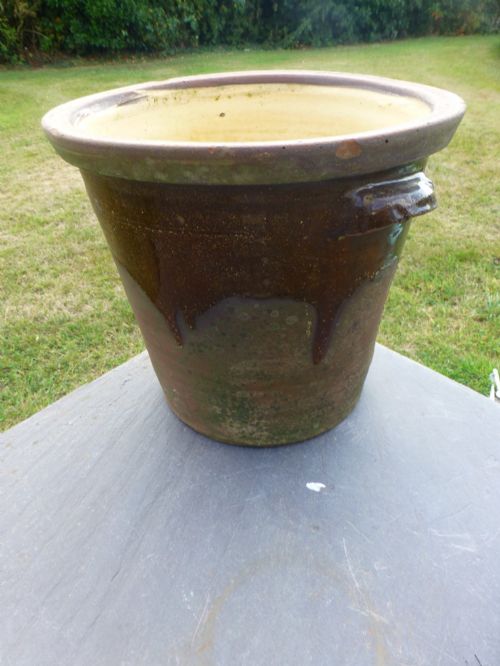
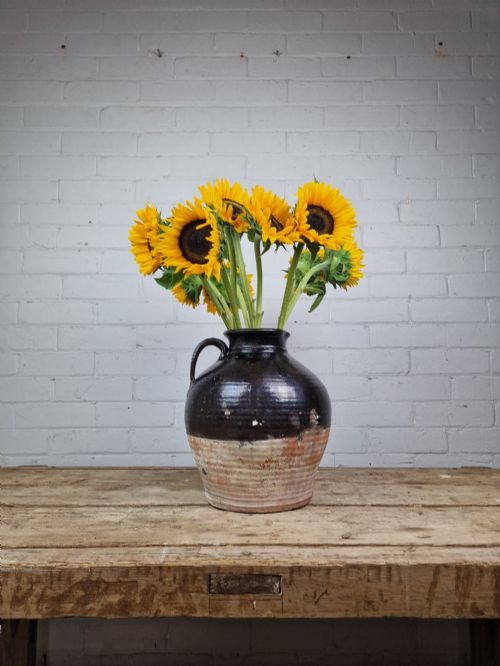
The selection on this page leans heavily toward nineteenth-century Staffordshire figures, slipware jugs, and earthenware planters, reflecting the rich domestic history of large rural estates. These pieces range from robust vernacular salt crooks to refined porcelain bough pots.
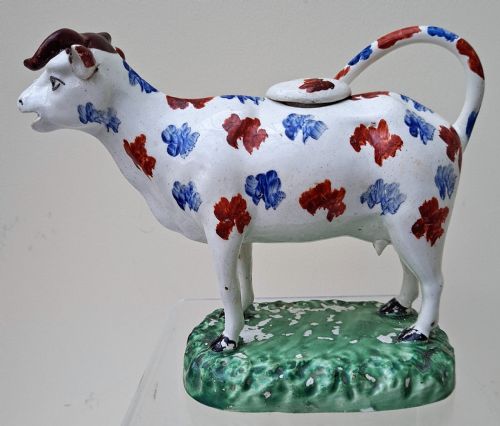
Objects include regional productions such as Welsh pottery cow creamers and English blue and white transfer-printed plates, offering a snapshot of domestic life across different social tiers and periods.
Materials and methods
Potters relied primarily on earthenware, terracotta, and porcelain bodies, shaped on the wheel or pressed into moulds depending on the required form. Glazes ranged from simple lead and slip coatings on utilitarian vessels to intricate enamel and gold leaf decorations on fine porcelain.
Transfer printing technology allowed factories to apply intricate blue and white topographical scenes onto tea plates and platters with remarkable consistency. Hand-modelling and painting remained essential for decorative figures and animal ornaments.
Listings span from seventeenth-century earthenware to mid-twentieth-century watercolours, incorporating materials such as terracotta, ironstone, and porcelain.
Judging quality in domestic pottery
Quality rests on the crispness of the modelling in figures and the depth of the glaze on utilitarian vessels, where thicker, richer applications reveal superior craftsmanship. Finer pieces demonstrate better control during firing, resulting in fewer warping distortions or kiln scars.
Decoration also dictates standing, with hand-painted polychrome enamel work or detailed transfer printing commanding greater artistic merit than plain utilitarian wares. The integrity of the material, whether porous terracotta or hard-paste porcelain, governs how well the object has survived decades of domestic use.
The Country House Ceramics Glossary
- Slipware
- Pottery decorated with a liquid clay mixture applied before firing to create patterns or smooth surfaces. It is characteristic of early vernacular kitchenware.
- Bough pot
- A decorative vessel designed to hold leafy branches or cut flowers for interior decoration. These containers often feature pierced covers.
- Staffordshire flatback
- A type of ceramic figure unmodelled at the rear because it was intended to sit against a wall on a mantelpiece. These figures typically depict notable people or animals.
- Toleware
- Painted or enamelled metalware used for domestic vessels and bowls. It often mimics the decorative finishes of contemporary ceramics.
- Agateware
- Pottery made from mixed clays of different colours to imitate the variegated appearance of natural stone. The technique creates marbled effects throughout the body of the vessel.
Country House Ceramics: Frequently Asked Questions
What defines country house ceramics?
These pieces comprise a mix of utilitarian kitchenware, dairy vessels, and decorative ornaments used within large domestic residences over several centuries.
They reflect both the practical needs of estate management and the aesthetic tastes of their owners across the Georgian, Victorian, and later periods.
How were slipware jugs used?
Slipware jugs served primarily for storing, pouring, and serving liquids such as milk, cider, or water in domestic kitchens and dairies.
Their robust lead glazes and thick earthenware bodies made them durable enough for daily labour on country estates.
How do I date Staffordshire figures?
Dating relies on stylistic clues such as clothing fashions, colouring techniques, and whether the back of the piece is finished or left flat.
Earlier eighteenth-century examples differ significantly in posture and palette from the mass-produced Victorian flatbacks common on this page.
Where were these ceramics displayed?
Utilisation determined placement, with heavy terracotta planters and crooks stationed in gardens, dairies, or boot rooms.
Meanwhile, porcelain vases, transfer-printed plates, and decorative figures occupied reception rooms, dining tables, and bedroom mantelpieces.