



Regency Blue Transferware
Regency blue transferware brings together monochrome printed imagery and domestic ceramic forms from the Georgian and early nineteenth-century periods.
Regency Blue Transferware
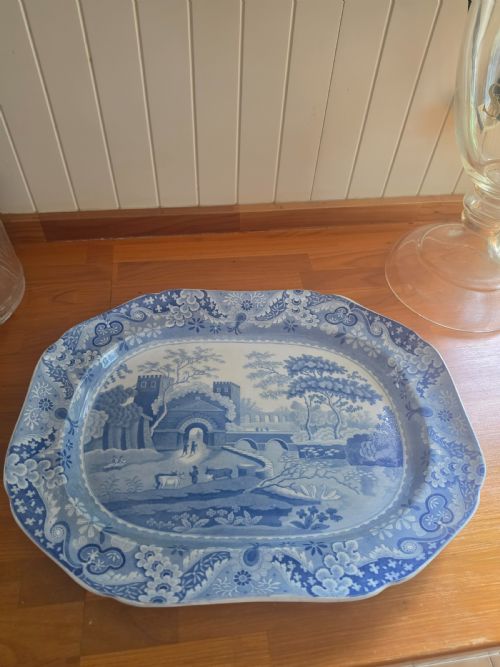
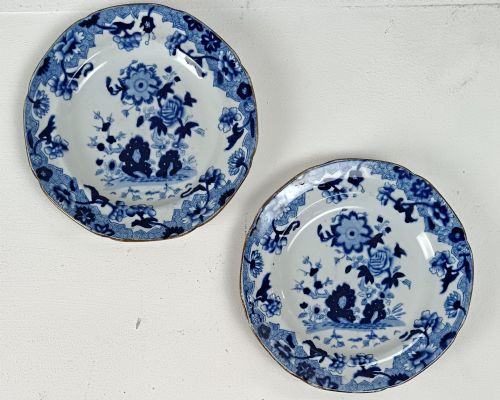
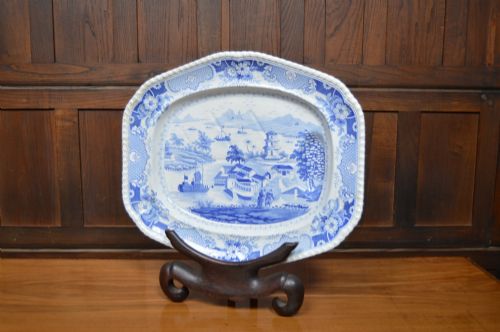
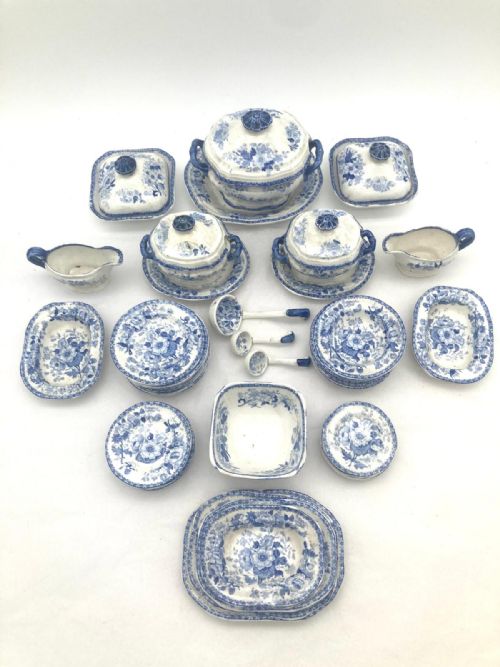
Regency blue transferware comprises serving platters, decorative plates, footbaths, and tureens decorated with copperplate prints in cobalt blue. These ceramics encompass both large meat dishes and miniature tea services produced across English potteries during the early nineteenth century.
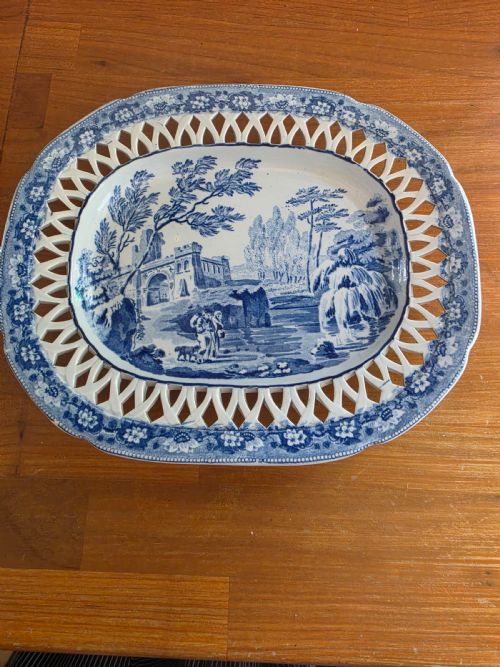
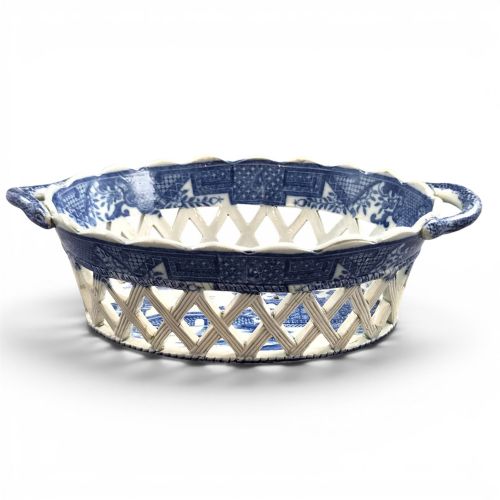
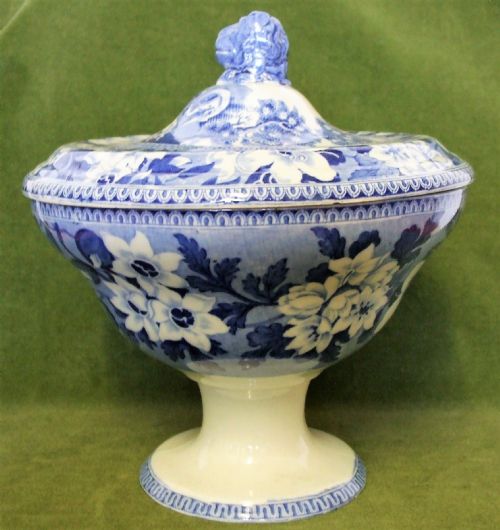
The objects span serving vessels, drainers, chestnut baskets, and compotes created for dining and display. Makers applied pictorial scenes ranging from British landscape views and classical architecture to Regency Chinoiserie motifs onto earthenware, pearlware, and ironstone bodies.
How They Were Made
Potters formed these items using earthenware, pearlware, and ironstone bodies, often shaping them into heavy meat platters, footbaths, and reticulated baskets. Artisans applied a fluid glaze over the ceramic surface to seal the porous clay and enhance the depth of the printed cobalt decoration.
Workers transferred engraved copperplate designs onto tissue paper using cobalt blue pigment, then pressed the paper onto the biscuit fired ceramic body before glazing and firing the piece in a kiln.
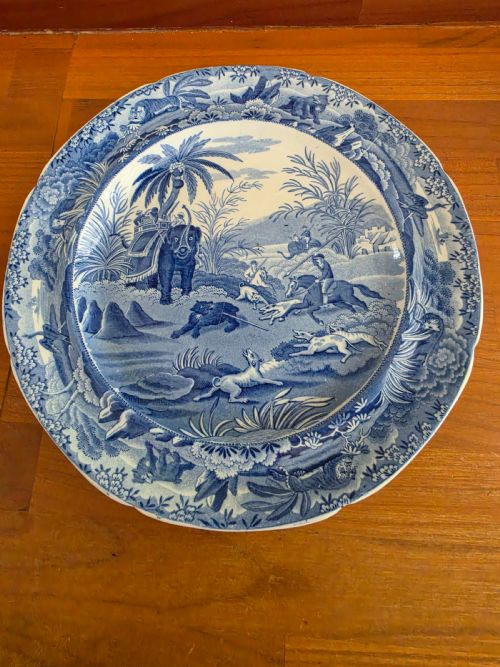
Spode produced a surprisingly grim plate depicting the Death of the Bear for nineteenth-century dining tables.
What Varies in Quality
Quality appears in the crispness of the transfer print and the registration of the engraved design across complex forms like footbaths and reticulated chestnut baskets. Sharp outlines and deep, even cobalt blue tones indicate superior copperplate application during production.
The refinement of the underlying ceramic body, whether delicate pearlware or dense ironstone, distinguishes standard domestic plates from exhibition-scale meat platters and armorial services.
Spode·Davenport·John Rogers and Son·Minton·Ridgway·Copeland and Garrett·Wedgwood·Heathcote·Mason
The Regency Blue Transferware Glossary
- Transferware
- Ceramic pottery decorated by applying a printed design from an engraved copper plate using tissue paper and pigment. This technique allowed intricate pictorial patterns to be reproduced consistently across large dinner services.
- Pearlware
- A refined earthenware developed by Josiah Wedgwood featuring a thin glaze with a faint bluish tint. The formulation was designed to mimic the appearance of Chinese porcelain.
- Ironstone
- A heavy, durable ceramic body patented in the early nineteenth century to withstand rigorous daily use. It provides a strong, opaque base for cobalt blue transfer prints.
- Reticulated
- Pierced or openwork ceramic design executed before firing to create decorative borders on baskets and stands. This intricate piercing requires skilled hand manipulation of the soft clay.
- Footbath
- A large ceramic vessel used for washing feet or chilling wine at the dining table. These substantial pieces frequently feature detailed scenic transfers and applied handles.
Regency Blue Transferware: Frequently Asked Questions
What subjects appear on these ceramics?
The patterns depict topographical views, classical ruins, botanical studies, and narrative scenes including literary subjects and exotic animals. Many designs draw inspiration from Chinese porcelain motifs adapted into Regency Chinoiserie styles.
Potters also recorded contemporary events, British country houses, and historical monuments on meat platters and tea plates. These pictorial themes reflect the broad visual interests of the nineteenth-century household.
How were large platters used?
Large meat platters served substantial joints of roasted meat at the dining table during formal meals. Many feature integrated drainage wells and channels to collect juices during carving.
Deep basins and footbaths accommodated larger household functions or served as display pieces on sideboards. Their sturdy earthenware and ironstone construction supported heavy daily service.
How do I care for antique transferware?
Wash these ceramics gently by hand using mild detergent and warm water to protect the historic glaze and ironstone or pearlware body. Avoid abrasive scrubbers and automatic dishwashers, which can dull the surface gloss over time.
Store pieces securely on stable shelving with adequate support for heavy platters and tureens. Inspect handles and rims carefully when moving or displaying the items.
How can I distinguish pearlware from later ironstone?
Pearlware typically exhibits a lighter, more resonant ceramic body with a characteristic bluish pooling of glaze in crevices and around foot rims. It represents earlier nineteenth-century production standards.
Ironstone offers a heavier, more opaque white body designed for durability during the later Victorian period. The glaze on ironstone lacks the characteristic blue tint found on pearlware.