

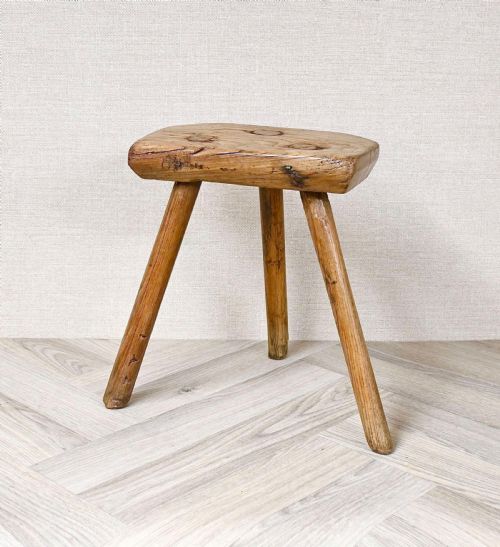

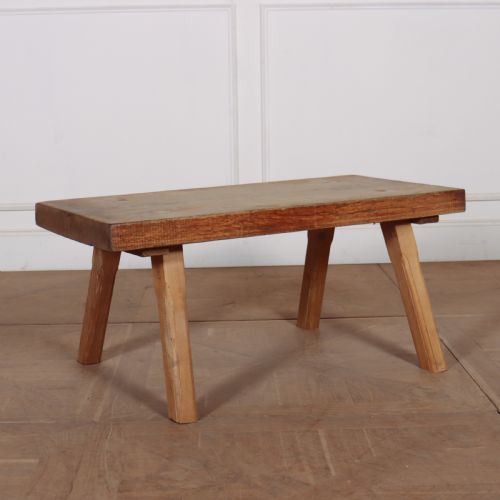


Country Farmhouse Low Stool
A country farmhouse low stool gives any room a grounded, honest character built from honest domestic use.
Country Farmhouse Low Stool
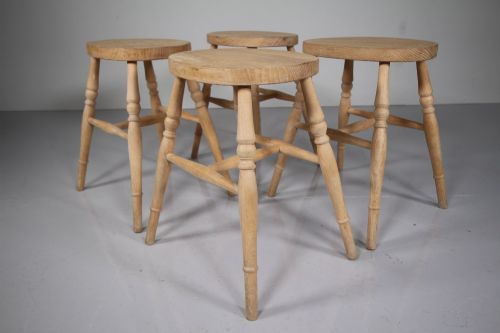
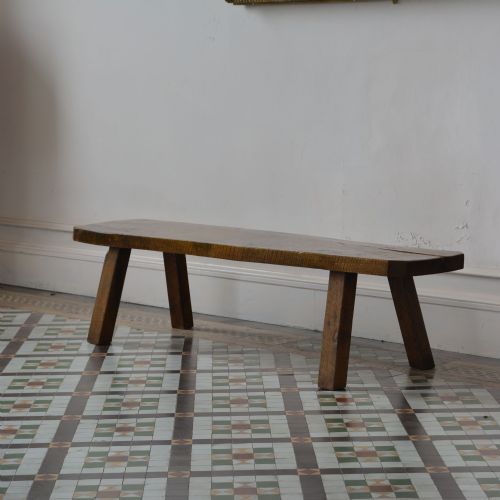
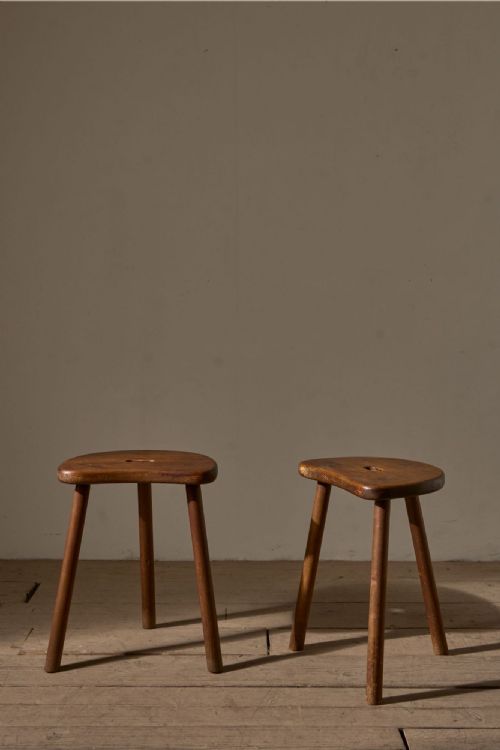
A country farmhouse low stool is a utilitarian seat born from daily domestic and agricultural tasks across the eighteenth and nineteenth centuries. These pieces appear in forms such as milking stools, dining stools, primitive stools, and pig benches, reflecting practical rural needs.
The specimens seen here span the Edwardian period, the nineteenth century, and the eighteenth century, showing simple timber construction. Buyers encounter vernacular designs shaped by regional makers working in oak, elm, pine, and beech.
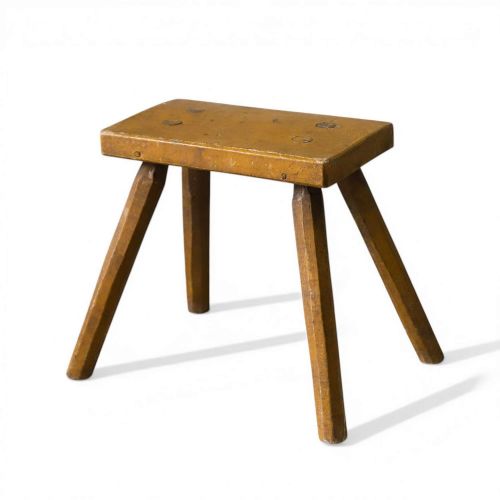
Many items display rustic country styles and original paint finishes, particularly yellow. Alongside standard stools, related forms like benches, occasional tables, and coffee tables emerge from the same working tradition.
Construction and materials
Constructed primarily from sturdy hardwoods and softwoods like oak, elm, pine, and beech, these seats rely on solid timber for daily endurance. Makers selected native woods that withstood heavy farmhouse workloads without intricate machinery.
Joinery techniques focus on straightforward utility, often joining thick timber seats directly to turned or shaved legs. Simple pegged joints and wedged tenons keep the low profile stable on unevenflagstone or dirt floors.
Country Farmhouse Low Stool Retail Price Guide 2026
Typical asking prices for country farmhouse low stool among the pieces listed under this phrase on Sellingantiques today, from the lower quarter to the upper quarter. They describe what is for sale here now, not the wider market.
Listings feature items from the eighteenth, nineteenth, and Edwardian periods, constructed in oak, elm, pine, and beech.
Assessing quality
Quality rests in the integrity of the original timber and the honesty of the wear. Seats shaped from a single solid slab of elm or oak carry greater presence than composite builds.
Surface character distinguishes an ordinary piece from a superior one, especially when original paint survives intact. Honest patination earned through decades of kitchen or dairy use elevates the visual weight of the timber.
The Country Farmhouse Low Stool Glossary
- Vernacular
- Architecture and objects created independently of grand architectural styles, using local traditions and materials. These pieces reflect regional habits rather than metropolitan fashions.
- Pig bench
- A low wooden bench utilised in agricultural settings for farm tasks or butchery. Their low stature and heavy timber build suit them to rigorous daily labour.
- Milking stool
- A small, usually three-legged seat designed for milkers to use in the dairy or field. The tripod base provides stability on uneven ground.
- Primitive
- Describing early or rustic items made with basic tools and direct methods. These objects prioritize function over refined decoration.
Country Farmhouse Low Stool: Frequently Asked Questions
What is a country farmhouse low stool?
A country farmhouse low stool is a traditional utility seat created for rural work and domestic life. They usually feature simple wooden seats supported by three or four legs.
These pieces originate from periods spanning the eighteenth to the early twentieth century. Their unpretentious design suited kitchens, dairies, and farmyards alike.
How were milking stools used?
Milking stools served as portable seats for farm workers tending to livestock in barns or fields. Their compact size allowed handlers to carry them easily during daily chores.
The tripod leg arrangement ensured the seat remained steady on uneven agricultural ground. This practical design defined their everyday function.
What woods are typical?
Makers utilised accessible local hardwoods and softwoods such as oak, elm, pine, and beech. These timbers provided the durability required for hard agricultural tasks.
Elm frequently appears in seat construction due to its resistance to splitting under pressure. Beech and pine often formed the turned or shaped legs.
How do I date a stool?
Dating relies on observing tool marks, timber characteristics, and structural wear patterns. Eighteenth and nineteenth-century examples show hand-shaved surfaces and simple joinery.
Comparing the style of the legs and the method of securing them provides clues to the era. Original paint surfaces also help establish the historical context of the piece.