

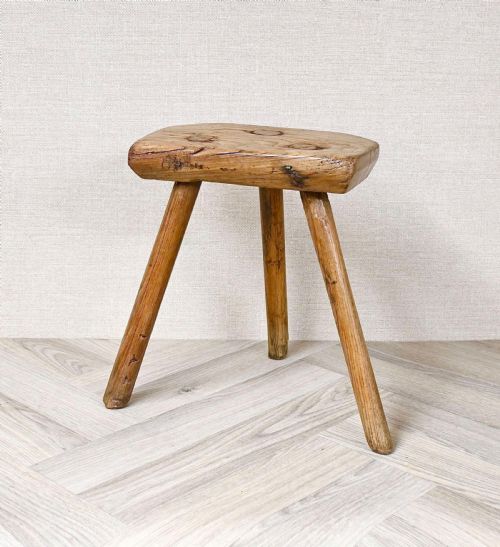


Primitive Wooden Milking Stool
A primitive wooden milking stool offers honest, functional utility and sculptural presence, making it a sought-after piece for rustic interiors.
Primitive Wooden Milking Stool
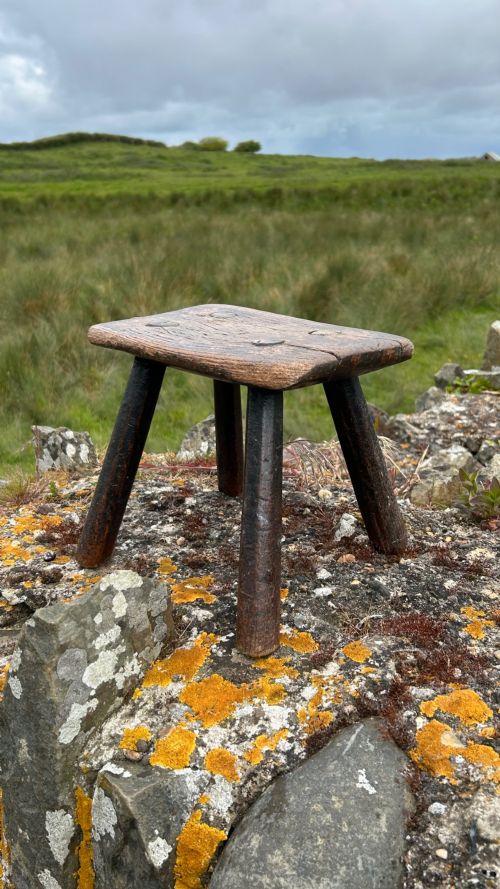
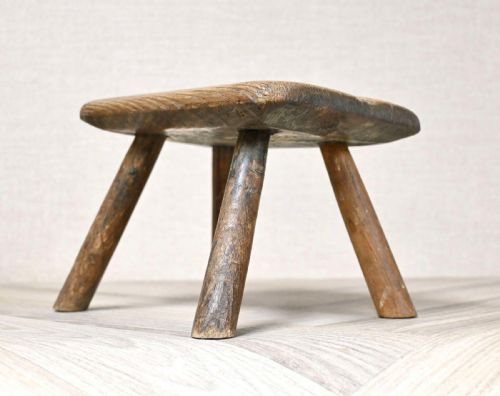
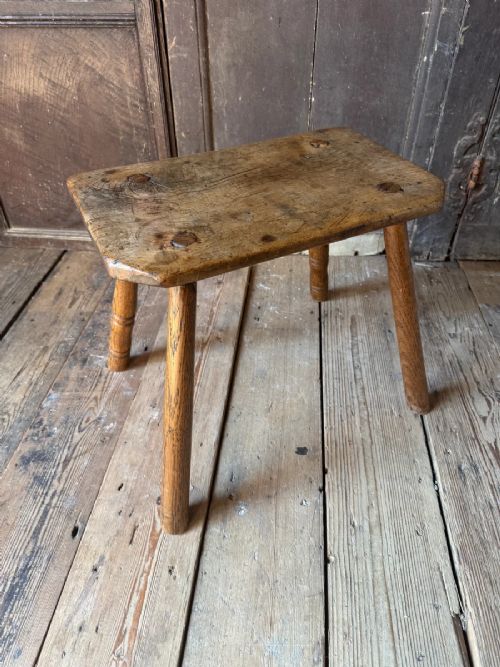
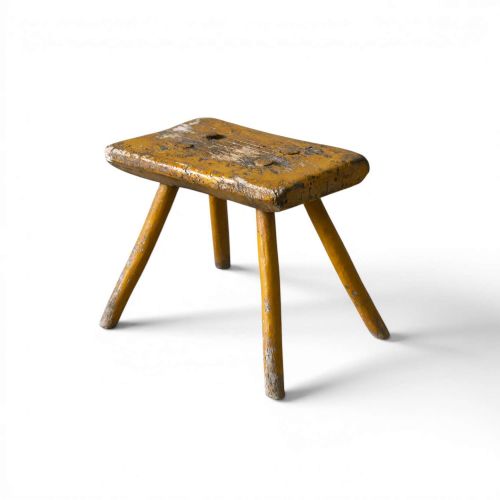
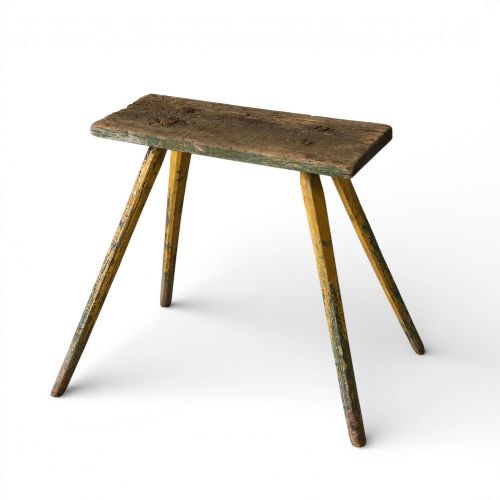
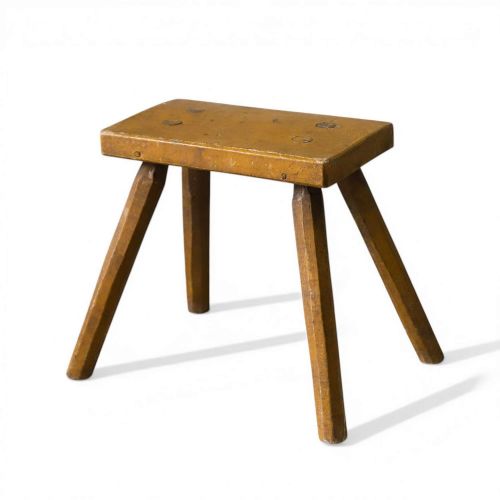
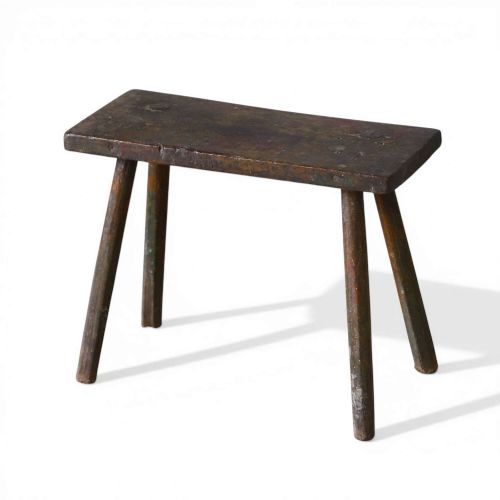
The most common versions on this page are nineteenth-century examples, often constructed with three splayed legs and solid timber seats designed for stability on uneven ground. You will find pieces shaped from sycamore, ash, oak, and pine, reflecting the readily available materials of local woodlands and farms. Their rustic charm lies in their unpretentious utility, shaped by decades of daily service in barns, dairies, and cottages.
How they were made
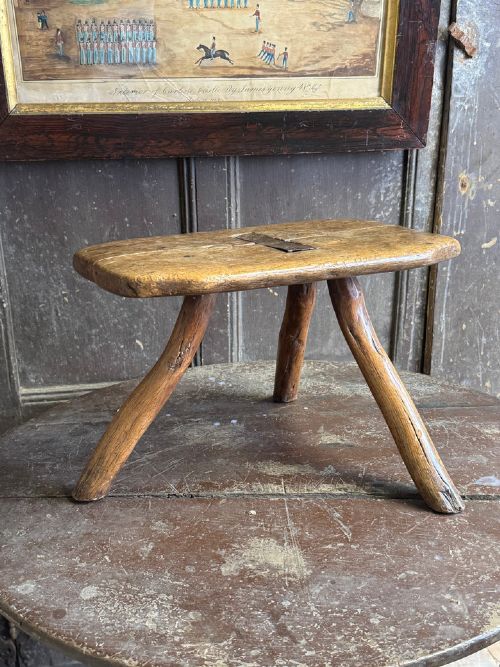
Makers fashioned these pieces using simple hand tools, relying on green woodwork and basic joinery techniques suited to vernacular furniture production. Legs were typically turned or shaved using a drawknife, then wedged firmly into bored holes through the underside of the solid seat. Blacksmith-made iron repairs occasionally reinforce structural joints, showing how working items were kept in service rather than discarded.
Surfaces often retain traces of their working life, including original ochre, yellow, green, or black paint applied to protect the wood. Native hardwoods like oak, ash, and sycamore provided the necessary density and strength for seats that had to withstand constant weight and movement.
Primitive Wooden Milking Stool Retail Price Guide 2026
Typical asking prices for primitive wooden milking stool among the pieces listed under this phrase on Sellingantiques today, from the lower quarter to the upper quarter. They describe what is for sale here now, not the wider market.
Some nineteenth-century work stools come complete with blacksmith iron repairs, proving that even a humble milking seat deserved a second chance.
What varies in quality
The distinction between a standard utility seat and a finer example rests on the sculptural character of the seat and the balance of the proportions. Stools with deeply sculpted rounded seats or unusually splayed hedgerow legs show greater attention to form by the maker. The survival of original paint finishes, whether vibrant ochre or muted green, elevates an ordinary work stool into a piece with strong visual appeal.
Structural integrity also separates examples, as pieces that retain their original wedged joints without excessive timber shrinkage command closer inspection. The presence of early blacksmith repairs adds historical depth, whereas clumsy modern replacements diminish the integrity of a vernacular object.
The Primitive Wooden Milking Stool Glossary
- Splayed legs
- Legs set at an outward angle to provide a wide, stable base on uneven rural floors. This construction method prevents tipping during daily use.
- Vernacular
- Everyday objects designed for practical use by local craftsmen rather than high-style urban cabinetmakers. These pieces utilise regional materials and traditions.
- Natural form
- Furniture retaining the organic contours of the raw timber from which it was shaped. This approach celebrates the natural irregularities of the branch or trunk.
- Diminutive
- Unusually small in scale, often denoting pieces intended for children or specialised low-level tasks. Such items offer high decorative impact in compact spaces.
- Hedgerow legs
- Raw branches or saplings selected straight from the hedgerow and utilised directly as structural supports. They give rustic furniture an unrefined, organic aesthetic.
Primitive Wooden Milking Stool: Frequently Asked Questions
How were these stools used originally?
Farm workers used these low seats for milking cows by hand in barns and pastures, needing stability and mobility close to the ground.
Beyond dairy tasks, similar small stools served various roles around the hearth or workshop where low seating was practical for detailed labour.
Are these painted finishes original?
Many pieces retain early layers of paint, such as ochre, yellow, or green, which served to seal the wood and brighten dark agricultural spaces.
Examining the wear patterns and surface degradation helps determine whether the pigment dates from the working life of the stool.
How do I style a milking stool at home?
Their compact size allows them to function well as bedside tables, plant stands, or simple display surfaces in minimalist or rustic rooms.
Placed beside a chair or in a hallway, they introduce organic texture and historical character without dominating the floor plan.
What woods were commonly used?
Craftsmen relied on native British and European hardwoods like oak, ash, and sycamore for their durability and impact resistance under daily weight.
Softwoods and mixed timbers also appear, particularly in regional pieces where local forest availability dictated the choice of materials.