

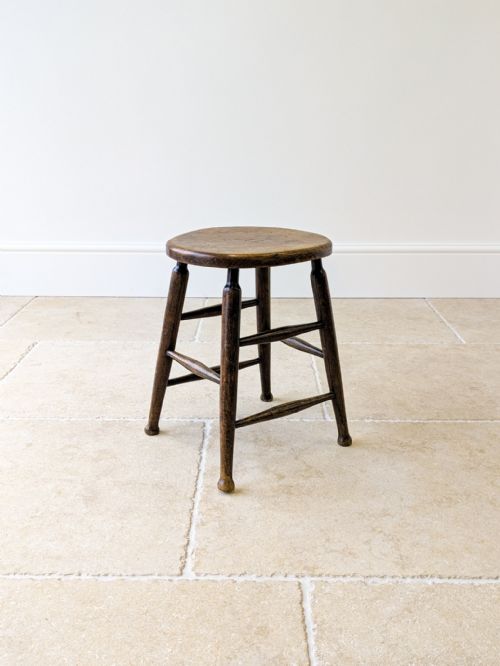
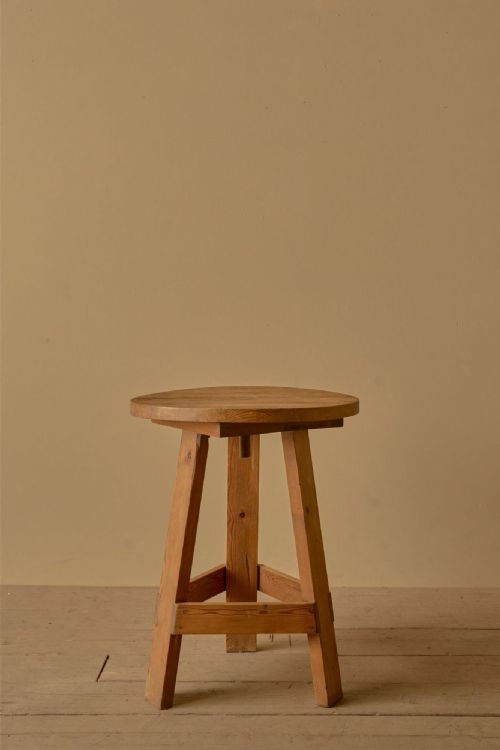
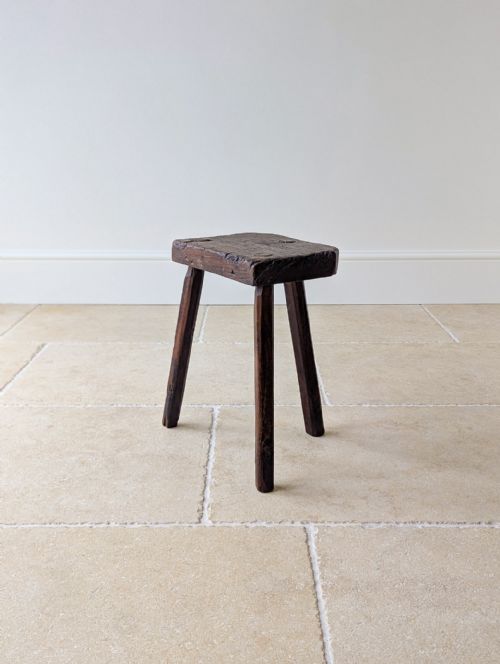
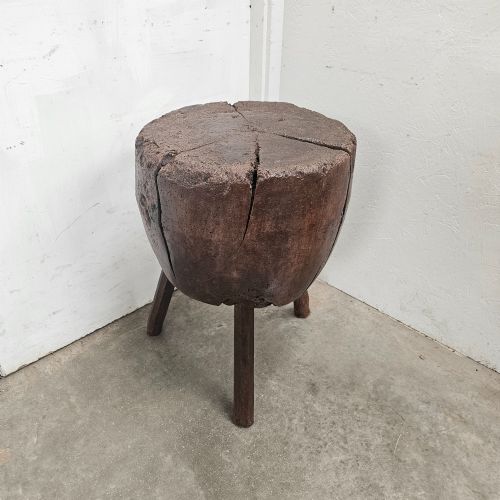
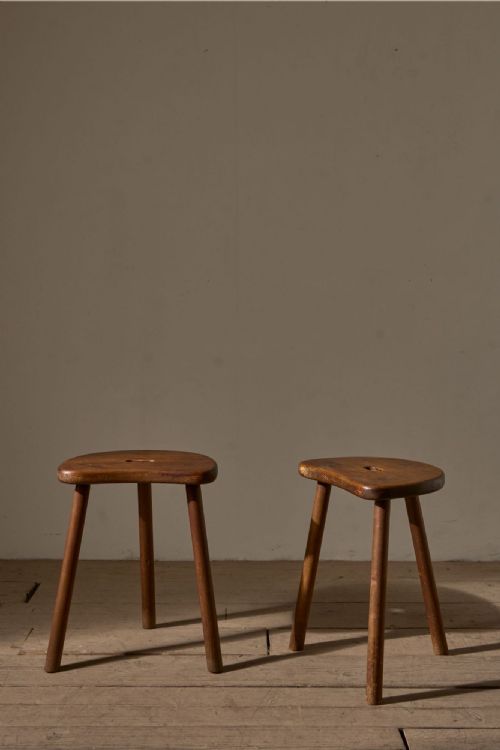

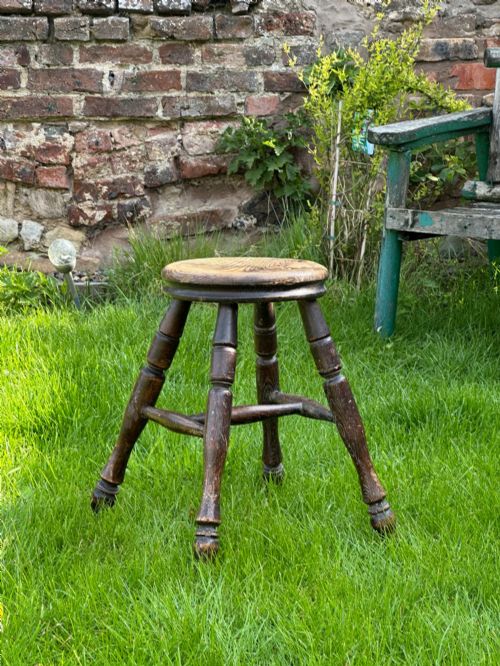
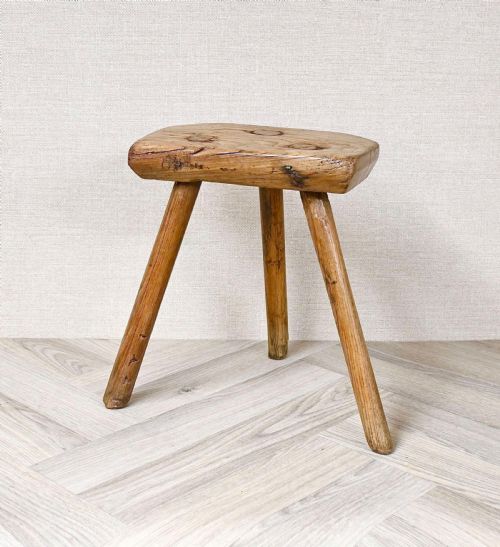


Rustic Wooden Tripod Stool
A rustic wooden tripod stool brings honest vernacular craft and tactile organic warmth into a modern room through its simple three-legged form.
Rustic Wooden Tripod Stool
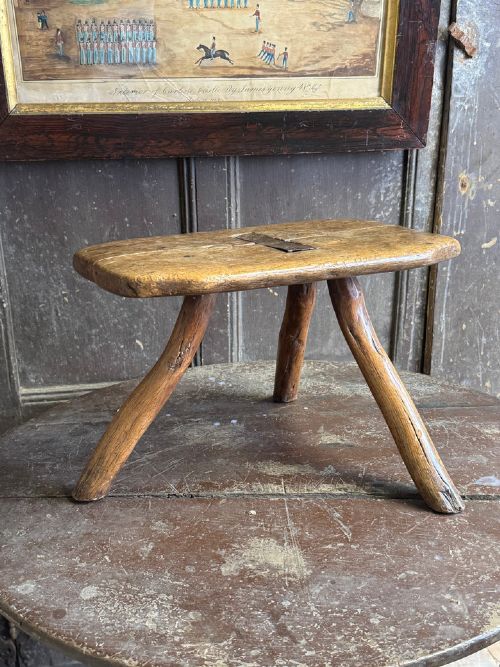
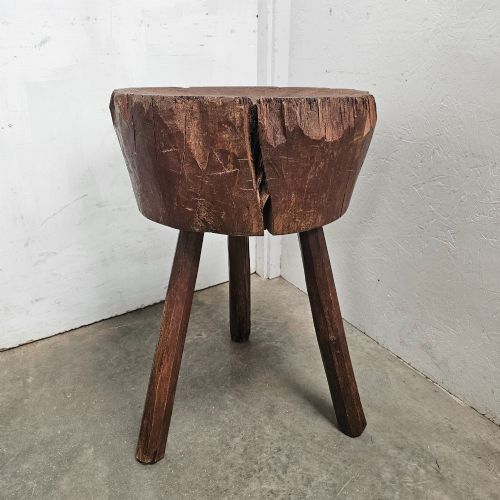
A rustic wooden tripod stool is a utilitarian seat born from regional workshops and rural necessity, shaped by makers who utilised whatever timber came to hand. When searching this phrase, buyers encounter pieces spanning the eighteenth, nineteenth, and early twentieth centuries, reflecting diverse vernacular traditions from English farmhouses to French provincial kitchens.
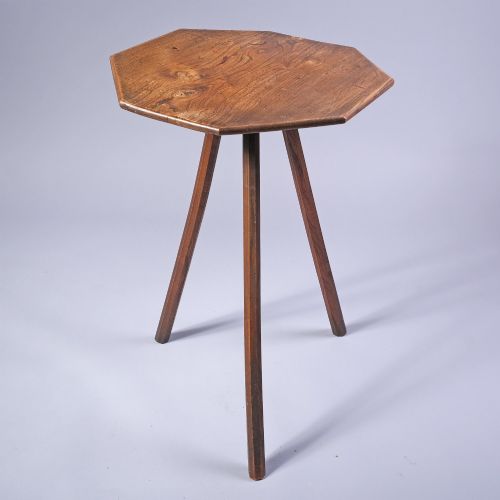
The most common form on this page is the nineteenth century elm top stool, often constructed with three splayed legs wedged directly into a thick solid seat. These humble survivors include dairy stools, milking stools, and workshop seating such as jeweller or cutler stools, alongside game blocks and occasional tables sharing the same three-legged tripod architecture.
Materials and construction methods
Makers selected tough domestic hardwoods such as elm, ash, and beech for the seats and legs, frequently combining timbers within a single piece depending on local woodland supplies. Elm provided a tough, interlocking grain that resisted splitting when the maker drove tenoned legs directly through the underside of the seat.
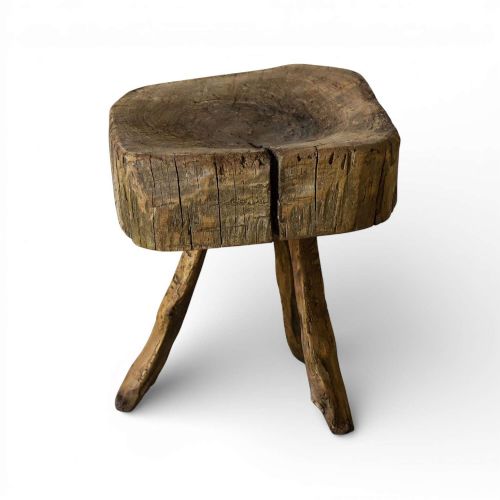
Construction relies on basic joinery techniques, principally through-tenons wedged from above and secured with timber pins or blacksmith repairs in iron. Some pieces incorporate turned elements like bobbin legs, while others retain the raw, gnarled shape of unworked branches selected for natural strength and character.
Rustic Wooden Tripod Stool Retail Price Guide 2026
Typical asking prices for rustic wooden tripod stool among the pieces listed under this phrase on Sellingantiques today, from the lower quarter to the upper quarter. They describe what is for sale here now, not the wider market.
Evaluating quality in country seating
Quality in a rustic wooden tripod stool rests in the integrity of the timber and the honesty of its original working life. A superior piece exhibits substantial thickness in the seat slab, deep patination built up through decades of use, and legs that remain firmly keyed without excessive structural movement.
The distinction between ordinary utility and a finer vernacular survival lies in the proportion and balance of the splayed legs relative to the seat. Evidence of early blacksmith repairs, original paint surfaces, or unusual regional forms like swivel mechanisms elevate a piece above standard domestic inventory.
The Rustic Wooden Tripod Stool Glossary
- Vernacular
- Describing objects made by local craftsmen following regional traditions rather than high-style academic designs. These pieces solved everyday functional problems using readily available local materials.
- Splayed
- Angled outwards from the centre to provide a wide, stable base. This stance prevented the seat from tipping on uneven stone floors.
- Through-tenon
- A joint where the leg passes completely through a hole in the seat slab and is locked in place. Wedges driven into the top of the leg expand the timber for a permanent grip.
- Patina
- The surface sheen and darkening developed over generations of handling, scrubbing, and exposure to light. It signals age and honest domestic service.
- Live edge
- A tabletop or seat edge that retains the natural contour of the tree trunk rather than being sawn straight. This feature highlights the organic origins of the timber.
Rustic Wooden Tripod Stool: Frequently Asked Questions
What were tripod stools used for?
These pieces served practical roles in dairies, farmhouses, and workshops where workers needed a movable seat that remained stable on uneven floors. Milkers, cutlers, and jewellers relied on three-legged stools because the configuration naturally prevents rocking.
Over time, these utilitarian objects migrated into domestic spaces as occasional tables or side surfaces. Their compact footprint made them useful for small corners beside firesides or beds.
How do I date an old stool?
Dating relies on observing tool marks, timber selection, and construction wear rather than painted dates. Eighteenth-century examples often display hand-adzed surfaces and early blacksmith repairs, while Victorian pieces may show the influence of mass-produced turning.
Examining the underside reveals how the legs were joined to the seat, offering clear clues about the manufacturing era and regional workshop practices.
Can I use an antique stool daily?
Most surviving country stools retain robust structural integrity and handle normal daily sitting without issue. The tough hardwoods used by period makers ensure long-term durability.
Placing them in rooms with stable humidity protects the dry timber from shrinking or loosening the wedged leg joints over time.