

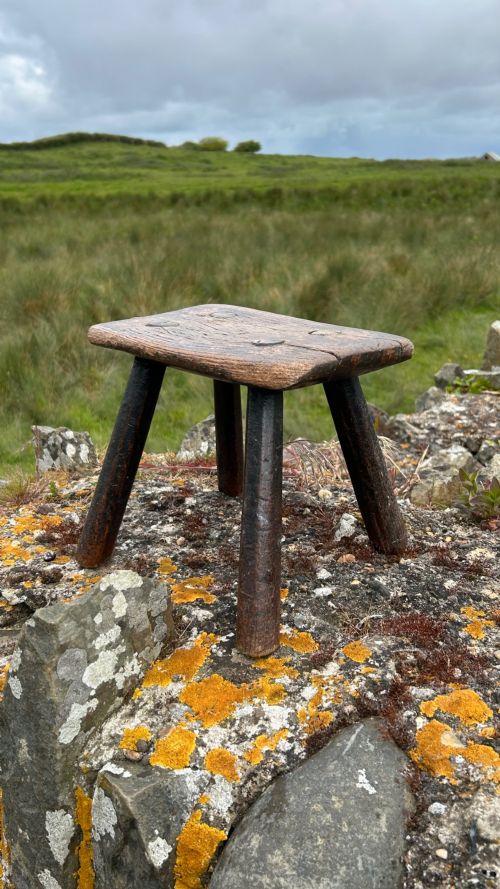
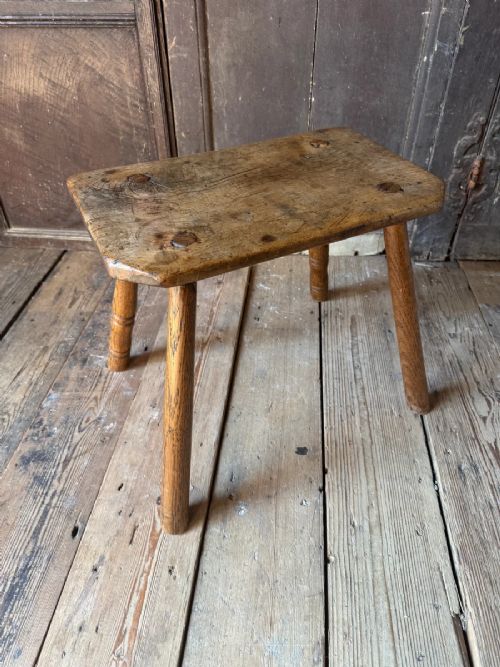
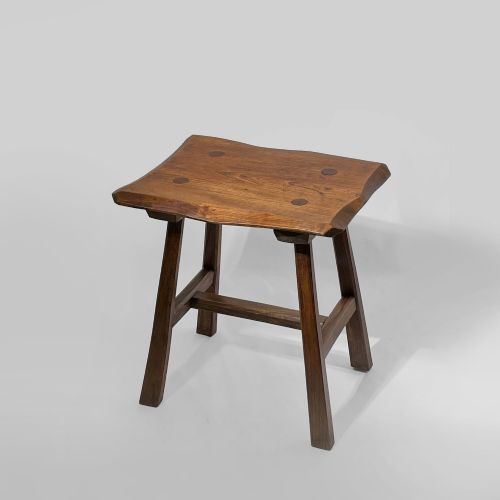
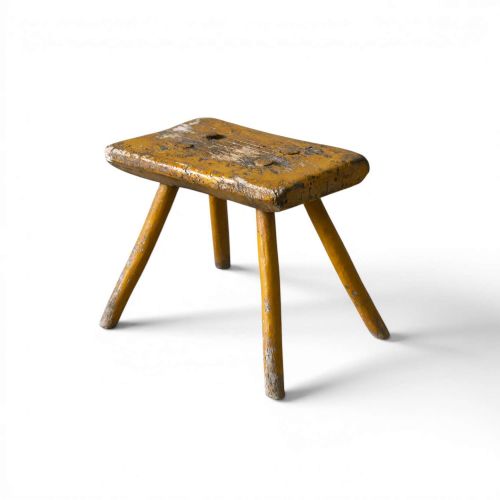

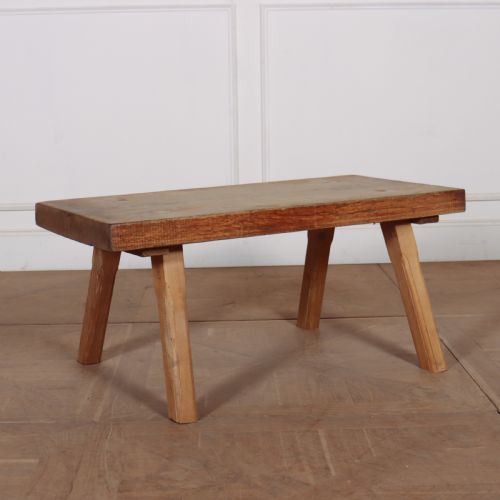


Primitive Wooden Bench Stool
These primitive wooden bench stool examples offer honest country utility, shaped by generations of practical rural work.
Primitive Wooden Bench Stool
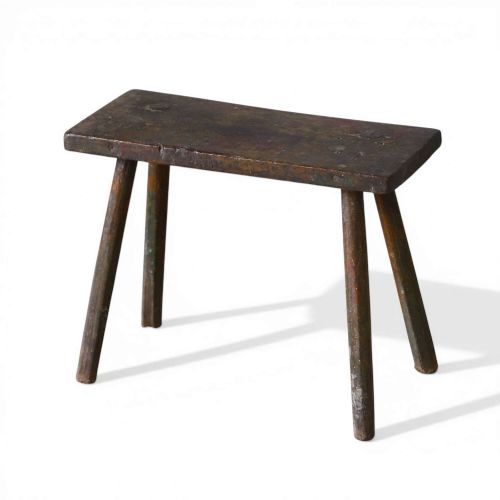
The forms vary from low milking stools and hearth benches to diminutive children's seats and occasional tables. Most pieces on this page lean heavily into rustic vernacular and folk art traditions, reflecting straightforward regional designs.
Origins span across British, French, Eastern European, and African traditions, showing how different rural communities solved simple seating needs with local materials. These objects function equally well today as low coffee tables, side tables, or decorative seats.
Materials and Construction Methods
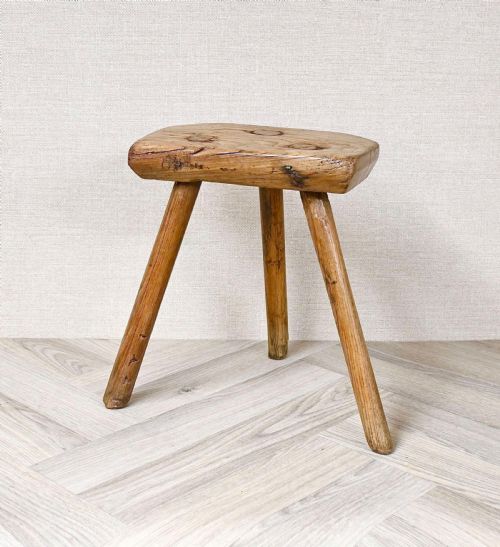
Local hardwoods dominate these pieces, with oak, elm, sycamore, and ash selected for their strength and availability. Makers worked with timber in its natural form, often utilising whole sections of logs for seats and simple turned or cleft legs for support.
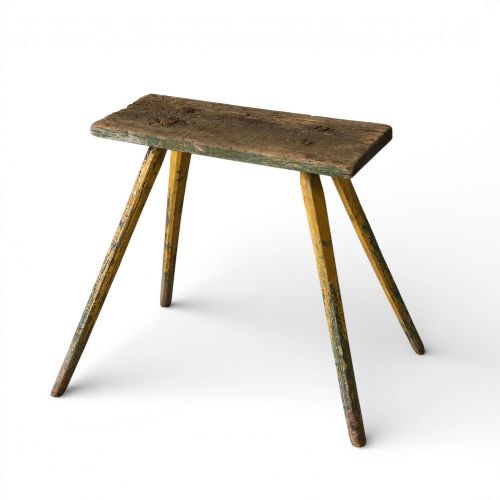
Surface finishes include untouched bare timber, weathered patinas, and occasional remnants of historic paint, such as ochre and green. Construction relies on traditional joinery techniques like pegged mortise and tenon joints or simple wedged legs inserted directly into drilled seat boards.
Primitive Wooden Bench Stool Retail Price Guide 2026
Typical asking prices for primitive wooden bench stool among the pieces listed under this phrase on Sellingantiques today, from the lower quarter to the upper quarter. They describe what is for sale here now, not the wider market.
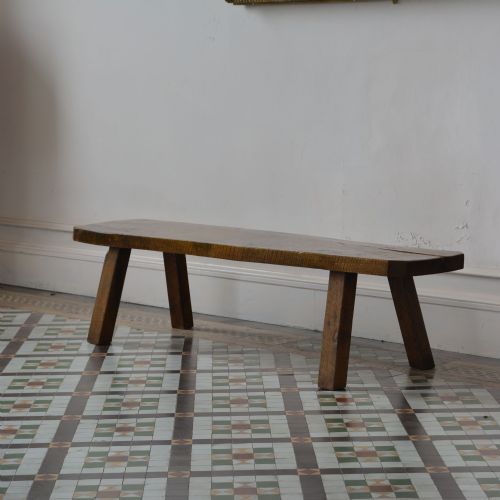
The selection spans domestic household forms like hearth stools alongside specialised agricultural items such as milking stools and pig benches.
Evaluating Quality and Character
Quality in a primitive wooden bench stool lies in the balance between structural integrity and the depth of its honest wear. Pieces that retain their original surface patinas or historic painted finishes command stronger interest from collectors.
Proportion and sculptural presence also set individual items apart, particularly when a maker shaped a seat with distinct anatomical curves or natural forms. The integrity of the timber and the tightness of the original joints dictate how well the piece survives centuries of practical use.
The Primitive Wooden Bench Stool Glossary
- Vernacular
- Everyday objects made by local craftspeople rather than professional cabinetmakers, using regional styles and available materials. These pieces prioritize function over formal academic design.
- Milking stool
- A small, usually three-legged seat designed to be stable on uneven farm floors while a worker sat close to an animal. Their compact forms make them popular for modern interior use as small tables.
- Patina
- The surface sheen and colour developed by wood over long periods of use, cleaning, and exposure to light. A rich patina indicates age and authentic handling.
- Pig bench
- A low wooden bench traditionally used in agricultural settings for butchery or farm tasks. They are prized today for their long, narrow proportions.
- Folk art
- Utilitarian items made outside the formal artistic traditions, often displaying charming irregularities and direct decoration. They embody the cultural expressions of rural communities.
Primitive Wooden Bench Stool: Frequently Asked Questions
How do I use a primitive stool at home?
These low seats function well as small side tables, plant stands, or minimalist bathroom stools. Their modest scale allows them to fit easily into tight corners or beside low seating.
Place them where their weathered timber surfaces can provide a textural contrast against modern interiors.
What is the difference between a bench and a stool?
Stools generally provide single-occupant seating on three or four legs, while benches offer longer, narrow platforms designed for more than one person or specific agricultural tasks. Both share the same robust, utilitarian construction methods.
Regional names often blur these lines depending on the exact proportions of the piece.
Are painted primitive stools genuine?
Many nineteenth-century European pieces retain original layers of paint, such as traditional ochre or green coatings, applied to protect the timber. Examination of the surface reveals the craquelure, wear patterns, and underlying wood preparation characteristic of age.
Original paint adds significant character and historical value to the object.
How should I care for antique rustic wood?
Keep these items away from direct heat sources and rapid humidity changes to prevent the dry timber from splitting. A light application of beeswax helps nourish the wood and maintain its surface patina.
Avoid harsh chemical cleaners that can strip away decades of accumulated character.