




Country Farmhouse Armchair
A country farmhouse armchair brings robust local character and time-worn timber directly into daily domestic life.

Country Farmhouse Armchair
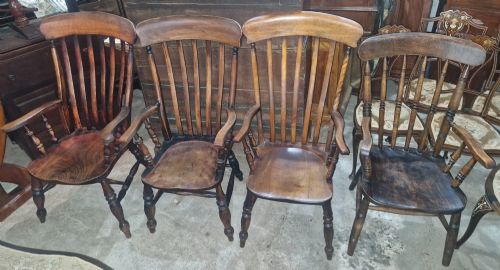
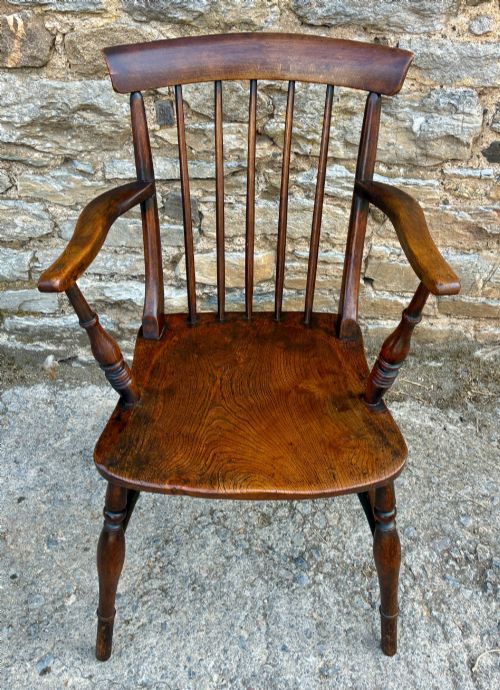
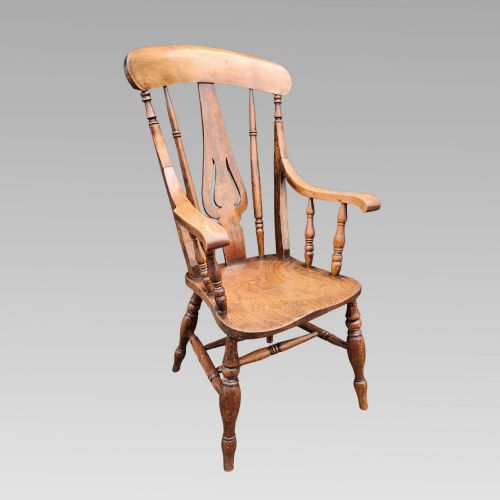
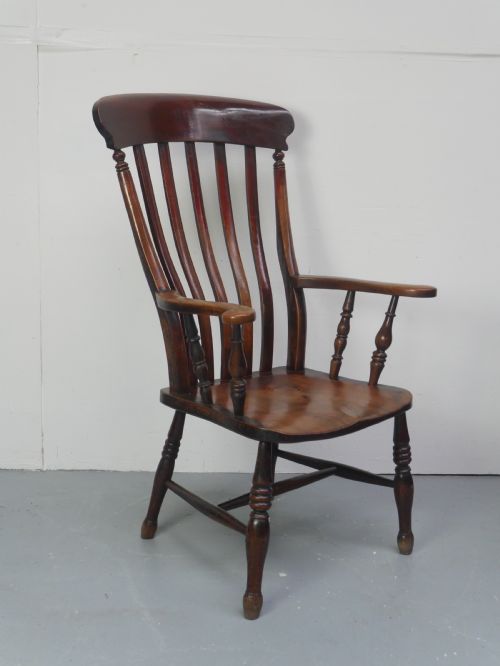
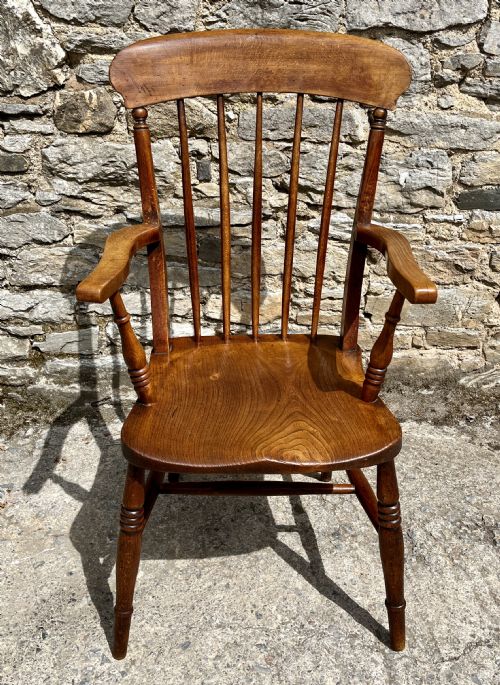
A country farmhouse armchair is a sturdy seat built for daily domestic use in rural kitchens and parlours. These chairs appear frequently as nineteenth-century Windsor forms, featuring stick backs, spindle backs, and hooped structures.
Buyers often encounter regional variations such as Yorkshire or Lancashire armchairs alongside classic Windsor designs. Many examples combine multiple domestic timbers in a single frame to handle heavy weight and constant movement.
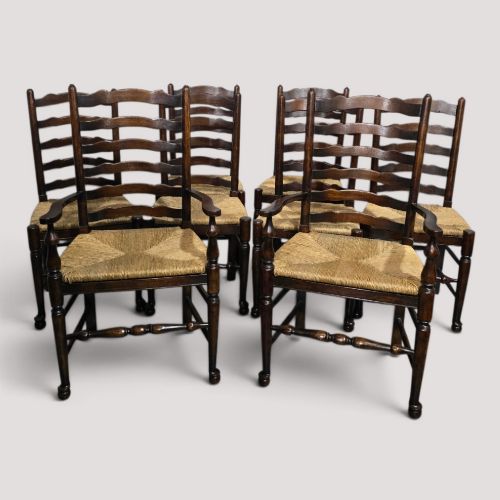
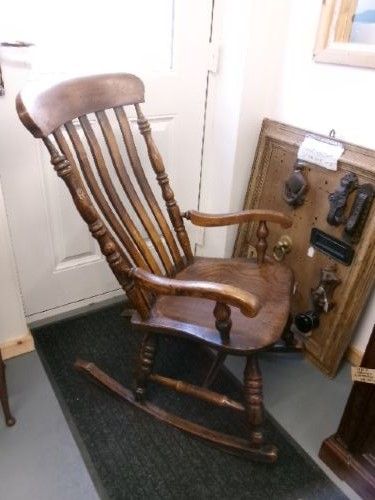
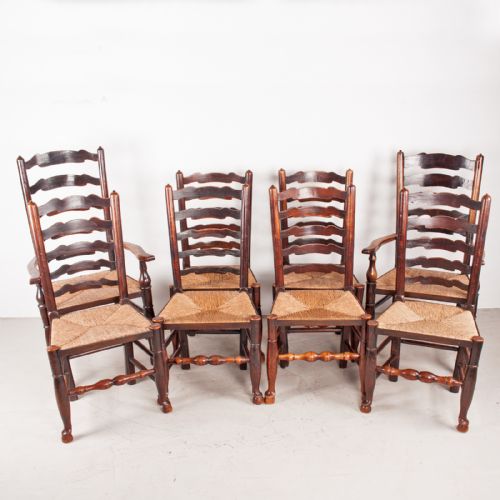
The selection also includes ladder-backed dining chairs and rocking chairs originating from the nineteenth and early twentieth centuries. These pieces reflect traditional English country craftsmanship intended for practical longevity rather than formal display.
Materials and construction methods
Maker workshops utilised contrasting timbers within a single chair, pairing tough elm for sculpted seats with ash, beech, or fruitwood for the turned spindles and legs. This division of labour ensured each part of the frame managed specific stresses.
Constructors relied on traditional joinery techniques, seating turned uprights directly into bored holes in solid wood plank seats using wedged tenons. Rush seating also appears woven directly over timber frames for added support.
Turned components were shaped on pole lathes or treadle lathes, producing subtle irregularities that distinguish hand-turned spindles from later mass-produced alternatives.
Listings feature eighteenth-century George III examples alongside nineteenth-century Victorian pieces, utilising elm, ash, beech, oak, and fruitwood.
Distinctions in quality and execution
Quality rests on the depth of the sculpted elm seat and the balance of the turned spindles. Thicker, deeply saddled seats combined with well-proportioned armbows offer superior comfort and visual harmony.
The choice of timber combinations affects the overall solidity of the armchair, with dense fruitwood and mature ash providing greater rigidity than softer utility hardwoods. Original surface patination accumulated through decades of domestic use also elevates a piece.
Structural integrity depends on the tightness of the original joints and the minimal intervention of later repairs. Chairs retaining their original turned components and uncompromised wedged tenons demonstrate superior craftsmanship.
The Country Farmhouse Armchair Glossary
- Windsor
- A traditional wooden chair featuring a solid carved seat into which the legs and back sticks are independently tenoned. This construction provides exceptional strength without requiring heavy frame rails.
- Elm
- A tough, interlocking timber frequently utilised for chair seats because it resists splitting under pressure. Its characteristic grain adds visual depth to the surface.
- Spindle
- A slender, turned wooden rod used to form the backrest or arm support of a chair. These elements are typically shaped on a lathe.
- Rush
- Dried marsh grass twisted into cord and woven tightly to form a supportive seat base. This traditional seating method appears frequently on ladder-backed chairs.
- Ladderback
- A chair back constructed from horizontal wooden slats arranged between two upright posts. This traditional form dates back centuries in English rural workshops.
Country Farmhouse Armchair: Frequently Asked Questions
How do I care for an elm seat?
Maintain the timber by applying traditional beeswax sparingly and buffing it with a soft cloth to preserve the natural lustre. Avoid placing the chair near direct heat sources to prevent the solid wood from shrinking or splitting.
Keep the room at a stable humidity level so the timber joints remain secure over time. Regular gentle cleaning is sufficient to protect the historic surface patination.
Where were these armchairs used?
These armchairs served primarily in farmhouse kitchens, dining spaces, and hearthside settings where sturdy seating was essential. Their robust construction handled daily domestic demands across generations of rural life.
They also found places in country parlours and estate offices. Their utilitarian origins meant they moved easily between working areas and family living spaces.
How do I tell regional styles apart?
Regional variations often show in the turning of the spindles and the shaping of the arm supports. Lancashire and Yorkshire designs frequently employ ladder backs or distinctive spindle arrangements.
Windsor variations display different hoop configurations and comb-back crests depending on the local workshop traditions. Examining the turning profiles reveals much about the geographical origin of the maker.
Can I use these chairs daily?
Most country farmhouse armchairs remain fully functional for everyday seating if the wooden joints are secure. Their original purpose was heavy domestic service, which makes them well-suited for modern residential use.
Check that the wedged legs and arm joints are stable before regular use. A professional inspection can consolidate dry joints without altering the historical fabric.