


Coromandel Wooden Box
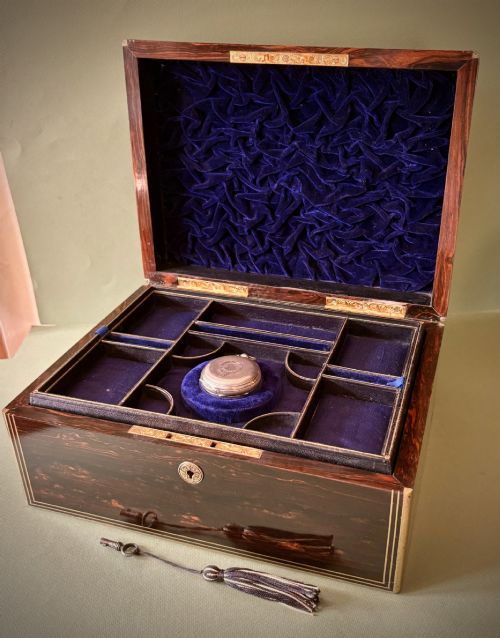
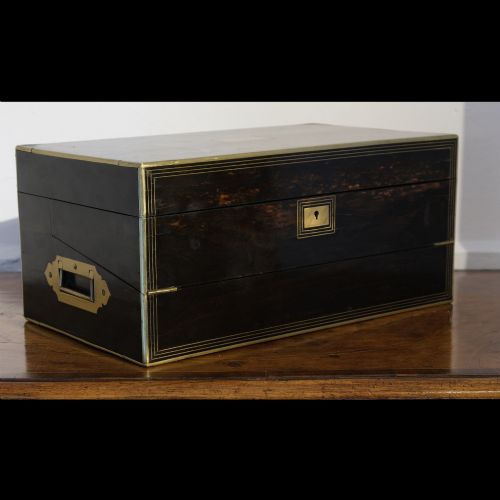
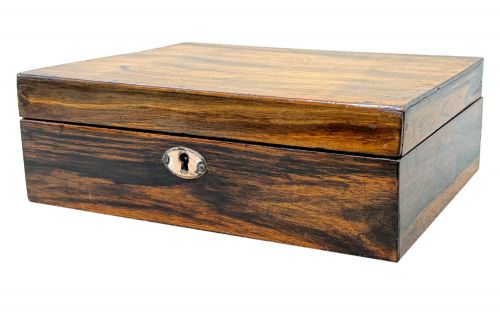
A coromandel wooden box brings rich grain and solid weight to a desk, usually taking the form of a writing slope or jewellery case.

Coromandel Wooden Box
A coromandel wooden box stands out for its dense, dark grain and use as a personal container for correspondence, writing equipment, or valuables.
The pieces seen here date primarily from the nineteenth century, spanning the Regency and Victorian eras.
Writing slopes, tea caddies, and jewellery boxes dominate the forms, reflecting the utilitarian elegance of domestic life in those decades.
Materials and construction
Craftsmen utilised coromandel wood for its distinctive dark striping, frequently pairing the dense timber with brass banding or mother-of-pearl inlay.
Interiors often feature velvet linings, glass inkwells, and secret drawers concealed behind sliding panels.
Coromandel Wooden Box Retail Price Guide 2026
Typical asking prices for coromandel wooden box among the pieces listed under this phrase on Sellingantiques today, from the lower quarter to the upper quarter. They describe what is for sale here now, not the wider market.
Writing slopes and tea caddies represent the most common object types found across the Regency and Victorian periods.
Quality differences
The standard of a coromandel wooden box depends on the complexity of its interior fittings, the precision of the brass mounts, and the integration of pietra dura or inlaid work.
Pieces bearing the stamps of known makers or retailers display superior joinery and more ambitious hardware.
H Mitchell·Mechi and Bazin·Edwards·Lund of London
The Coromandel Wooden Box Glossary
- Coromandel wood
- A dense, heavy exotic timber native to Southeast Asia with dark brown and black striations. It provides the primary exterior material for nineteenth-century luxury boxes.
- Writing slope
- A portable desk with a hinged, slanted surface that opens to reveal storage for paper and pens. These often include secret compartments.
- Pietra dura
- An artistic technique using cut and fitted polished coloured stones to create geometric or floral designs. It appears on the lids of select stationary boxes.
- Tantalus
- A locking wooden frame that holds decanters or scent bottles securely while displaying the contents. The mechanism prevents removal without a key.
- Tea caddy
- A container designed to store loose tea leaves, often featuring internal lidded compartments. Examples in this material date to the Victorian and Regency periods.
Coromandel Wooden Box: Frequently Asked Questions
What is a coromandel wooden box used for?
These containers served specific domestic purposes in the nineteenth century, functioning as writing desks, jewellery storage, tea caddies, or stationery organisers.
Today, they suit similar roles on modern desks or dressing tables, keeping small items secure within fitted compartments.
How do I date a coromandel wooden box?
Dating relies on style markers such as brass binding, gothic revival motifs, or aesthetic movement inlay, alongside locks and hinges characteristic of the Victorian or Regency periods.
Maker stamps and retailer signatures provide more precise decades of origin when present inside the lid.
What is coromandel wood?
Coromandel is a heavy, durable tropical hardwood prized for its striking contrast between dark brown and near-black grain patterns.
It resembles ebony but exhibits richer striping, making it the material of choice for high-end nineteenth-century portable desks and caddies.
Are keys normally included with these boxes?
Working keys accompany several pieces from this period, though many survive without them due to centuries of use and displacement.
Locks on writing slopes and vanity cases are often brass-fitted and integrated directly into the front edge.