

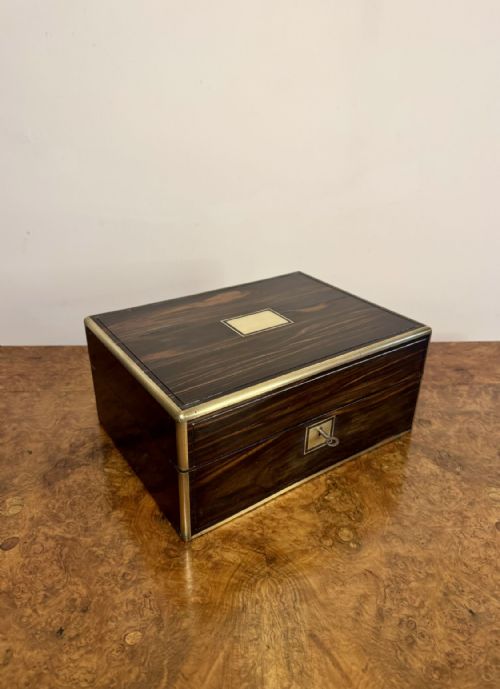
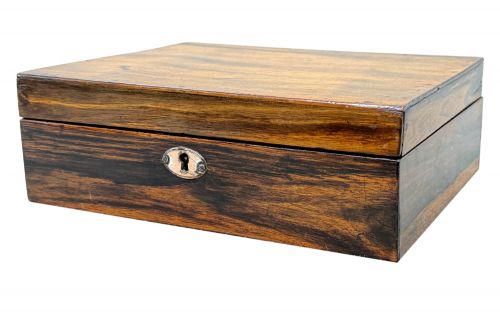


Coromandel Vanity Box
A coromandel vanity box is a heavily grained nineteenth-century luxury chest designed for travel and dressing.
Coromandel Vanity Box
When you search for a coromandel vanity box, you encounter a sophisticated class of nineteenth-century travelling chest created for affluent Victorians. These pieces appear predominantly from the mid to late Victorian decades, spanning from eighteen-forty through to eighteen-eighty.
The form functions as a portable dressing room, equipped internally to house jewellery, cosmetics, and writing accessories. Examples take rectangular proportions and frequently incorporate brass mounts, mother-of-pearl inlay, and fitted velvet interiors alongside cut crystal bottles.
Materials and construction
Makers utilised dense coromandel wood as the primary carcass, prized for its dark, richly figured grain. This exotic timber was frequently combined with polished brass banding, escutcheons, and mother-of-pearl inlay to accentuate the geometric exterior lines.
Internal compartments demand precise carpentry to house removable trays, glass scent bottles with silver plate or sterling silver tops, and velvet-lined cavities. Many iterations conceal secret drawers activated by spring mechanisms or hidden release pins within the wooden frame.
Coromandel Vanity Box Retail Price Guide 2026
Typical asking prices for coromandel vanity box among the pieces listed under this phrase on Sellingantiques today, from the lower quarter to the upper quarter. They describe what is for sale here now, not the wider market.
Secret spring drawers require pressing hidden wooden levers, rewarding curious owners with concealed compartments for clandestine love letters.
Factors of quality
Quality rests in the completeness of the original internal fittings and the complexity of the internal arrangement. Pieces retaining their full complement of matching cut crystal bottles, silver lids, and original velvet or leather linings stand apart from altered examples.
The precision of the cabinetwork defines the upper tier, visible in the tight alignment of brass stringing and the depth of the coromandel grain. Maker attribution via engraved signatures on locks or plaques elevates the stature of an individual box.
H Mitchell·Asprey·Edwards·William Neal·Goodman·Betjemman's
The Coromandel Vanity Box Glossary
- Coromandel
- A dense, heavily figured exotic hardwood imported from Asia, displaying dark brown and caramel striations. It was favoured by nineteenth-century cabinetmakers for high-end luxury boxes.
- Tantalus
- A locking wooden frame holding glass bottles securely so they cannot be removed without a key. This mechanism protected expensive contents from unauthorized access during travel.
- Escutcheon
- A flat plate surrounding a keyhole, usually fashioned from brass in these pieces. It protects the surrounding wood from wear caused by the key.
- Fitted interior
- A compartmented wooden or leather insert designed to organise specific items such as scent bottles, brushes, and jewellery. It ensures every tool has a designated slot.
- Stringing
- Thin inlaid lines of contrasting material, such as brass or boxwood, embedded into the surface of the wood. This technique creates geometric borders on the box lid.
Coromandel Vanity Box: Frequently Asked Questions
What fits inside a coromandel vanity box?
These boxes contain dedicated compartments for jewellery, sewing implements, and crystal glass scent bottles with silver tops. Many also provide removable trays and hidden drawers for letters or small valuables.
Travellers used them as portable dressing cases to maintain grooming routines away from home. The interior layout adapts easily to modern storage needs for watches and trinkets.
How do you date a coromandel vanity box?
Dating relies on stylistic clues, lock stamps, and the complexity of the brass or mother-of-pearl inlay. Pieces from eighteen-forty often feature heavy brass banding, whilst later Victorian examples incorporate Aesthetic Movement motifs.
Maker signatures stamped on locks or inscriptions on silver bottle caps provide precise chronological anchors. Construction methods inside the carcass also help distinguish early Victorian work from late nineteenth-century production.
Are keys usually included with these boxes?
Some surviving boxes retain their original working keys, whilst others operate without them due to centuries of displacement. Working locks remain a desirable feature for collectors.
Specialist locksmiths can often provide replacement keys if the mechanism requires operation. The presence of a working lock does not alter the fundamental aesthetic value of the cabinetwork.
How should I care for coromandel wood?
Maintain the wood by keeping it away from direct sunlight and dramatic humidity shifts to prevent timber splitting. Gentle dusting with a dry cloth preserves the polished surface.
Avoid using modern liquid polishes that can build up a residue in the grain. Conditioning wax applied sparingly helps maintain the natural lustre of the exotic veneer.