

Corner Tier Stand
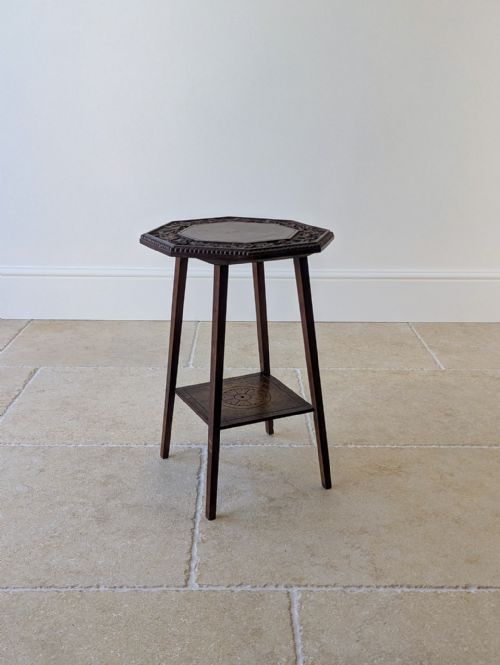
These corner tier stand examples provide useful vertical display space in smaller rooms, combining practical shelving with period timber work.
Corner Tier Stand
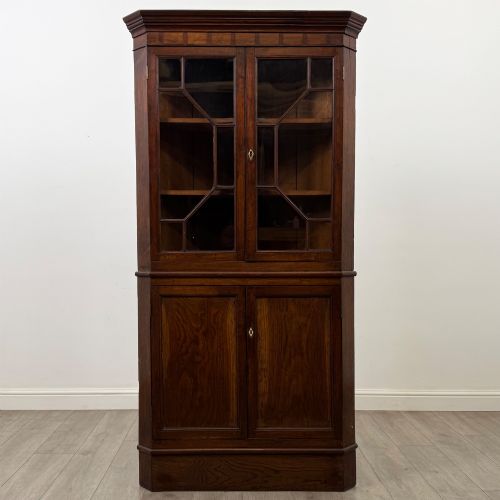
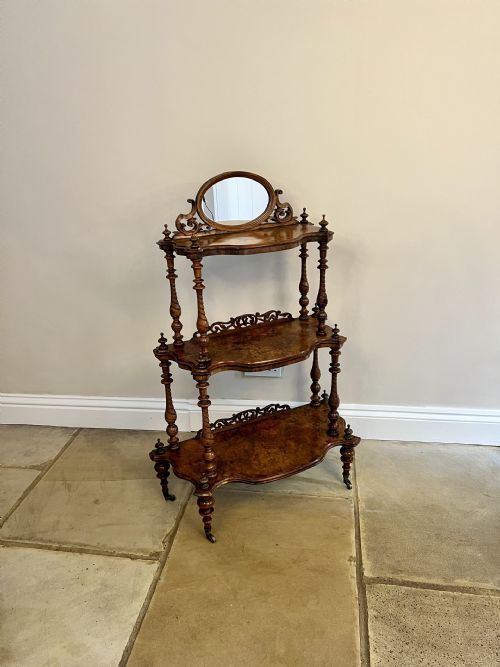
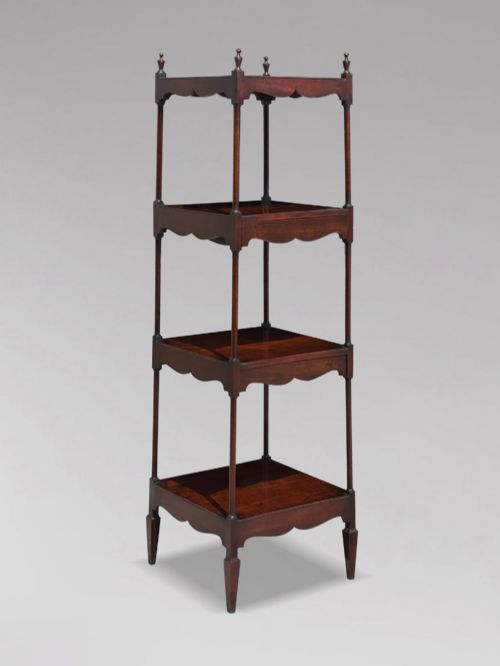
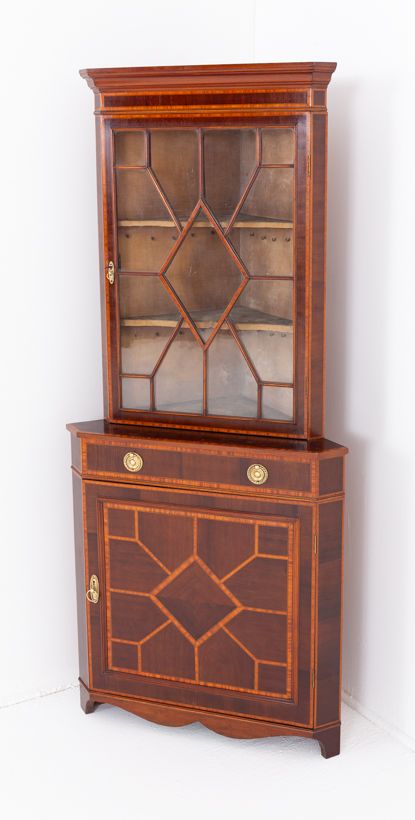
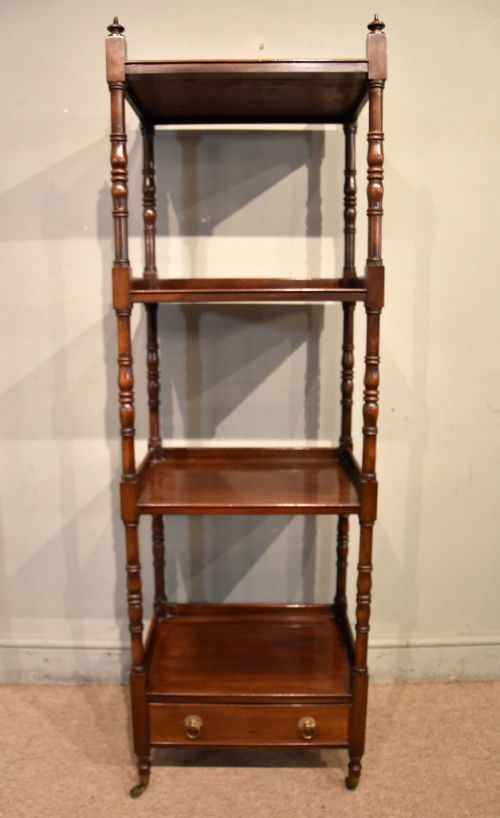
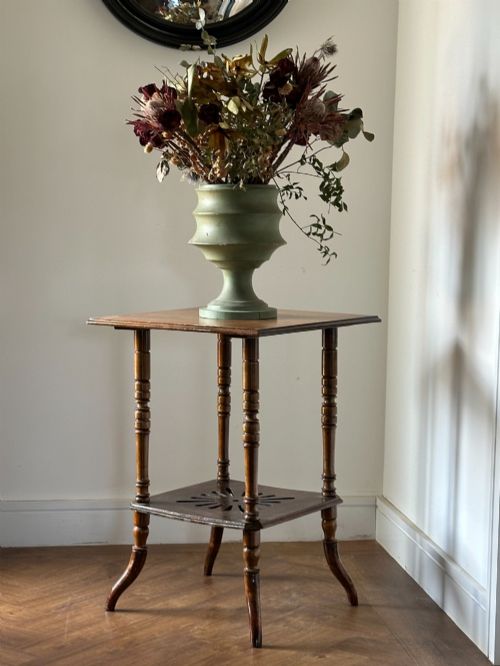
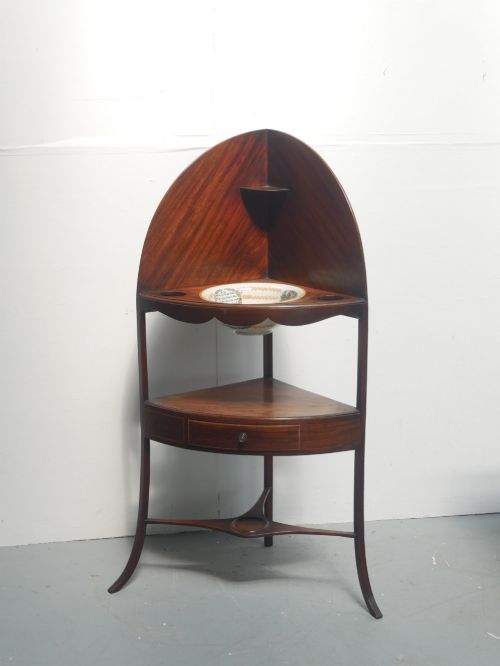
A corner tier stand utilises dead space in a room by stacking multiple open shelves or enclosed cupboards into a right-angled footprint. Buyers seeking these pieces generally encounter multi-tiered whatnots, washstands, and corner cupboards originating from the Georgian, Regency, and Victorian periods.
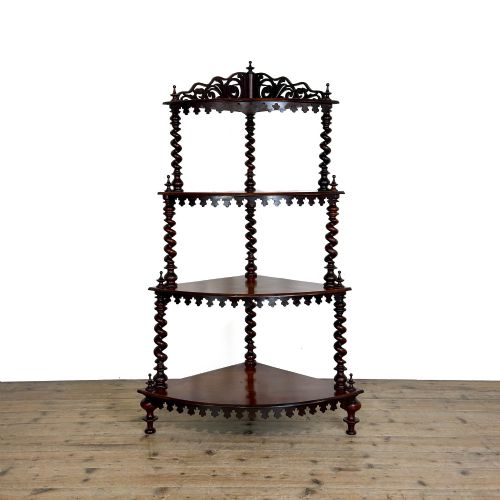
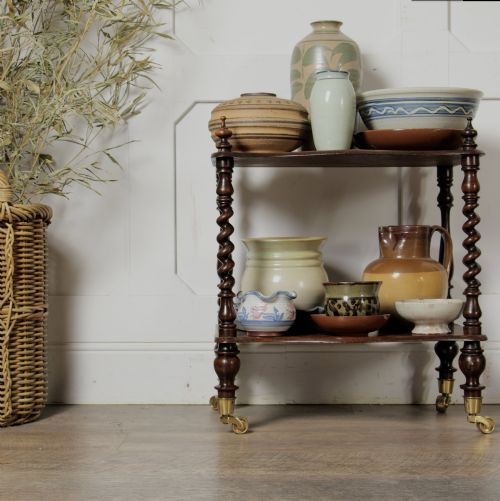
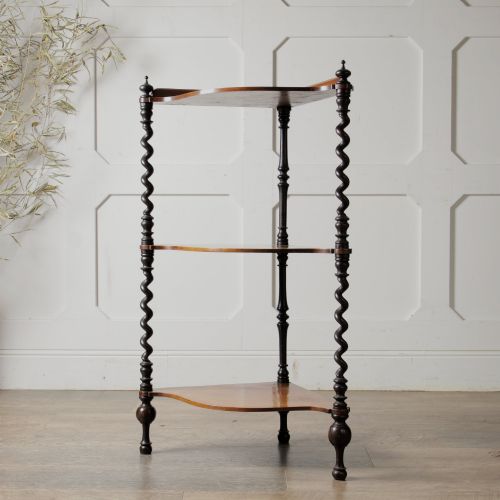
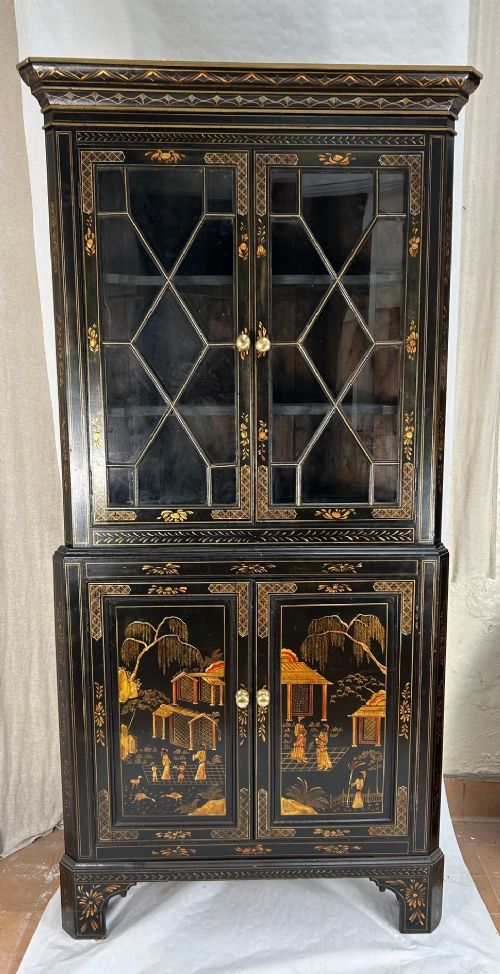
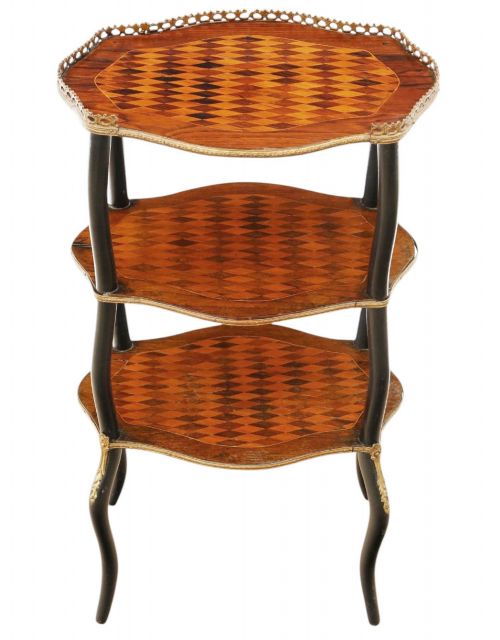
The form ranges from simple two-tier mahogany washstands and oak cupboards to elaborate four-tier burr walnut etageres and barley twist stands. Pieces frequently appear in styles spanning Sheraton Revival, Arts and Crafts, and Chinoiserie.
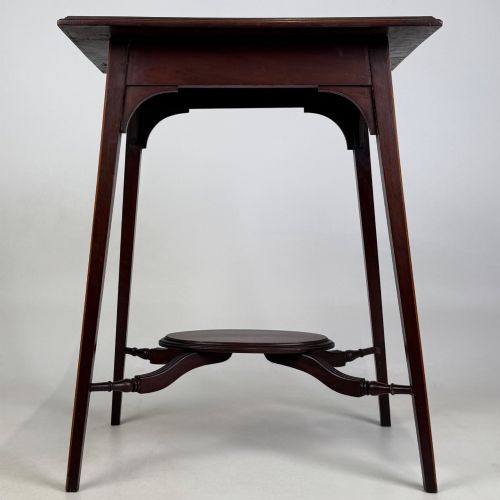
Georgian and Regency examples tend towards clean architectural lines in mahogany and oak, while Victorian makers introduced burr walnut, ebonised wood, and complex multi-tiered display shelving.
How they were made
Cabinet makers utilised dense hardwoods such as mahogany, walnut, and oak for structural stability, often applying burr walnut veneers or lacquer finishes to visible surfaces. Joinery relies on traditional dovetail and mortise techniques to support multiple tiers without sagging.
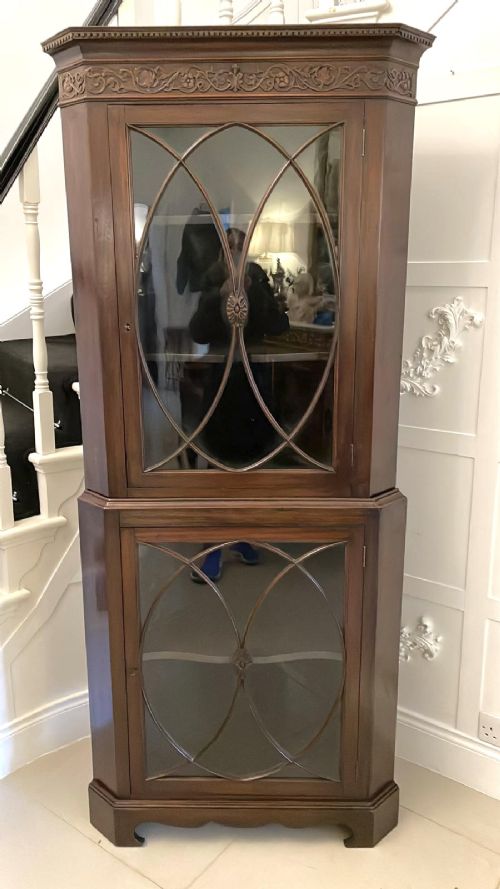
Decorative elements involve boxwood inlay, brass fittings, and hand-carved details like barley twist supports or glazed astragal doors. Certain pieces incorporate glass panels, gilt metal mounts, or painted surfaces to achieve specific period aesthetics.
Periods represented range from the 18th century through the Regency era and into late Victorian and Edwardian decades.
What varies in quality
The calibre of a piece rests upon the selection of timber grain, particularly in burr walnut and figured mahogany veneers, where symmetrical figuring elevates the visual impact. Superior examples display crisp joinery, refined turnings, and well-balanced proportions across every tier.
Original hardware, intact glass, and untouched patination distinguish finer items from later replacements or heavily restored pieces. The complexity of the carving and the integration of specialised elements like parquetry or brass galleries mark the upper echelon of the range.
Gillows·Liberty of London·E.W Godwin
The Corner Tier Stand Glossary
- Whatnot
- An open shelving unit designed for displaying ornaments, books, or small objects. These pieces typically feature three or four tiers supported by turned columns.
- Etagere
- A French-derived piece of furniture featuring multiple tiers for display. This term often overlaps with whatnot in nineteenth-century listings.
- Astragal
- A small moulding profile used to divide glass panes within a cabinet door. It creates a grid pattern typical of finer Georgian and Victorian display units.
- Parquetry
- Geometric wood inlay work arranged in patterns similar to mosaic. Craftsmen applied this technique to tabletops and shelf surfaces for decorative effect.
- Barley twist
- A carved wooden support resembling a spiralling rope or column. This turned detail appears frequently on nineteenth-century Victorian stands.
Corner Tier Stand: Frequently Asked Questions
Where should I place a corner tier stand?
These stands fit neatly into empty room corners, making them ideal for adding storage or display space in smaller reception rooms and hallways.
Because they utilise vertical height rather than floor space, they hold books, plants, and ceramics without crowding the surrounding area.
How do I clean mahogany tier stands?
Dust the timber regularly with a soft, dry cloth to prevent dirt accumulation in carved details and around shelf joints. Apply a quality beeswax periodically to nourish the wood and maintain its natural lustre.
Avoid placing wooden stands near direct heat sources or strong sunlight, which can dry out the timber and fade the finish over time.
Were these stands used for washing?
Certain tiered designs originated as washstands, featuring cut-outs on the top tier for basins and lower shelves for jugs and personal items.
Later owners frequently repurposed these washstands into general display units or bedside tables once plumbed bathrooms became common.
How do I distinguish Georgian from Victorian stands?
Georgian pieces generally exhibit restrained lines, solid mahogany or oak construction, and architectural mouldings influenced by classical design. They prioritise function and structural joinery over ornate decoration.
Victorian examples often introduce exotic veneers like burr walnut, elaborate barley twist columns, and multiple display tiers designed specifically for ornamental display.