

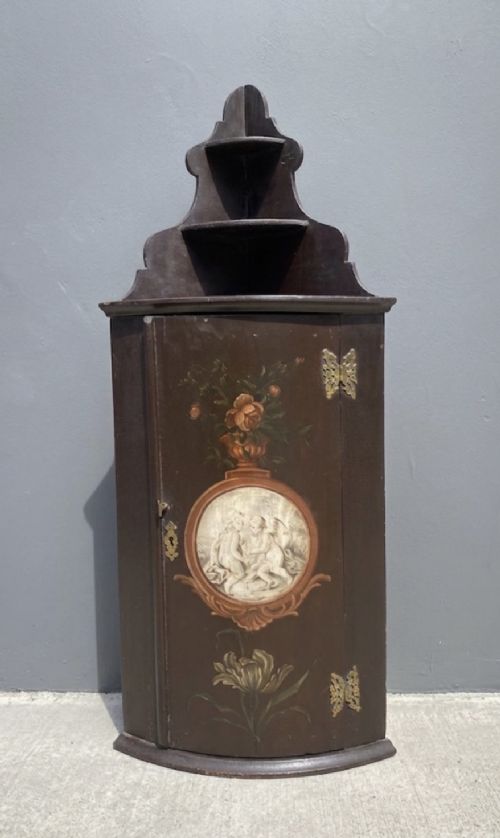


Vintage Corner Shelves
Vintage corner shelves turn neglected room angles into display space, offering tiered storage in mahogany, walnut and painted wood.
Vintage Corner Shelves
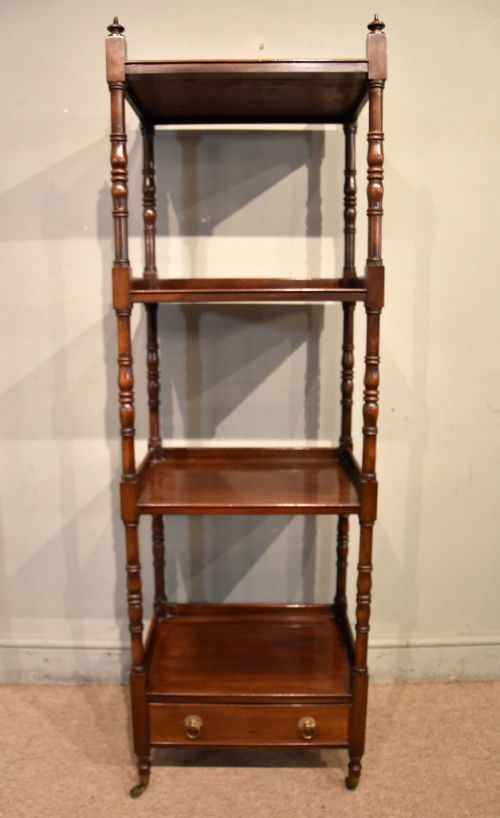
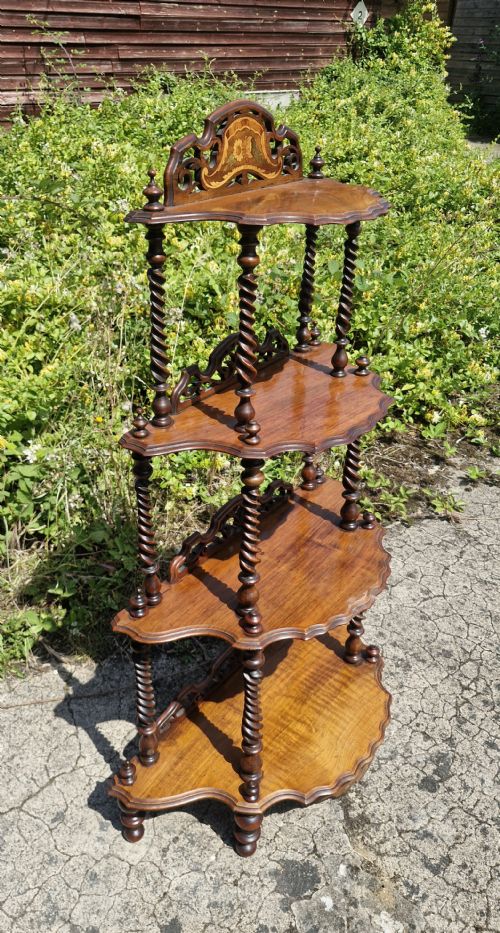
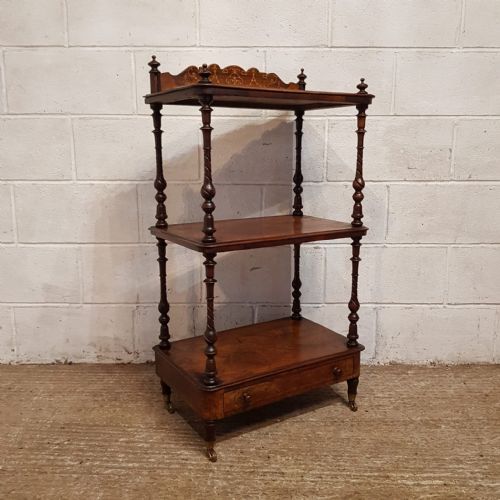
Vintage corner shelves span several centuries of design, appearing as whatnots, etageres, and tiered stands intended to fit neatly into domestic corners. The most frequent examples seen here date from the Victorian and Georgian periods, utilising the angles of a room to hold books, plants, and decorative objects without blocking floor space.
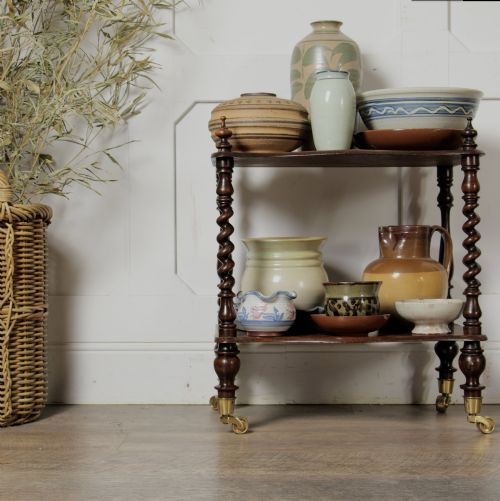
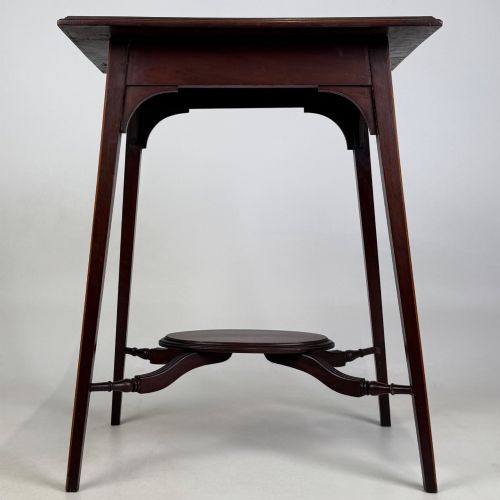
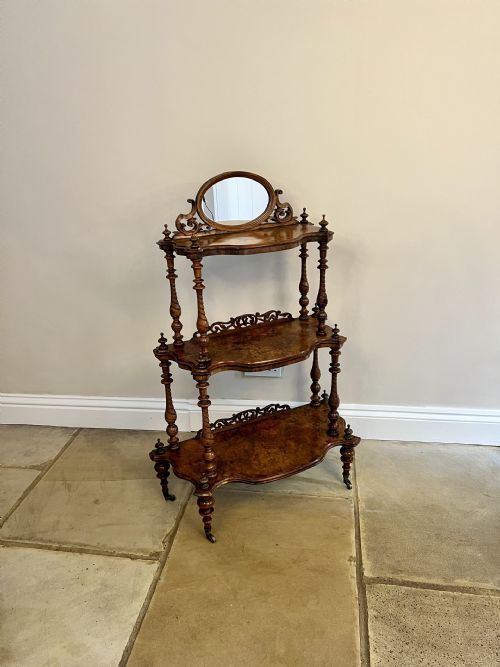
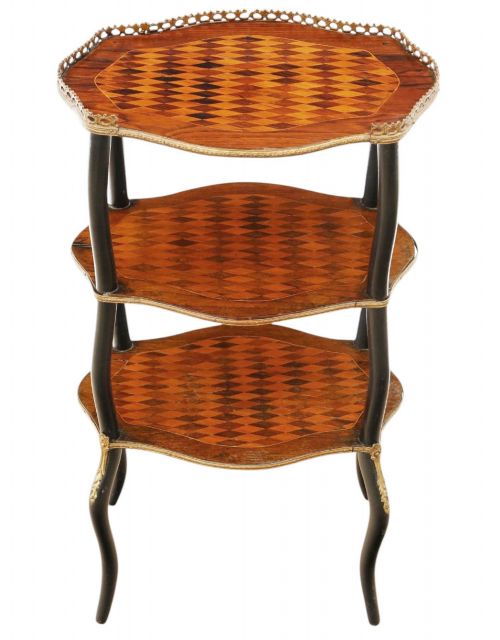
Makers constructed these pieces in diverse formats, from open four-tier mahogany structures to enclosed corner cupboards and hanging cabinets. Woods such as burr walnut, ebonised timber, and mahogany dominate the selection, often complemented by inlaid parquetry or brass fittings.
The category overlaps closely with standing whatnots and display stands, making it essential to look at the specific tier count and whether the unit is open or enclosed. Buyers choose them to bring height and architectural interest to dead space in a room.
How they were made
Craftsmen relied heavily on solid timber and veneers, selecting figured mahogany and burr walnut for their rich grain patterns. Timber sections were joined using traditional cabinet-making methods, while structural elements in iron and brass provided support for plant stands and heavy tiered shelving.
Surface treatments ranged from clear french polish that highlighted the natural wood to painted finishes and ebonised details. Marquetry inlay and parquetry geometric patterns frequently decorated the top surfaces and doors of finer examples.
Listings feature pieces fashioned from mahogany, walnut, burr walnut, wrought iron, and ebonised wood across Victorian, Georgian, and Regency periods.
What varies in quality
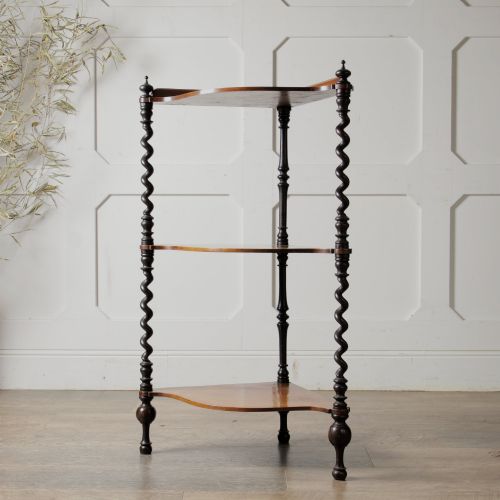
The standard of timber selection largely dictates the quality of these pieces, with highly figured burr walnut and dense mahogany sitting at the upper end of the range. Finer examples feature crisp parquetry inlay, well-turned supports such as barley twist columns, and precise joinery that remains rigid across multiple tiers.
Proportion and stability separate standard utility pieces from exceptional ones. Superior corner shelves integrate cleanly into ninety-degree angles while maintaining balanced weight distribution across every tier without leaning or rocking.
The Vintage Corner Shelves Glossary
- Whatnot
- An open shelving unit with multiple tiers designed for displaying ornaments or holding books. These pieces gained immense popularity during the Victorian period.
- Etagere
- A piece of furniture consisting of a set of open shelves for displaying small objects. They are often freestanding and light in appearance.
- Parquetry
- Geometric mosaic woodwork used for decorative floors or furniture surfaces. It involves arranging small blocks of wood to form patterns.
- Ebonised
- Wood finished to resemble ebony through staining or painting. This technique was frequently utilised on Victorian display furniture.
- Barley twist
- A type of turned column resembling a twisted rope. It appears frequently on the upright supports of Victorian stands and whatnots.
Vintage Corner Shelves: Frequently Asked Questions
Where should I place vintage corner shelves?
These pieces suit dead angles in living rooms, studies, and hallways where standard rectangular furniture would block traffic flow.
They maximise vertical wall space while leaving the central floor area open.
How do I care for mahogany and walnut shelves?
Keep timber furniture away from direct sunlight and sudden temperature changes to prevent the veneer from drying out.
Dust regularly with a dry cloth and occasionally apply a traditional beeswax polish to nourish the wood.
Can tiered stands hold heavy books?
Sturdy freestanding mahogany and iron stands can support substantial weight, but lighter bamboo or multi-tier decorative etageres are better suited for lighter ornaments.
Check the stability of the upright supports and joints before loading heavy items onto upper tiers.