
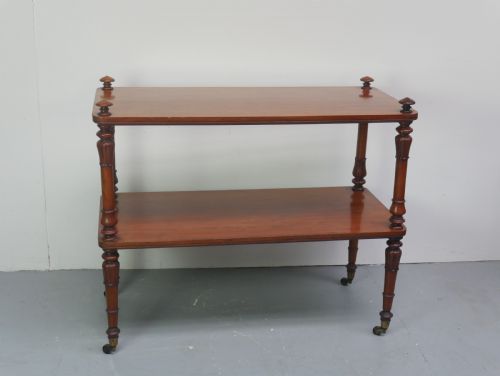


Carved Wooden Whatnot
A carved wooden whatnot is a tiered display piece designed to hold ornaments and books, bringing classic multi-level shelving into a room.
Carved Wooden Whatnot
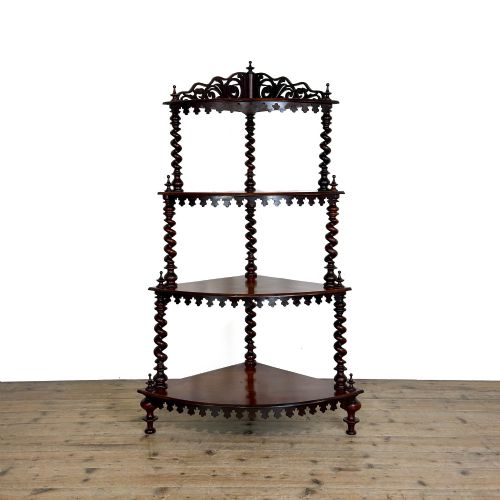
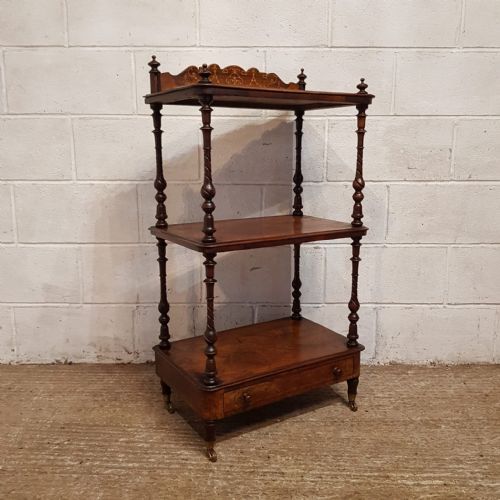
A carved wooden whatnot is a multi-tiered display stand originating from the nineteenth century, built to hold ornaments, books, and collections. These pieces range from compact corner units to large freestanding etageres fitted with mirrors, drawers, and lower cupboards.
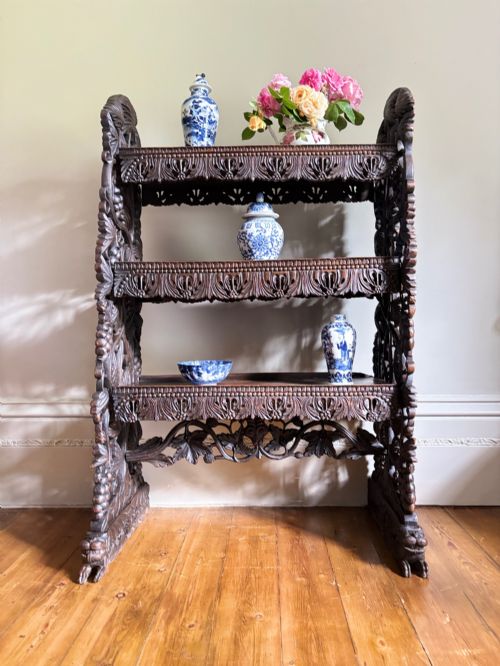
The versions you meet on this page lean heavily into Victorian tastes, alongside regional variations such as Anglo-Indian padauk shelves and Chinese carved cabinets. They appear as tiered stands, canterburys, and buffets, reflecting the diverse domestic storage needs of the nineteenth century.
Makers utilised rich timbers like mahogany, walnut, burr walnut, and rosewood to construct these tiered structures. Whether configured as a simple corner shelf or a serpentine Canterbury with dividers for sheet music, each piece provides vertical display space.
How they were made
Makers relied on dense timbers such as mahogany, rosewood, walnut, and exotic padauk, selecting them for their durability and rich grain patterns. Burr walnut veneer was often applied to key surfaces to create striking visual movement across the tiers.
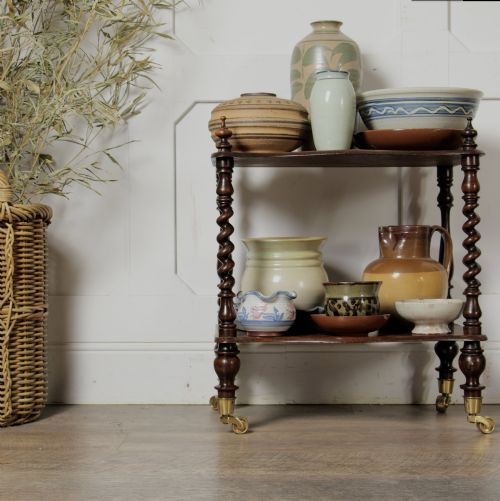
Turned supports, barley twist columns, and intricate hand-carved details define the structural uprights of these pieces. Brass castors and glass panels were occasionally incorporated, while specialised joinery ensured stability across multiple loaded shelves.
Some nineteenth-century makers cleverly combined shelving with sheet music storage, inventing furniture that doubled as an acoustic filing cabinet.
What varies in quality
The depth of hand-carving and the choice of timber set the finer examples apart from standard production pieces. Figured burr walnut and dense padauk require superior cabinet-making skill compared to plain mahogany or standard domestic woods.
Complexity of form dictates the upper tier of quality, seen in pieces featuring serpentine fronts, integrated mirrors, or lower drawers and canterbury sections. The crispness of the turned columns and the integrity of the tiered joints determine the overall structural success.
The Carved Wooden Whatnot Glossary
- Whatnot
- A tiered open shelving unit designed for displaying small objects and ornaments. These pieces became popular in the nineteenth century for parlour and drawing-room display.
- Etagere
- A piece of furniture consisting of a set of open shelves for displaying small articles. The term is frequently used interchangeably with whatnot in nineteenth-century contexts.
- Canterbury
- A low stand with partitions used originally for holding sheet music or books. Many nineteenth-century examples combine this function with upper whatnot tiers.
- Burr walnut
- Wood taken from the burl growth of a walnut tree, showing intricate and swirling grain patterns. Cabinet-makers prized this veneer for high-status Victorian display furniture.
- Barley twist
- A type of turned wooden column resembling a spiral rope. This decorative support is characteristic of nineteenth-century stands and furniture.
Carved Wooden Whatnot: Frequently Asked Questions
What is a carved wooden whatnot used for?
A carved wooden whatnot serves as a multi-tiered display stand for ornaments, books, and collections.
In nineteenth-century interiors, these pieces occupied drawing rooms and parlours to showcase decorative objects and personal treasures.
How do I identify a Victorian whatnot?
Victorian whatnots typically feature dense timbers like mahogany, walnut, or rosewood, alongside turned uprights or carved details.
Many examples from this era incorporate multiple open shelves, and some include integrated mirrors, drawers, or lower canterbury sections.
Where should I place a whatnot in a room?
Freestanding whatnots work well against open wall spaces or serving as room dividers, while corner models fit neatly into unused angles.
Keep them away from direct heat sources and strong sunlight to protect the polished wood surfaces and delicate veneers.
What is the difference between an etagere and a whatnot?
An etagere is formally a French-derived term for a set of open display shelves, whereas whatnot is the traditional English equivalent.
In marketplace listings, the two terms often describe the same multi-tiered shelving furniture from the nineteenth century.